
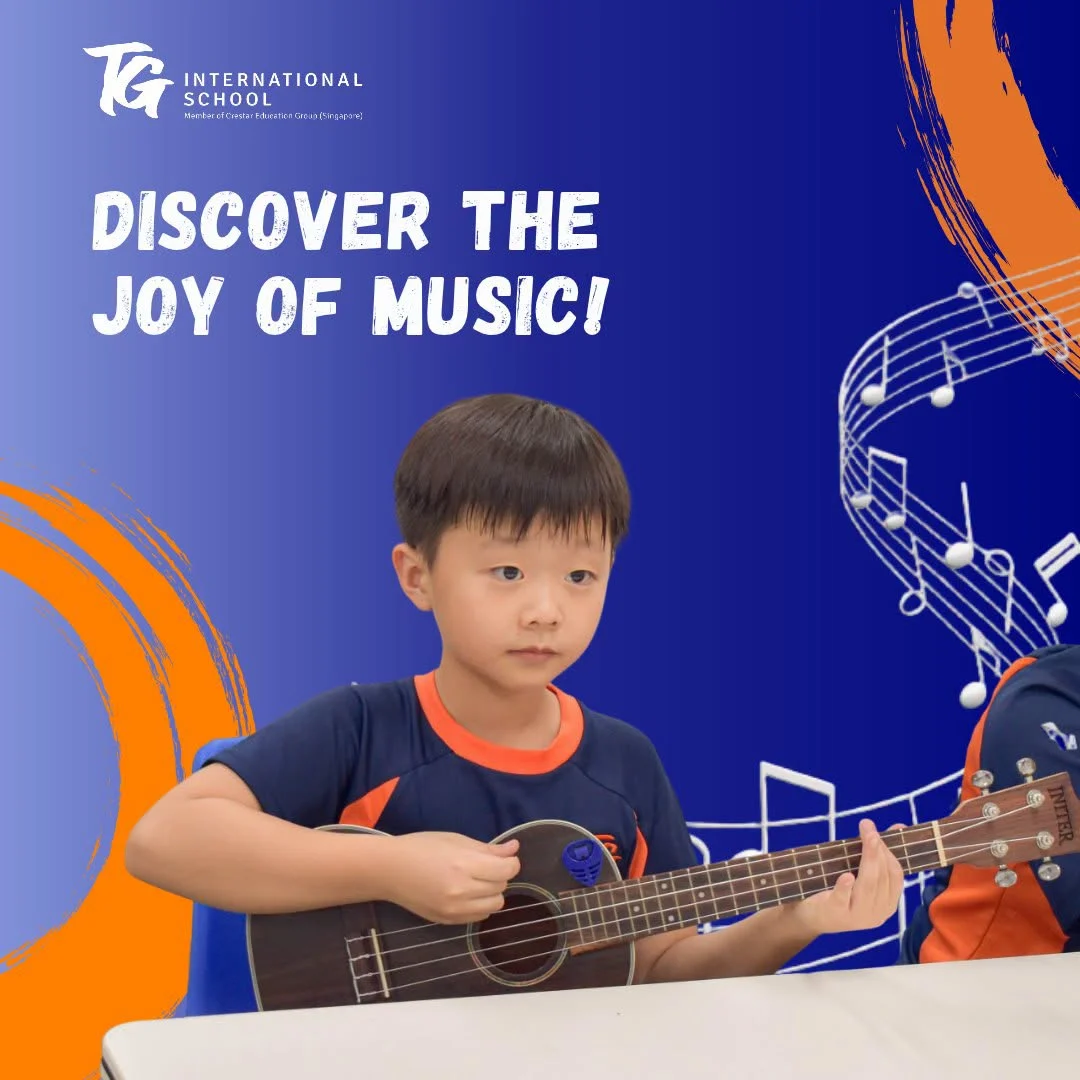
TG International School in Phnom Penh has shared a look at its music classes, highlighting opportunities for students to explore rhythm, musical instruments and creative expression. In a Facebook post titled “Discover the Joy of Music,” the school describes music education as a way for children to develop musical skills and confidence through practical experiences. Accompanying images show young learners engaging with instruments in classroom settings.
TG International School highlights music education

The school’s announcement focuses on giving students opportunities to discover their musical talents and express creativity. It refers to learning rhythms and developing new skills, while the photographs show children handling instruments, including a small string instrument, a keyboard and percussion equipment.
The post does not specify students’ ages, the number of weekly music lessons or the qualifications of individual music teachers. It also does not announce a public performance or competition. Instead, it introduces music as part of the learning experiences available at TG International School.
Why rhythm matters in early music learning
Rhythm activities can help children recognise patterns in sound and practise coordinating movements with a steady beat. Teachers might introduce these skills through clapping, tapping, singing or simple percussion exercises, depending on students’ developmental levels.
Following a rhythm requires listening carefully, remembering a short sequence and responding at an appropriate moment. These activities can provide practice in attention and sequencing, although improvement in music skills should not automatically be interpreted as improvement in unrelated academic subjects.
Young learners may begin by copying short patterns before experimenting with their own. Teachers can adjust the pace and complexity to make participation manageable for children with different levels of experience.
Creative expression through musical instruments
Exploring instruments allows students to discover how different actions produce sound. A child playing a keyboard may notice changes in pitch, while a learner using a string instrument can experiment with rhythm and the way strings vibrate.
Music classes can also introduce basic concepts such as loud and soft sounds, fast and slow tempos, and repeating musical patterns. These concepts give children a vocabulary for discussing what they hear and create.
Opportunities to improvise or choose sounds can support creative decision-making. Structured guidance remains important, particularly when children are learning how to handle instruments safely and take turns with shared equipment.
Building confidence and participation in music classes
Learning a musical skill often involves repetition, feedback and gradual progress. Children may become more willing to participate when they are given achievable tasks and enough time to practise without pressure to perform perfectly.
Group music activities can offer opportunities to listen to classmates, wait for a cue and contribute to a shared performance. Some children prefer to begin individually or in small groups before joining larger activities.
Teachers can recognise progress through specific feedback, such as noticing when a student maintains a beat or remembers a sequence. This approach helps learners understand what they are improving.
Information for families in Phnom Penh
Parents interested in music education can ask schools about the instruments children use, how lessons are adapted for beginners and whether students have opportunities for both individual exploration and group activities.
TG International School lists its location as #50, at the corner of Streets 516 and 317, Sangkat Boeng Kak 1, Khan Tuol Kouk, Phnom Penh. Its Facebook announcement provides the contact number +855 77 666 700 and a Telegram admissions channel.
The TG International School music classes announcement presents rhythm, instrumental exploration and creative participation as elements of student learning. Families seeking information about timetables or enrolment can contact the school directly.
If the information about this school is inaccurate or incomplete, Contact Us.
Would you like to register your school? Click Here.
Leave A Comment