
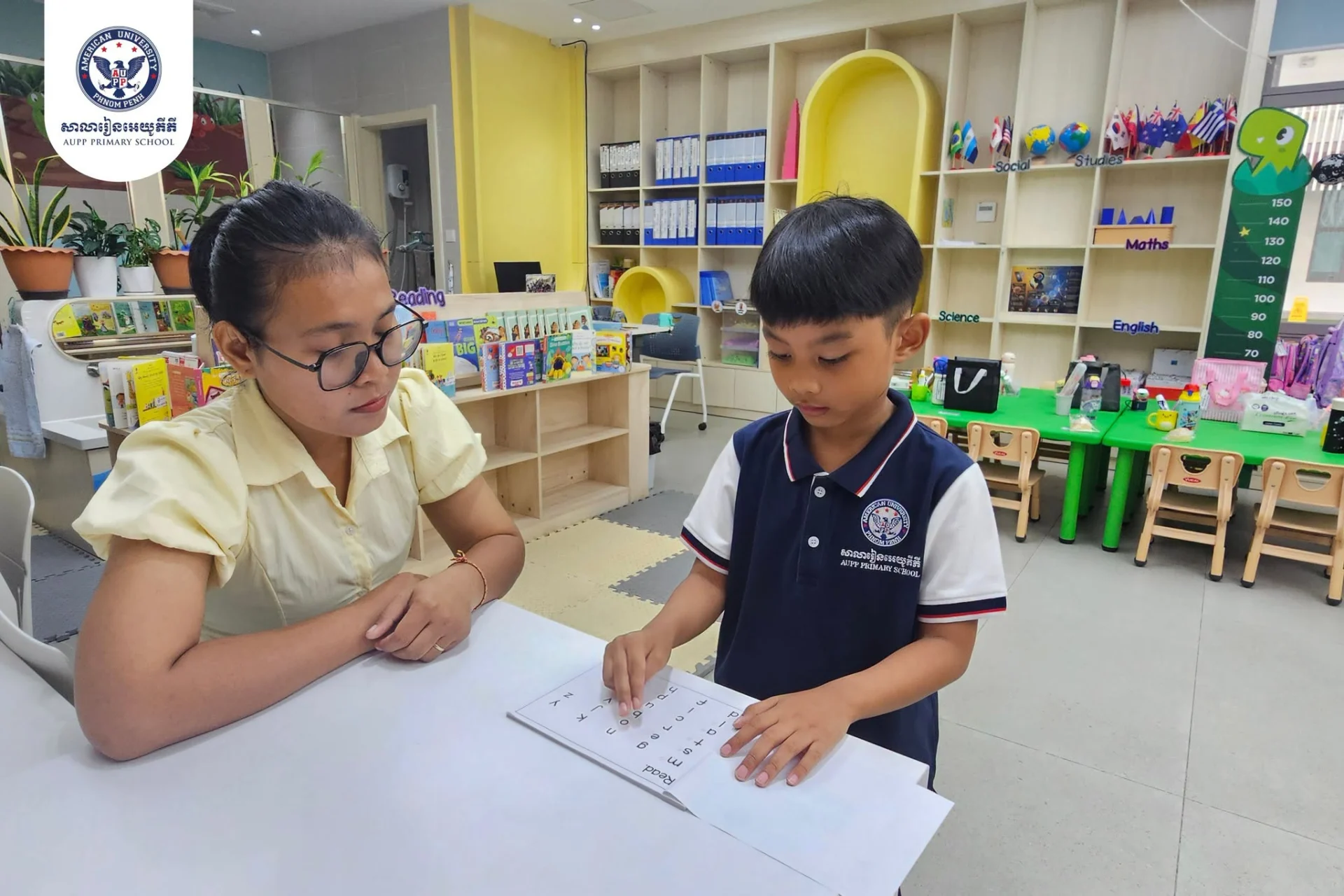

AUPP Primary School has shared how its K3 learners practise English through differentiated classroom activities that respond to children’s individual learning levels. The school describes vocabulary development, word recognition, teacher guidance and opportunities to participate at a comfortable pace.

The Facebook post, published by AUPP High School – Foxcroft Academy, presents the activity under the message “Learning English, One Little Step at a Time!” It highlights playful learning and individual attention in early language tasks.
Differentiated English learning at AUPP Primary School
According to the school’s announcement, K3 learners participated in English activities adapted to different needs and abilities. Teachers supported students as they worked through tasks and encouraged them to take part with confidence.
Differentiated instruction means adjusting aspects of a lesson to account for differences among learners. In early childhood classrooms, this might involve offering different levels of support, varying word complexity or allowing children more time to respond. These are general teaching approaches, rather than additional activities confirmed in the school’s post.
The school’s photographs show teachers interacting with children during classroom tasks. The description does not specify lesson duration, number of participating pupils or assessment results, so the activity should be understood as classroom practice rather than evidence of measured improvement.
Building vocabulary and recognising English words
AUPP Primary School identified vocabulary building and word recognition as important elements of the lesson. Both skills contribute to early language development, although they involve different learning processes.
Vocabulary development helps children connect words with objects, actions and ideas. Word recognition involves identifying familiar written words or word forms. Young children can encounter these skills through pictures, conversation, guided reading and age-appropriate games.
Teachers can make vocabulary more accessible by linking a new word to something children already know. Repetition across different situations can help learners remember and use words, while short activities provide opportunities to practise.
The school’s post states that children practised English through engaging activities. It does not identify a specific phonics programme, textbook or formal assessment, and none should be assumed from the photographs.
Teacher guidance and individual support
The school also emphasised teacher guidance. In a K3 classroom, adult support may include modelling a response, giving a prompt, explaining an instruction again or encouraging a child to attempt a task independently.
Effective support changes as a learner becomes more familiar with a task. A teacher might initially demonstrate an activity, then gradually reduce assistance as the child gains confidence. This approach can help children participate while developing independence.
For parents, it is useful to ask how teachers adapt activities when children have different levels of English exposure. Some children may already use English at home, while others encounter it mainly at school. Classroom instruction can account for those differences.
Confidence and participation in early English lessons
AUPP Primary School’s announcement describes giving children opportunities to practise and celebrate their progress. Positive classroom experiences can encourage young learners to attempt unfamiliar words, respond to questions and engage with teachers.
Confidence is best supported through achievable challenges and constructive feedback. Children benefit when adults acknowledge effort and provide clear guidance rather than expecting identical performance from everyone.
For families following their child’s English development, everyday conversation, picture books and opportunities to name familiar objects can complement classroom learning. The most useful activities are manageable, enjoyable and suited to the child’s language abilities.
AUPP Primary School’s approach to early language learning
The K3 activity illustrates AUPP Primary School’s stated emphasis on differentiated English learning, vocabulary development, individual teacher support and confidence-building. Its classroom update offers parents a view of how teachers encourage children to participate at their own pace.
Through this example of AUPP Primary School differentiated English learning, the school presents language development as a gradual process supported by practice, playful activities and responsive teaching.
If the information about this school is inaccurate or incomplete, Contact Us.
Would you like to register your school? Click Here.



Leave A Comment