
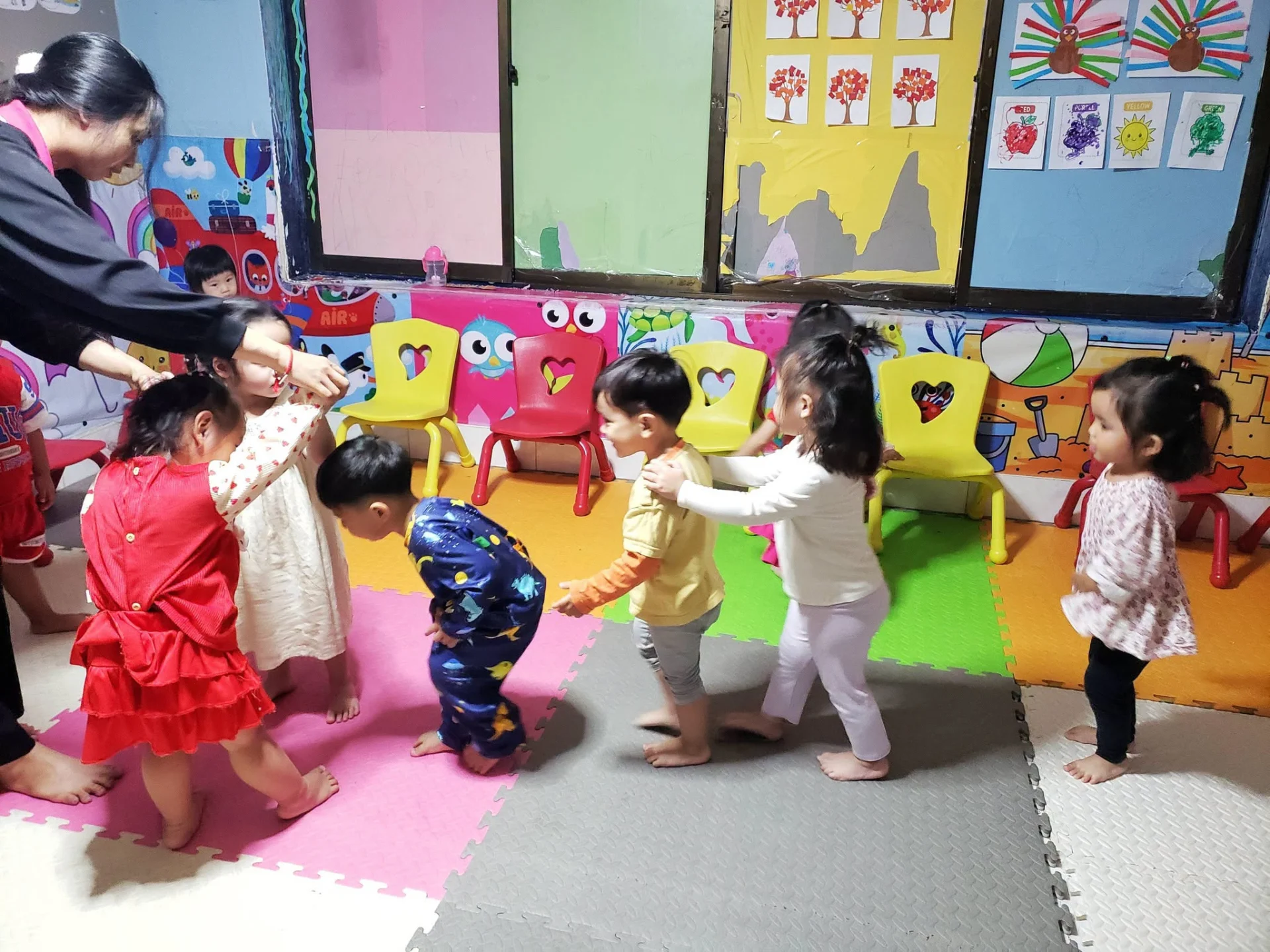

Happy Daycare Phnom Penh Cambodia has shared a glimpse of its Nursery activities, showing young children learning through play, movement and hands-on exploration. In a Facebook post titled “Nursery Time!”, the centre described a nurturing environment where children practise early skills while spending time with teachers and classmates.
Happy Daycare Phnom Penh Cambodia shares Nursery Time activities

The post presents nursery learning as a combination of enjoyable activities and opportunities for development. Photographs show children sitting together on a soft play mat while working with colourful materials. Another image shows children moving together in a classroom decorated with bright learning displays.
These scenes illustrate group participation and supervised play. The post does not identify the children’s ages, a formal lesson plan or assessment results. It is therefore best understood as a snapshot of everyday nursery experiences rather than evidence of measured progress.
For families considering early childhood care, this kind of classroom update can help them see the activities children encounter during the day. It also offers a starting point for questions about how teachers support different developmental needs.
Fine motor practice through hands-on play
Small objects, sorting tasks and creative materials can give young children opportunities to practise controlled hand movements. Picking up pieces, positioning objects and exploring textures may involve finger strength, hand-eye coordination and attention.
In the shared photographs, children appear to be working with small, colourful pieces on the floor. The exact learning materials and instructions are not specified, so the activity should not be described as a particular formal teaching method.
Teachers can adjust similar tasks by offering larger objects, fewer choices or additional demonstration when children need support. Because nursery children may place objects in their mouths, materials must be age-appropriate and closely supervised.
Movement and social interaction in nursery
The images also show children participating in a movement activity together. Group movement can encourage listening, awareness of personal space and coordination. Depending on how a teacher structures the activity, children may practise following directions, waiting and responding to peers.
Shared play creates opportunities for communication. Young children may express preferences through words, gestures or actions and gradually learn how to interact with classmates. Adults can model simple language, support turn-taking and help children navigate disagreements.
These abilities develop at different rates. Some children join group activities immediately, while others need time to observe or participate with adult support. An inclusive nursery environment should allow meaningful participation without expecting every child to respond in the same way.
What parents can ask about nursery learning
When visiting a nursery, parents can ask how the daily routine balances active play, quiet activities, meals and rest. They may also want to know how teachers communicate with families, respond to distress and adapt activities for children who need extra assistance.
Classroom safety is another practical consideration. Families can ask about supervision, cleaning procedures, safe materials and how staff manage transitions between activities. These questions help parents understand the care provided beyond what appears in photographs.
At home, caregivers can encourage similar learning through simple activities such as sorting large objects, singing action songs, looking at picture books and taking turns during play. Everyday interactions offer opportunities to practise communication and coordination.
Play-based experiences at Happy Daycare Phnom Penh Cambodia
Happy Daycare’s Nursery Time post offers families a view of children exploring materials and participating in group movement. The centre describes its approach in terms of care, learning and enjoyment, while the photographs document particular moments from the classroom.
For parents interested in Happy Daycare Phnom Penh Cambodia, the Nursery Time update is a useful introduction to its play-based activities. Further information about enrolment, age groups, schedules and educational approaches should be confirmed directly with the centre.
If the information about this school is inaccurate or incomplete, Contact Us.
Would you like to register your school? Click Here.


Leave A Comment