
Reigate Grammar School Phnom Penh has shared a hands-on learning activity in which Early Years pupils worked with their parents to build small boats and test whether they would float. The school presented the experience as an opportunity for children to experiment, create and learn alongside their families.
Early Years pupils build and test boats

According to the school’s Facebook post, parents joined their children in the classroom to make little boats before putting them to the test. The central question was simple: would the boats float? The activity invited children to explore that question through making and experimenting.
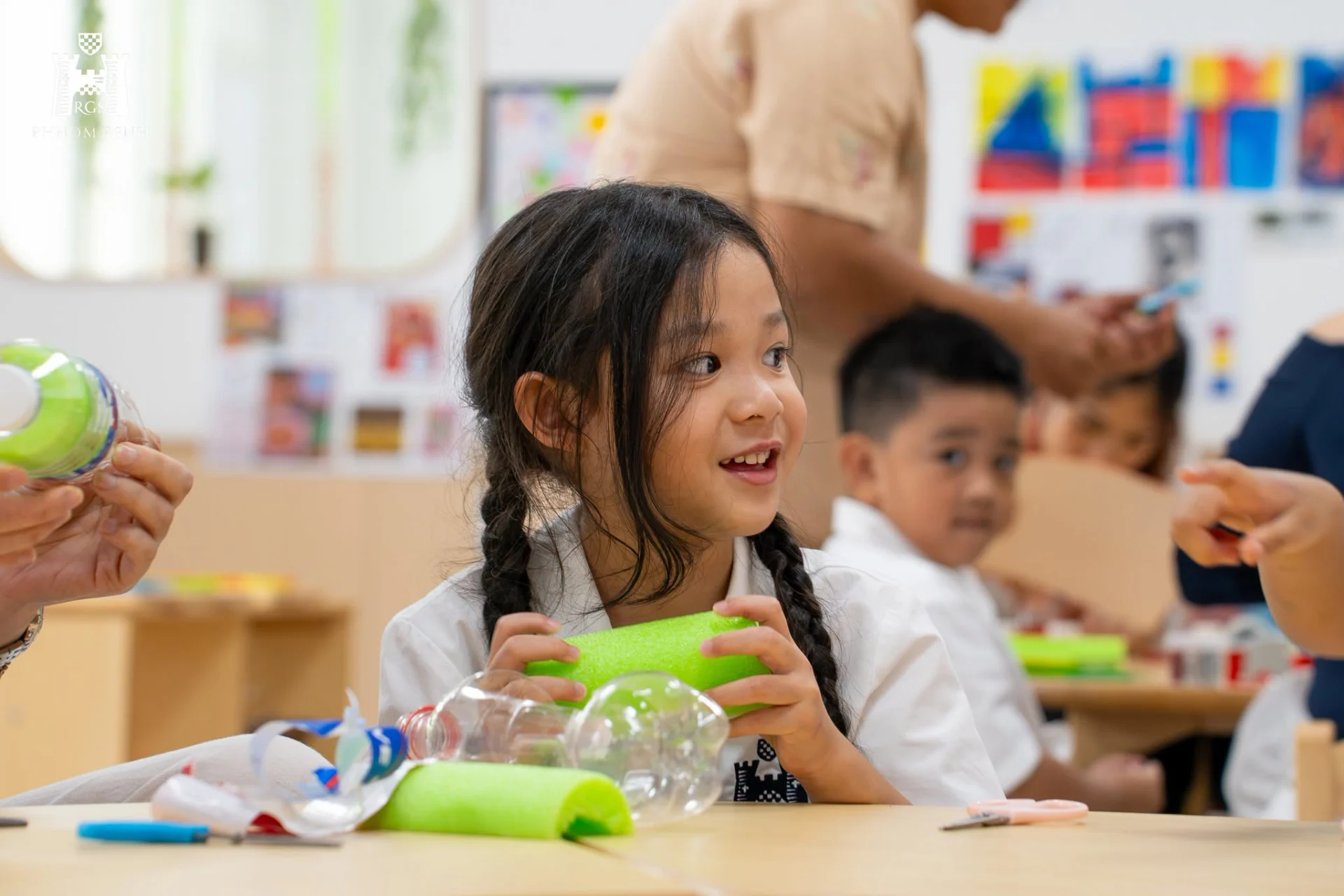
Photographs accompanying the announcement show children and adults working together at classroom tables with craft materials. Some images show pupils handling objects and interacting with family members and educators. The post does not specify the boat materials, the number of participants or the outcomes of individual tests.
The school described the session as a fun learning experience and highlighted the value of parents being part of their children’s educational journey.
How boat-building supports early science learning
A floating-boat challenge can introduce young children to basic scientific thinking without requiring technical explanations. Children can make a prediction, test an object in water, observe what happens and consider why their first attempt worked or did not work.
Teachers may use questions such as ‘What do you think will happen?’ or ‘What could we change?’ to encourage observation and reasoning. If a boat tips or sinks, trying a different shape or arrangement can turn the result into another learning opportunity.
Floating depends on factors including the boat’s shape, weight and how it displaces water. For Early Years learners, direct observation and age-appropriate vocabulary are usually more useful than formal calculations.
Learning through play at Reigate Grammar School Phnom Penh
Hands-on projects can connect several areas of early childhood development. Cutting, placing and joining craft materials may provide fine motor practice, while discussing a design gives children opportunities to use descriptive language and explain their choices.
Working beside another person also requires taking turns, listening and sharing materials. Children can practise solving small problems together, especially when their first design needs adjustment.
These are potential learning opportunities associated with the type of activity shown. The Facebook post does not report formal assessments or measured developmental gains from the session.
Why parent participation matters in Early Years education
When parents join classroom activities, they can observe how their children approach unfamiliar tasks and respond to guidance. Children, in turn, have an opportunity to share their school environment with an important adult in their lives.
For teachers, these occasions can create conversations about classroom routines, children’s interests and ways to extend learning at home. A family does not need specialist equipment to explore similar questions: supervised water play with safe household materials can provide simple opportunities to compare floating and sinking.
Adults should select materials suitable for the child’s age, avoid small choking hazards and supervise all activities involving water. Even shallow water requires close attention.
Connecting classroom activities with home learning
Families can extend a boat-building experience by asking children to describe what they made, draw a picture of their design or compare objects that float and sink. Asking open-ended questions helps children explain observations in their own words.
Reigate Grammar School Phnom Penh’s Early Years boat-building activity illustrates how a practical classroom project can bring children and parents together. The school encouraged interested families to arrange a visit to learn more about its educational environment.
If the information about this school is inaccurate or incomplete, Contact Us.
Would you like to register your school? Click Here.


Leave A Comment