
Pacific Kids School Cambodia has highlighted experiential outdoor play as part of its early childhood program. In a recent social media post, the school described activities involving balance, obstacle courses and cooperation in a sandbox. These experiences give young learners opportunities to move, explore and interact with classmates in an outdoor setting.
Pacific Kids School Cambodia highlights experiential outdoor play

According to the school’s announcement, outdoor play is a foundational component of its approach to early childhood learning. The post connects active exploration with gross motor coordination, self-efficacy and prosocial skills. These are important areas of development for children who are learning to manage their bodies, approach challenges and participate in groups.
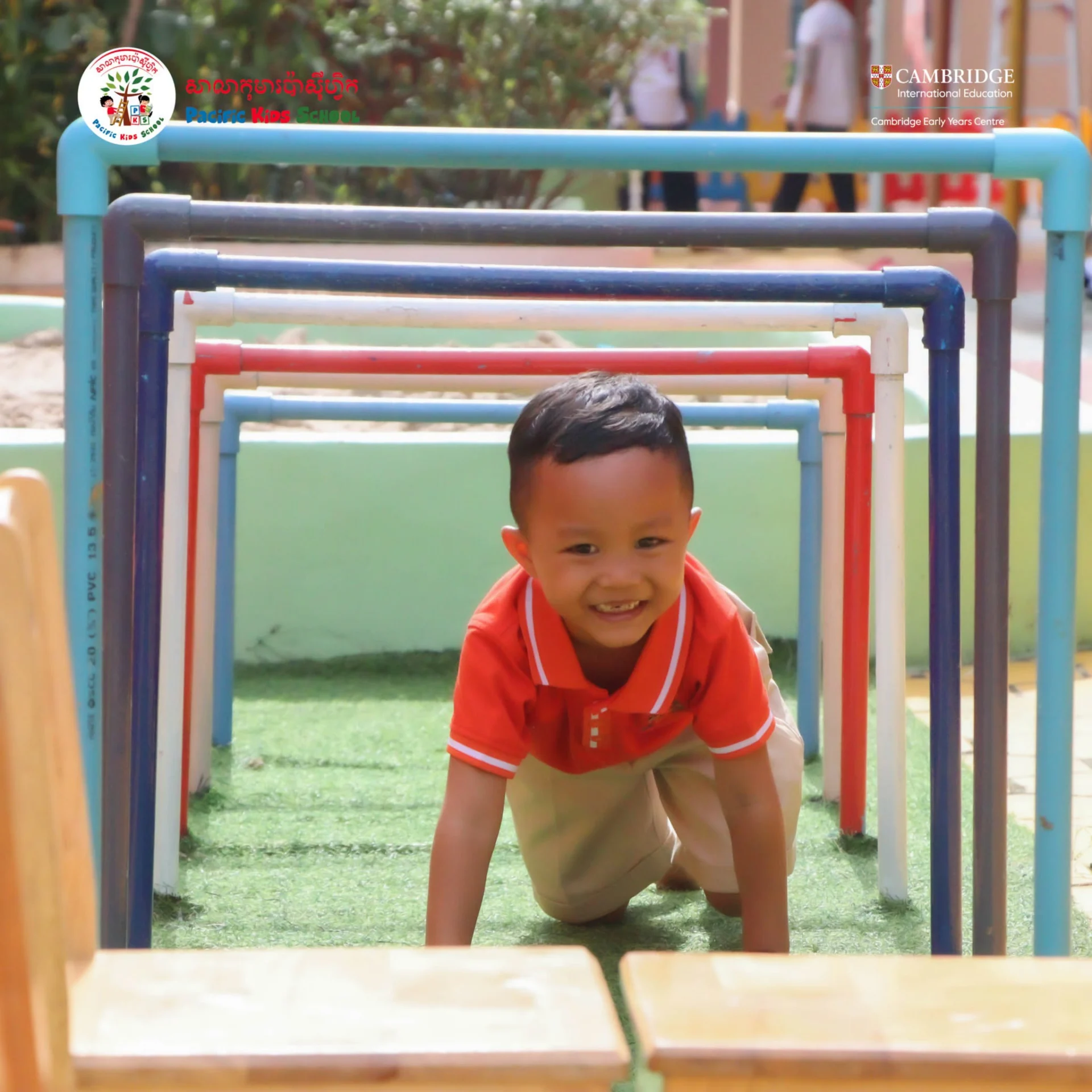
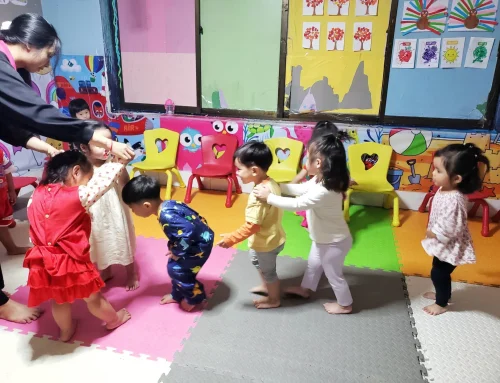
The accompanying photographs show a teacher supervising children outside and a young child moving through a low, colourful obstacle structure. Other images show children navigating the equipment. The photographs illustrate the kinds of physical challenges described in the announcement, although they do not establish individual learning outcomes.
Building balance and gross motor coordination
Gross motor skills involve large movements such as walking, running, climbing and balancing. Young children develop these abilities through repeated opportunities to move in different ways and adjust their bodies to new environments.
A simple obstacle course can encourage children to bend, crawl, step over objects and change direction. Balancing activities may require them to control posture and coordinate movements while paying attention to their surroundings. Teachers can adapt the height, distance and complexity of equipment to suit children’s abilities.
For parents, outdoor play does not require elaborate equipment. Safe stepping paths, supervised playground activities and age-appropriate movement games can create opportunities to practise coordination. Adults should check surfaces, equipment stability and supervision needs before children begin.
Confidence and self-efficacy through manageable challenges
Pacific Kids School Cambodia also refers to self-efficacy, which describes a person’s belief in their ability to complete a task or manage a challenge. In early childhood, this can develop when children attempt something difficult, receive appropriate encouragement and notice their own progress.
For example, a child may initially hesitate before crawling through a tunnel or crossing a balance path. With time, support and repeated practice, the child may become more willing to try independently. Teachers can help by offering achievable challenges without pressuring children to move beyond their readiness.
Progress varies among learners. A supportive environment allows children to participate at different levels and recognises effort, problem-solving and safe decision-making alongside successful completion.
Social learning through sandbox collaboration
The school’s post identifies collaboration in the sandbox as another example of outdoor learning. Shared play areas can encourage children to negotiate space, exchange tools, take turns and communicate their ideas.
These interactions can support prosocial behaviours such as helping, cooperating and considering another child’s needs. Young children often need adults to model respectful language, explain simple rules and guide disagreements. Social skills develop through practice rather than a single activity.
Sand play can also provide sensory experiences as children pour, scoop and shape materials. Educators should consider hygiene, appropriate tools and individual sensory preferences when planning these activities.
What parents can look for in outdoor learning
Families evaluating an early childhood program may ask how often outdoor activities occur, how staff supervise children and how activities are adapted for different developmental needs. Questions about shade, drinking water, safe equipment and procedures during hot or rainy weather are also useful.
Pacific Kids School Cambodia presents experiential outdoor play as an opportunity to combine physical movement, growing confidence and cooperation. Its recent post offers families a specific example of how active play can form part of early childhood education.
If the information about this school is inaccurate or incomplete, Contact Us.
Would you like to register your school? Click Here.

Leave A Comment