
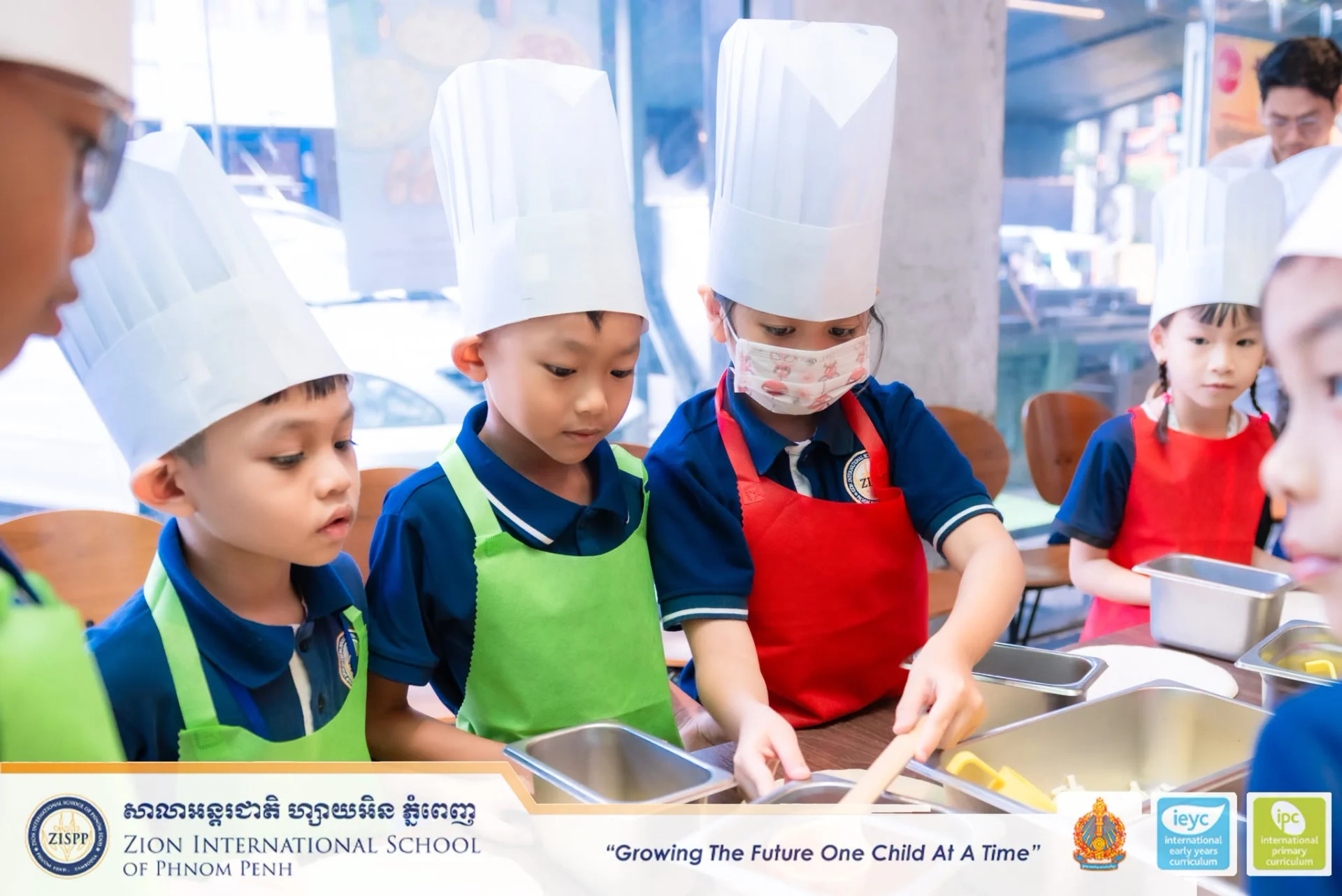

Zion International School of Phnom Penh (ZISPP) has shared an October field trip in which its Grade 2A students visited PaPa’s Kitchen to make personalised pizzas. The activity connected practical food preparation with the class science topic, “Changing Materials,” allowing children to observe how ingredients change during cooking.
Zion International School Grade 2A visits PaPa’s Kitchen

According to the school’s Facebook post, the students visited a pizzeria and followed the steps involved in preparing their own pizzas. Staff supplied premade pizza bases and demonstrated the sequence, beginning with spreading tomato-based sauce evenly across the dough.
Students then selected toppings, with options including prawns, chicken, pineapple, ham and cheese. Each child chose what to add rather than following one fixed combination. This gave students a practical opportunity to make decisions while following instructions.
After the children assembled their pizzas, restaurant staff collected them for cooking in a pizza oven. Each student received a numbered ticket so that the finished pizza could be returned to its maker. Once the pizzas were ready, students sat together and ate the food they had prepared.
Connecting the pizza activity with changing materials
The school explained that the visit was linked directly to Grade 2A’s science topic, “Changing Materials.” Pizza preparation offers a familiar example of how heat can change the properties of ingredients.
Before cooking, students can observe separate ingredients with different textures, colours and shapes. Heating a pizza changes its appearance and texture: cheese melts, moisture evaporates and the base becomes firmer. These visible differences can prompt questions about what has changed and why.
For primary school students, practical observations can make scientific vocabulary easier to understand. Teachers might ask children to compare ingredients before and after cooking, describe changes in texture or identify which changes resulted from heating.
The school’s post confirms that students experienced the preparation and cooking process, but it does not describe specific experiments, written assignments or assessment results from the trip.
Learning through practical tasks and personal choices
Making a pizza involves several connected tasks: listening to instructions, remembering a sequence, spreading sauce and choosing ingredients. These activities can support coordination, planning and independent decision-making when they are adapted to a child’s developmental level.
Allowing children to select toppings can also encourage them to express preferences and consider the outcome of their choices. The numbered-ticket system described by the school introduced a simple way to organise individual orders and connect each completed pizza to its student.
The experience was also social. Children prepared food in a shared setting and later ate together, providing opportunities to practise patience and appropriate behaviour outside the classroom.
What parents can take from the field trip
Parents can explore similar science ideas at home through supervised cooking. Comparing ingredients before and after heating, discussing why cheese melts or noticing how bread changes in the oven can reinforce observations made at school.
Children should not handle hot ovens or cooking equipment without appropriate adult supervision. Families should also consider food allergies, hygiene and safe food preparation when planning activities.
The Zion International School of Phnom Penh field trip demonstrates how a familiar activity can connect classroom science with everyday experiences. The school described the visit as enjoyable and noted that students behaved well while away from campus.
If the information about this school is inaccurate or incomplete, Contact Us.
Would you like to register your school? Click Here.
Leave A Comment