
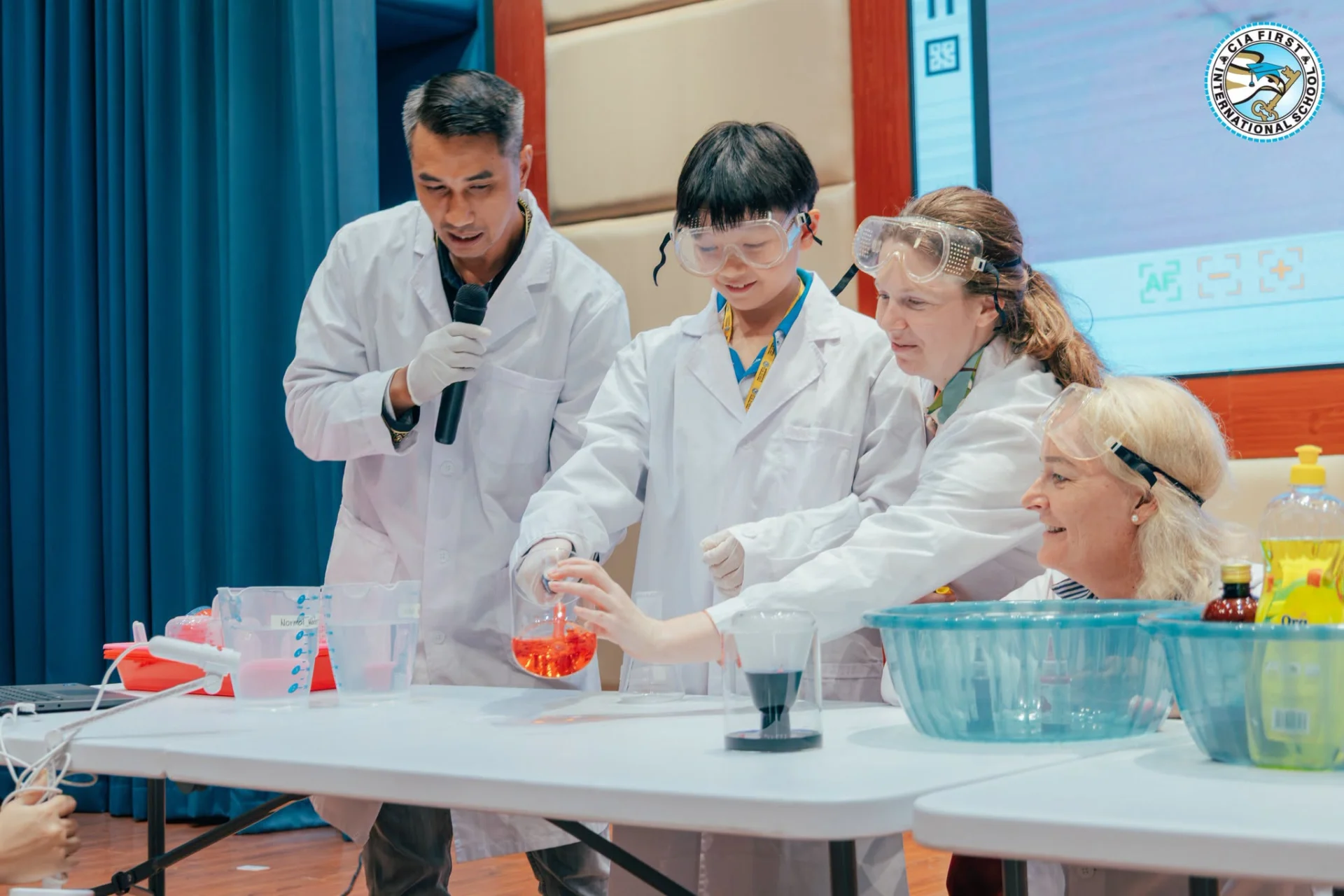

CIA FIRST International School highlighted hands-on science learning during its STEM Day, bringing students and families together for experiments and creative challenges. In a Facebook update shared on 11 November 2026, the school described an energetic event involving Lower Elementary and Upper Elementary students. The activities offered different ways for children to explore science, technology, engineering and mathematics through participation rather than observation alone.
CIA FIRST International School STEM Day activities

According to the school, parents joined Lower Elementary students in hands-on experiments alongside their children. These activities created opportunities for adults and children to investigate ideas together, ask questions and observe what happened during practical demonstrations.
Upper Elementary students, referred to by the school as UES, worked in teams on creative, competitive science challenges. The post emphasised cooperation and team spirit as students approached problems together. It did not specify the individual challenges, competition results or prizes, so those details should not be assumed.
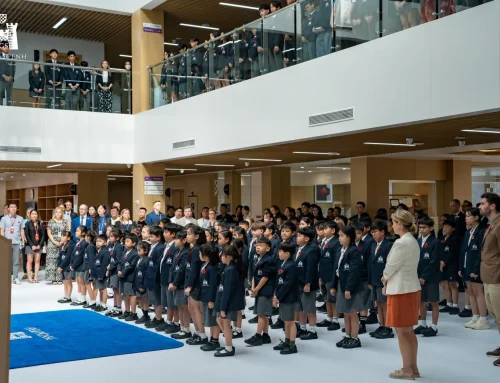
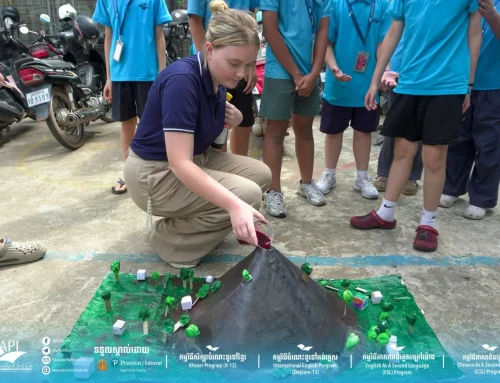
Photographs accompanying the announcement show an audience gathered in front of a STEM Day presentation and participants in laboratory coats working with materials at a demonstration table. The images illustrate the practical and collaborative atmosphere described in the post, although they do not establish which experiments each year group completed.
Why hands-on STEM learning matters
STEM stands for science, technology, engineering and mathematics. In primary education, STEM activities can help children connect classroom concepts with things they can see, test and explain. A simple experiment may introduce observation and measurement, while a design challenge can encourage students to compare solutions and revise their ideas.
The value of practical work depends on how teachers structure it. Asking students to predict an outcome, describe evidence and explain unexpected results can turn an entertaining activity into a meaningful learning experience. Discussion after an experiment is particularly useful because it helps children put their observations into words.
Group challenges offer another dimension. Students must often share materials, listen to different proposals and decide how to approach a task. These opportunities can develop communication and cooperation alongside subject knowledge. Teachers can support participation by giving students clear roles and ensuring that every team member has a way to contribute.
Family participation and curiosity in science
The involvement of parents in the Lower Elementary activities is a notable feature of the CIA FIRST International School STEM Day announcement. When families participate in school learning events, they can see how children approach unfamiliar tasks and what questions capture their interest.
Parents can extend this curiosity at home without specialised equipment. Comparing which household objects float, observing how shadows change or measuring plant growth can provide opportunities to practise prediction and observation. Adult supervision and age-appropriate materials remain important, especially when children are handling liquids, small objects or tools.
For educators, events like STEM Day also provide a chance to observe how students respond to practical challenges. Some children may enjoy presenting findings, while others show their understanding through building, drawing or testing. Offering different ways to participate can make science activities more accessible.
CIA FIRST announces Semester 2 admissions
Alongside the STEM Day update, CIA FIRST International School announced that Semester 2 admissions are open across all its campuses. The Facebook post did not include application deadlines, tuition details or specific enrolment requirements. Families interested in applying should seek current admissions information directly from the school.
The CIA FIRST International School STEM Day post offers a snapshot of students experimenting, collaborating and engaging with science alongside their families. Its emphasis on hands-on activities and teamwork shows how a school event can create opportunities to practise inquiry and problem-solving in an active setting.
If the information about this school is inaccurate or incomplete, Contact Us.
Would you like to register your school? Click Here.
Leave A Comment