
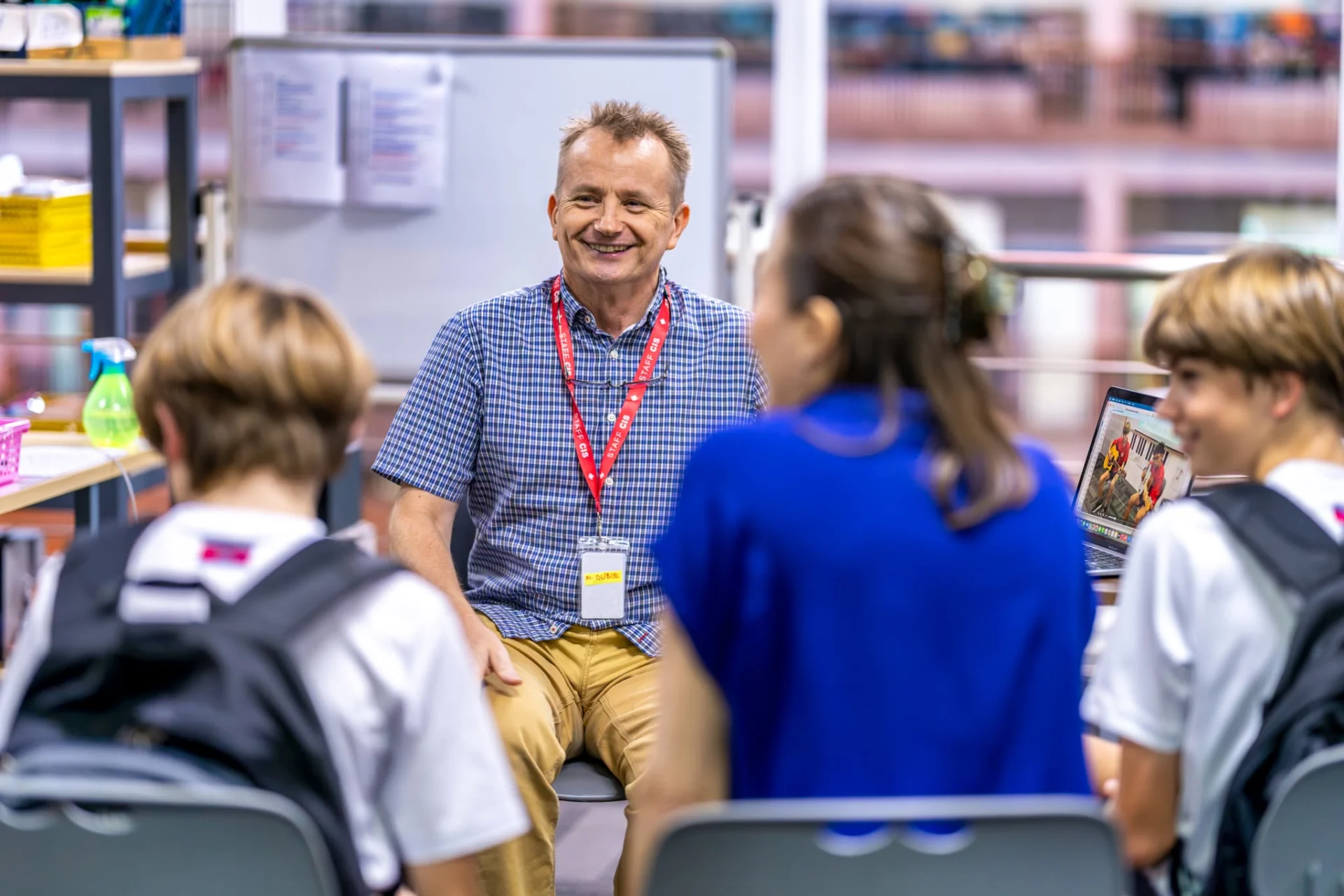

Canadian International School of Phnom Penh (CIS) recently shared an update about its Parent-Teacher Conferences, describing how meetings between families and educators help them discuss students’ academic progress and learning experiences. The school thanked parents who attended and emphasised the importance of working together to support each child’s continued development. The CIS Phnom Penh Parent-Teacher Conferences offer a useful example of the role regular communication can play in school life.
What CIS Phnom Penh shared about its Parent-Teacher Conferences

In its Facebook announcement, Canadian International School of Phnom Penh explained that the conferences give parents an opportunity to meet teachers, exchange information and discuss their children’s learning. The accompanying photographs show adults in conversation with teachers in classroom settings, with laptops and learning materials visible on desks.
The post focuses on collaboration between home and school. It does not specify the year groups involved, the precise conference date, individual student results or any decisions reached during the meetings. Those details should not be assumed from the photographs or the general description.
CIS thanked the families who participated. The message presents the conferences as an opportunity for parents and teachers to share insights, rather than as a report of examination scores or a particular school-wide academic outcome.
Why parent-teacher communication matters
Parent-teacher conferences can bring together two perspectives on a student’s education. Teachers can explain classroom expectations, learning activities and observed progress. Parents can share information about their child’s interests, study habits, questions and experiences at home. Comparing these perspectives may help adults identify practical ways to support learning.
Academic progress is broader than a single test result. A useful conversation may consider how a student approaches assignments, participates in lessons, manages routines and responds to feedback. Discussing examples can help families understand what is going well and where additional practice or clarification may be helpful.
Regular communication also creates an opportunity to address small concerns before they become harder to manage. For example, if a student finds homework instructions confusing, parents and teachers can discuss whether clearer directions or a consistent communication method would help. This is a general example, not a concern reported by CIS.
How families can prepare for a school conference
Parents attending a conference may find it useful to review recent schoolwork and prepare a few specific questions. Asking what a child is learning, which skills are developing and what can be practised at home can lead to clearer answers than asking only whether the child is doing well.
It can also help to ask teachers for examples of progress and to clarify any recommendations before leaving. If a particular strategy is suggested, families can discuss how it fits their routines and when progress might be reviewed. A short record of agreed next steps can make later conversations more focused.
Teachers, meanwhile, can support productive meetings by using accessible language, showing examples where appropriate and allowing time for parents to raise concerns. Respectful two-way discussion helps ensure that both parties understand the student’s needs and the actions being considered.
CIS Phnom Penh contact information
Families seeking information about Canadian International School of Phnom Penh can use the contact details included in the school’s post: telephone +855 61 666 780 and email admissions@cisp.edu.kh. The school also directs readers to its official website for further information.
The CIS Phnom Penh Parent-Teacher Conferences update reinforces a practical message: conversations about learning work best when parents and teachers exchange specific observations, listen to each other and agree on realistic ways to support students. The school’s post acknowledges the families who took part in that process.
If the information about this school is inaccurate or incomplete, Contact Us.
Would you like to register your school? Click Here.

Leave A Comment