

As schools in Cambodia become increasingly aware of different learning and developmental needs, one issue is becoming particularly important: schools cannot always provide every form of specialist support internally.

Students may require help from classroom teachers, SENCOs, special education teachers, speech and language therapists, occupational therapists, learning support staff, and other professionals.
Building stronger connections between these professionals can therefore play an important role in developing effective SEN support in Cambodia.
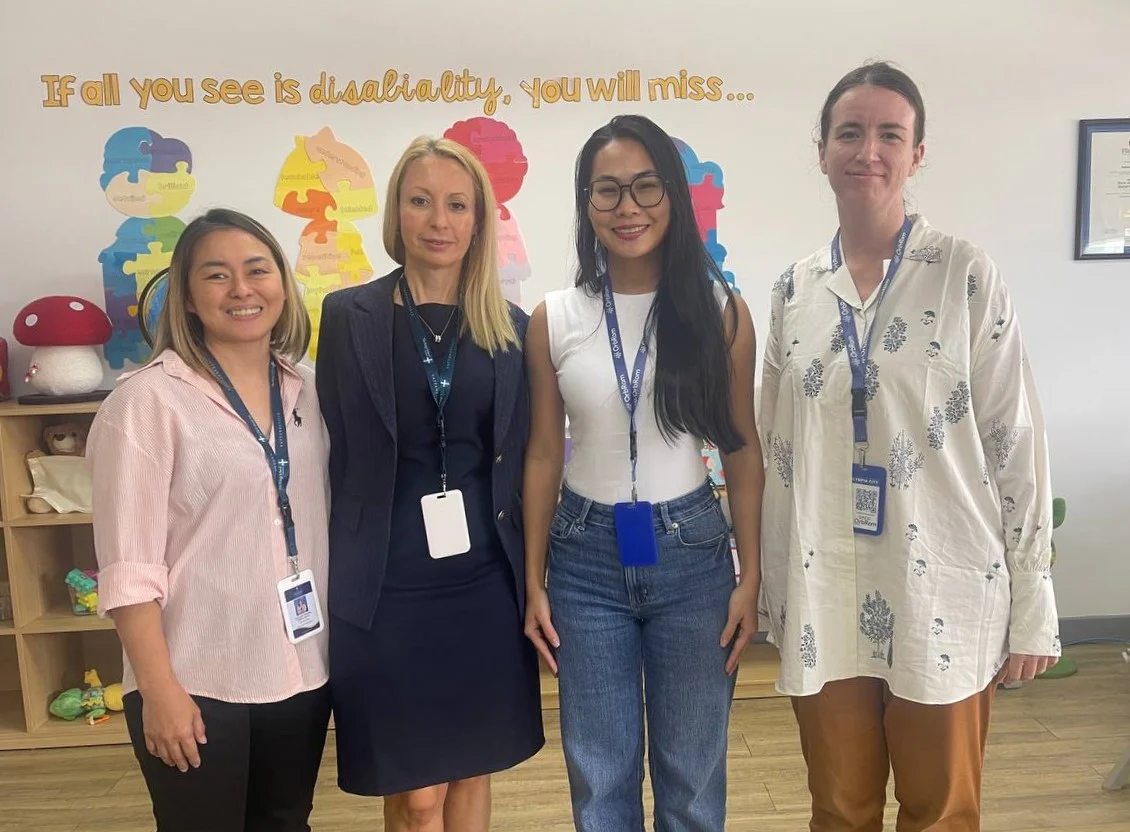
A recent meeting between The King’s School, Vattanacville and OrbRom Center provides a practical example of this type of professional connection.
Representatives included Danijela Pop-Jovanov, Deputy Principal, and Kenneth Rivera, SENCO and Designated Safeguarding Lead (DSL) from The King’s School. The discussion explored possible collaboration and approaches to supporting students with diverse educational needs.
The full meeting and discussion are covered by OrbRom Center in The King’s School & OrbRom Explore Collaboration for Inclusion.
Why School Partnerships Matter for SEN Support
Schools are often the first place where learning, communication, behavioral, social, or developmental difficulties become noticeable.
Teachers may observe that a student struggles to follow classroom instructions, communicate effectively, maintain attention, participate socially, complete academic work, or manage everyday classroom routines.
However, identifying a difficulty does not always explain why the student is struggling.
This is where collaboration with specialist professionals can become valuable.
A school may refer a student for further assessment, request specialist observations, discuss classroom strategies, or coordinate intervention goals with professionals working outside the school.
The purpose is not to move responsibility away from the classroom. Instead, it is to give teachers and families better information about how to support the student.
The Role of the SENCO
The Special Educational Needs Coordinator (SENCO) can be central to this process.
Depending on the school’s structure, the SENCO may help identify students requiring additional support, coordinate interventions, communicate with parents and teachers, monitor progress, and determine when external professional input may be appropriate.
This position can also serve as an important connection between classroom practice and specialist services.
For example, recommendations from a speech therapist or occupational therapist have greater educational value when relevant strategies can also be incorporated into the student’s school day.
Similarly, information from teachers can help specialists understand how a child functions in a real classroom rather than relying only on observations made during individual sessions.
Moving From Referral to Coordinated Support
Effective SEN support in Cambodia should not end with a referral.
Assessment, intervention, classroom support, and communication should form part of a connected process.
If an assessment identifies difficulties with language, adaptive functioning, academic skills, attention, sensory processing, or motor development, the findings should help guide practical decisions.
Schools and specialists can then determine which accommodations, interventions, learning goals, or environmental changes may be appropriate.
Regular communication also allows professionals to evaluate whether those strategies are actually helping.
Building Professional Connections Across Cambodia
As Cambodia’s education sector continues to develop, stronger professional networks between schools and specialist providers can help expand the support available to children with additional needs.
Not every school needs to provide every specialist service internally. What matters is having systems for recognizing concerns, communicating with families, accessing appropriate professional expertise, and applying useful recommendations within the educational environment.
Meetings such as the recent discussion between The King’s School, Vattanacville and OrbRom Center contribute to this process by creating opportunities for educators and specialists to understand each other’s work and explore areas where cooperation may benefit students.
For more information about their discussion on inclusion, safeguarding, learning support, and possible future collaboration, read the full OrbRom Center article.


Leave A Comment