

Supporting students with diverse learning needs increasingly requires cooperation beyond the classroom. School and specialist collaboration in Cambodia can connect teachers, families, therapists, and special education professionals so that children receive more consistent support across different environments.

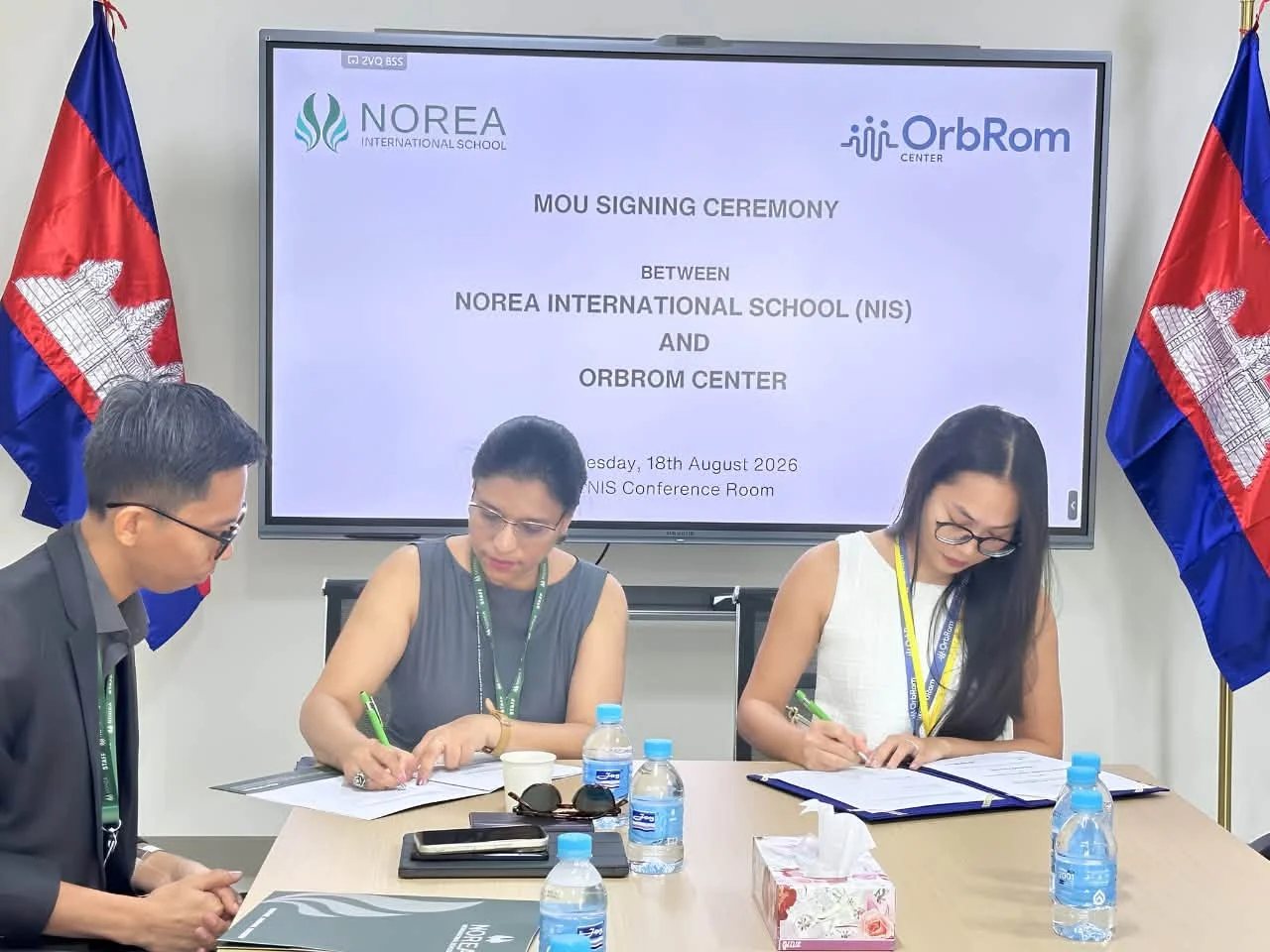
A recent example is the Memorandum of Understanding (MoU) between Norea International School and OrbRom Center. Rather than viewing specialized services and mainstream education as separate systems, partnerships like this can create stronger connections between the professionals responsible for a child’s learning and development.
Why School and Specialist Collaboration in Cambodia Matters
A child’s needs do not disappear when they move from a therapy session into a classroom.
A student who has difficulty communicating may require strategies that can be reinforced both during specialist sessions and at school. Another child may communicate effectively one-to-one but struggle with group instructions, transitions, sensory demands, attention, or peer interaction in the classroom.
When professionals work independently, each may see only one part of the child’s performance. Collaboration allows information from different environments to be considered together.
For example, teachers can provide valuable information about classroom participation, academic demands, friendships and behavior during group activities. Specialists can contribute knowledge about communication, sensory processing, developmental skills and individualized intervention strategies.
The objective is not for specialists to replace teachers or for schools to become therapy centers. Each professional maintains a different role while contributing to shared educational goals.
Building More Inclusive Learning Environments
Cambodia’s education sector continues to develop its approach to students with different learning and developmental needs. An important part of this development is creating practical systems that allow children to participate in education while receiving appropriate support.
Inclusive education in Cambodia requires more than placing a child with additional needs into a mainstream classroom. Schools must consider whether the student can access instruction, communicate effectively, participate socially and manage the expectations of the school environment.
For some students, additional professional support may be necessary to develop these skills.
This is where cooperation between schools and specialized organizations can be particularly useful. A specialist may help identify barriers to participation while educators determine how recommendations can realistically be incorporated into everyday classroom routines.
Norea International School and OrbRom Center Formalize Collaboration
The MoU between Norea International School and OrbRom Center provides a practical example of this type of cooperation.
Both organizations have expressed a commitment to diversity, inclusion, student wellbeing and supporting children as individuals. Formalizing the relationship creates a foundation for closer professional communication and coordinated student support.
OrbRom Center provides specialized services for children with additional developmental and educational needs, including special needs intensive intervention. Its work can complement the educational support provided within schools when a child requires more individualized intervention.
Partnerships can also help families navigate the often complicated relationship between school performance and developmental support. Instead of receiving disconnected recommendations, parents can benefit when the professionals involved understand each other’s objectives.
A Collaborative Direction for Education in Cambodia
No single school, therapist, teacher or specialist can address every aspect of a child’s development. Stronger professional networks can help close the gaps between assessment, intervention and everyday education.
The Norea International School and OrbRom Center MoU is one example of how organizations can establish these connections.
As Cambodia continues strengthening educational opportunities for students with diverse needs, school and specialist collaboration in Cambodia can contribute to a more coordinated model—one in which schools, specialists and families share information, establish realistic goals and work toward meaningful participation for every student.


Leave A Comment