
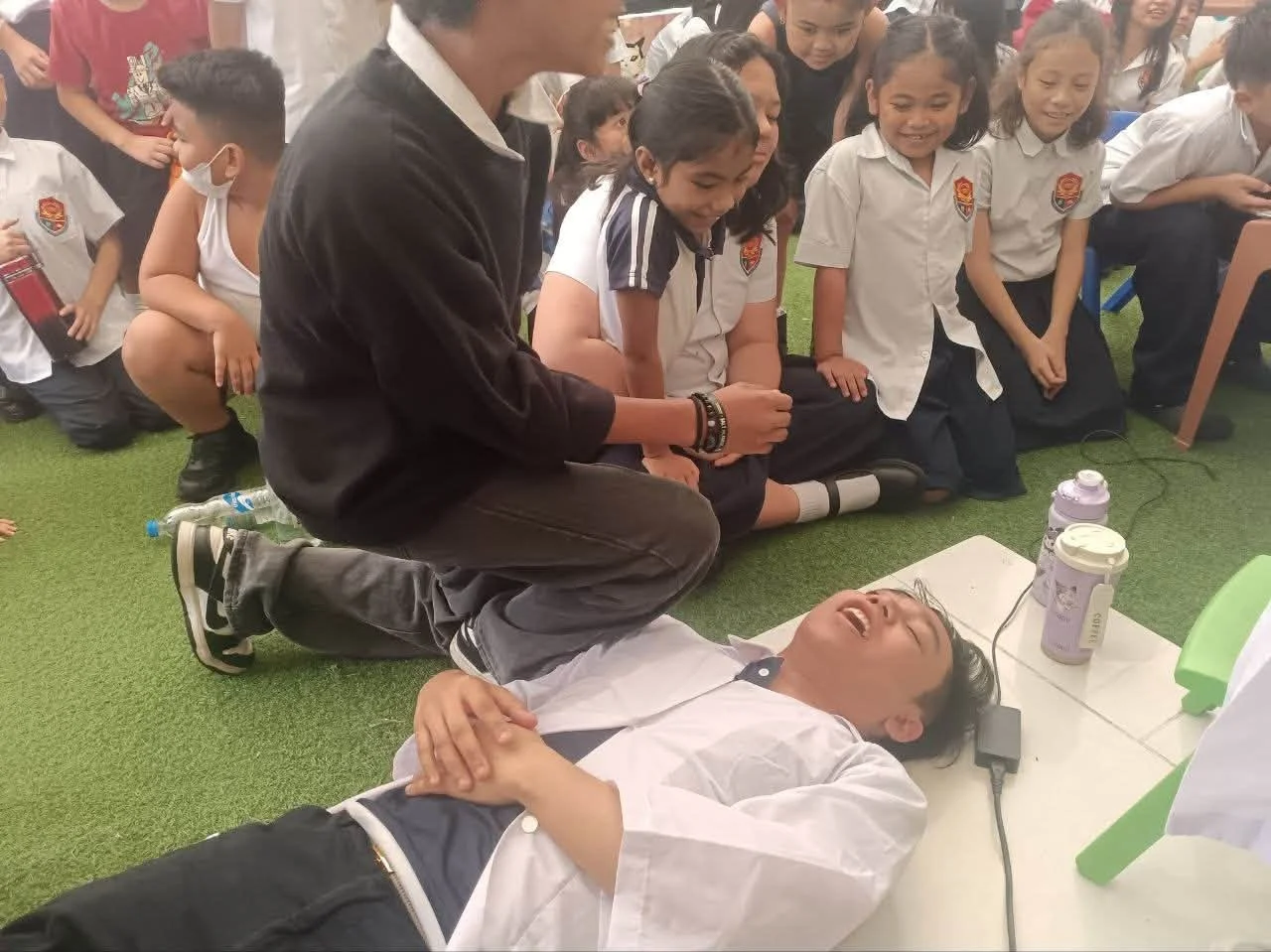
Philippine International School of Phnom Penh (PISPP) recently organised basic first aid training for students, introducing practical knowledge about responding to emergencies and recognising when someone needs immediate help. The school shared photographs of students participating in demonstrations and learning activities as part of its wider approach to life skills education.

According to the school’s Facebook announcement, the training was organised by school nurse Karter Castaneda and Dr. Mery Jean Tiauzon, the school principal, with support from faculty members. The school described the activity as an opportunity to develop preparedness, compassion and responsibility.
Basic first aid training at Philippine International School of Phnom Penh
The session introduced students to basic first aid knowledge, emergency response awareness and the importance of recognising situations in which someone needs assistance. The photographs show a student practising a response technique on another participant while others observe.
The images also show instructional material covering an initial assessment of an emergency situation, including checking responsiveness and breathing. These are important concepts for helping students understand that an emergency response begins with assessing safety and identifying the need for qualified assistance.
The Facebook post does not specify the students’ grade levels, the duration of the training or whether any formal certification was provided. It also does not establish that participants became qualified first aid providers.
Why emergency awareness matters in schools
Learning how to recognise an emergency can help students respond more thoughtfully when a classmate, family member or another person becomes unwell or injured. Age-appropriate first aid education can introduce the importance of staying calm, alerting an adult and contacting emergency services when necessary.
Practical demonstrations also give learners an opportunity to ask questions and discuss what they should do in unfamiliar situations. Such activities are particularly useful when teachers reinforce the distinction between actions students can safely take and procedures that require trained adults or healthcare professionals.
First aid instruction should follow current recognised guidance and be delivered with suitable supervision. Students should never assume that a classroom demonstration replaces professional medical training or emergency care.
Connecting classroom learning with everyday responsibility
PISPP presented the training as part of its commitment to holistic education. In the school’s account, learning beyond academic subjects helps students develop confidence and responsibility in real-life situations.
First aid awareness can also support discussion about empathy and community care. When students learn to recognise that another person may need help, they can consider how to communicate clearly, seek appropriate support and avoid actions that could increase risk.
These lessons complement academic learning by linking knowledge to decisions students may encounter at school, at home or in public spaces. They can also create opportunities for teachers and families to discuss emergency contacts and safe responses.
Questions parents can ask about first aid education
Parents interested in school safety activities can ask whether first aid awareness is included in the curriculum, how frequently practical sessions are offered and whether instruction is adapted to students’ ages.
It is also useful to ask about staff first aid qualifications, the school’s emergency response procedures and how families are notified when an incident occurs. These questions help distinguish introductory student activities from the operational safety arrangements a school needs.
The basic first aid training at Philippine International School of Phnom Penh illustrates how schools can introduce emergency awareness through supervised learning activities. The school’s account emphasises preparation, responsibility and helping others while recognising that students are still developing their skills.
If the information about this school is inaccurate or incomplete, Contact Us.
Would you like to register your school? Click Here.
Leave A Comment