
How occupational therapy for children supports everyday development

Occupational therapy for children helps develop the physical, sensory, and practical skills needed for learning, playing, and everyday independence. At OrbRom Center in Phnom Penh, Cambodia, pediatric occupational therapists use structured, play-based activities to support children with different developmental and learning needs.

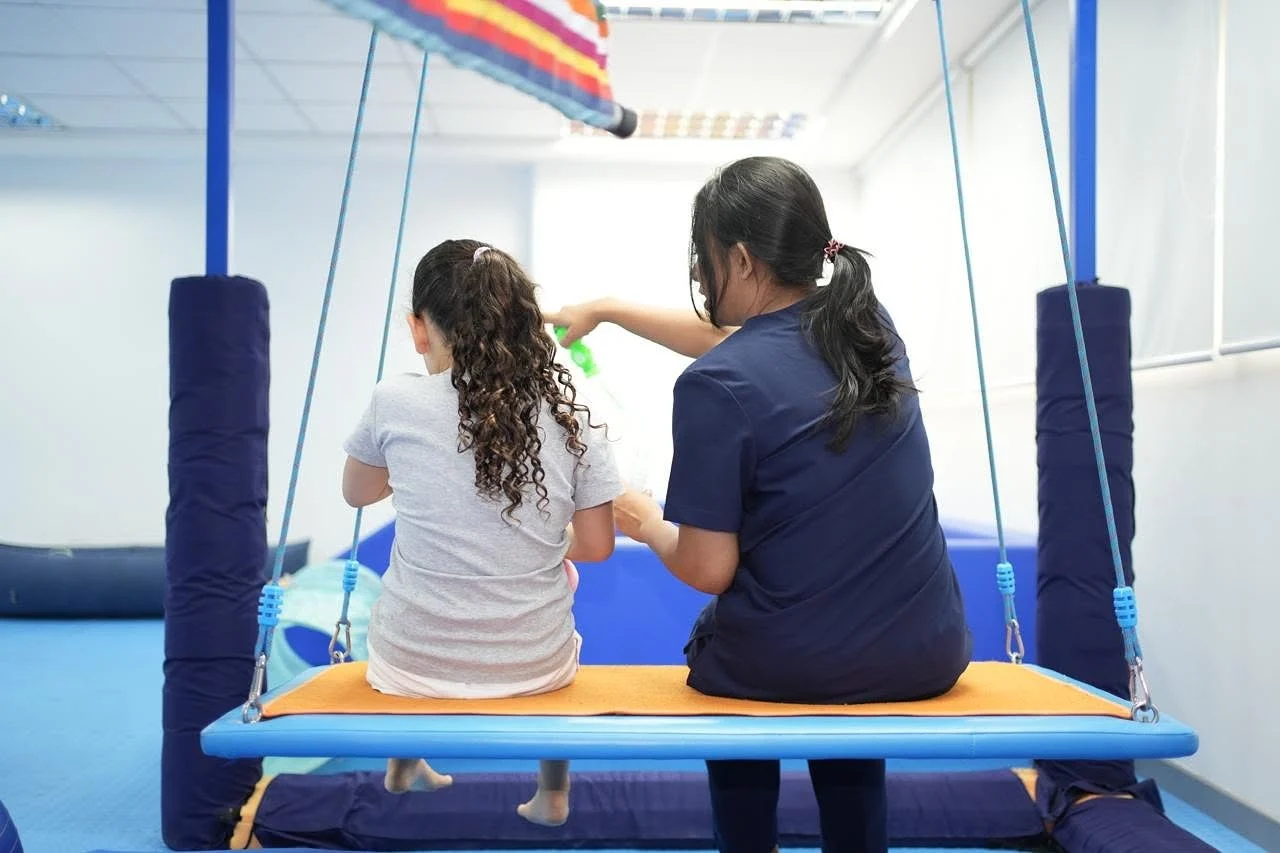
A recent Facebook post shared by Special Education Cambodia offers a look inside an occupational therapy session at OrbRom Center. The photograph shows a child using a sensory swing under the supervision of a therapist, demonstrating how movement can become part of a purposeful intervention.
While swinging may appear to be a simple recreational activity, therapists can use it to address specific developmental goals.
Why sensory swings are used in occupational therapy
Sensory swings are among the tools occupational therapists may incorporate into individualized treatment sessions. They provide controlled movement experiences that stimulate the vestibular system, which contributes to balance and spatial orientation.
Movement also provides opportunities to develop proprioception, the body’s ability to recognize the position and movement of its muscles and joints.
Depending on the child’s needs, therapists may use swinging activities to support:
- Balance and coordination: Practicing postural adjustments during controlled movement.
- Body awareness: Developing an understanding of body position and movement.
- Motor planning: Learning to organize movements to complete an activity.
- Core stability: Practicing the trunk control needed for sitting, playing, and participating in classroom tasks.
- Sensory regulation: Exploring appropriate movement experiences that may help children manage sensory input.
These activities require professional assessment and supervision. The type, direction, speed, and duration of movement should be selected according to each child’s responses and therapeutic goals.
Occupational therapy for children with autism and developmental delays
Children with autism, ADHD, sensory processing difficulties, or developmental delays may experience challenges that affect their participation in school and daily routines.
Some children struggle to remain seated during lessons, coordinate movements, manage clothing fasteners, or tolerate certain sensory experiences. Others have difficulty organizing the steps required to complete familiar activities.
At OrbRom Center, occupational therapy sessions focus on identifying these functional difficulties and developing practical skills through individualized intervention.
For example, a therapist may combine movement activities with reaching, grasping, sequencing, or balance tasks. The aim is to help children practice skills that can also be applied outside the therapy room.
Importantly, sensory activities do not produce identical results for every child. Therapists monitor individual responses and adjust activities accordingly.
Connecting occupational therapy with classroom learning
Occupational therapy for children can support participation in educational settings by addressing underlying motor, sensory, and self-care difficulties.
A child who struggles with postural control may find extended tabletop activities tiring. Another child may need additional support with motor planning to navigate playground equipment or complete classroom routines.
Occupational therapists can work with parents and teachers to identify appropriate strategies, establish realistic goals, and encourage opportunities for practicing skills across environments.
These strategies may include movement breaks, adapted classroom materials, positioning adjustments, and structured practice of everyday tasks.
Collaboration is especially useful because children need opportunities to apply newly acquired skills during ordinary activities, rather than only during therapy sessions.
Supporting independence through occupational therapy in Phnom Penh
At OrbRom Center, occupational therapy forms part of the center’s broader services for children with special educational and developmental needs.
The center provides support that may include occupational therapy, speech therapy, early intervention, and specialized learning programs.
For families exploring occupational therapy for children in Phnom Penh, the most useful starting point is an individualized assessment that identifies the child’s functional strengths, difficulties, and priorities.
When activities are matched to meaningful goals, movement and play can provide valuable opportunities to practice skills that support participation at home, at school, and in the community.
If information about this center is inaccurate or incomplete, contact us.
Would you like to register your school or education center? Click Here.

Leave A Comment