
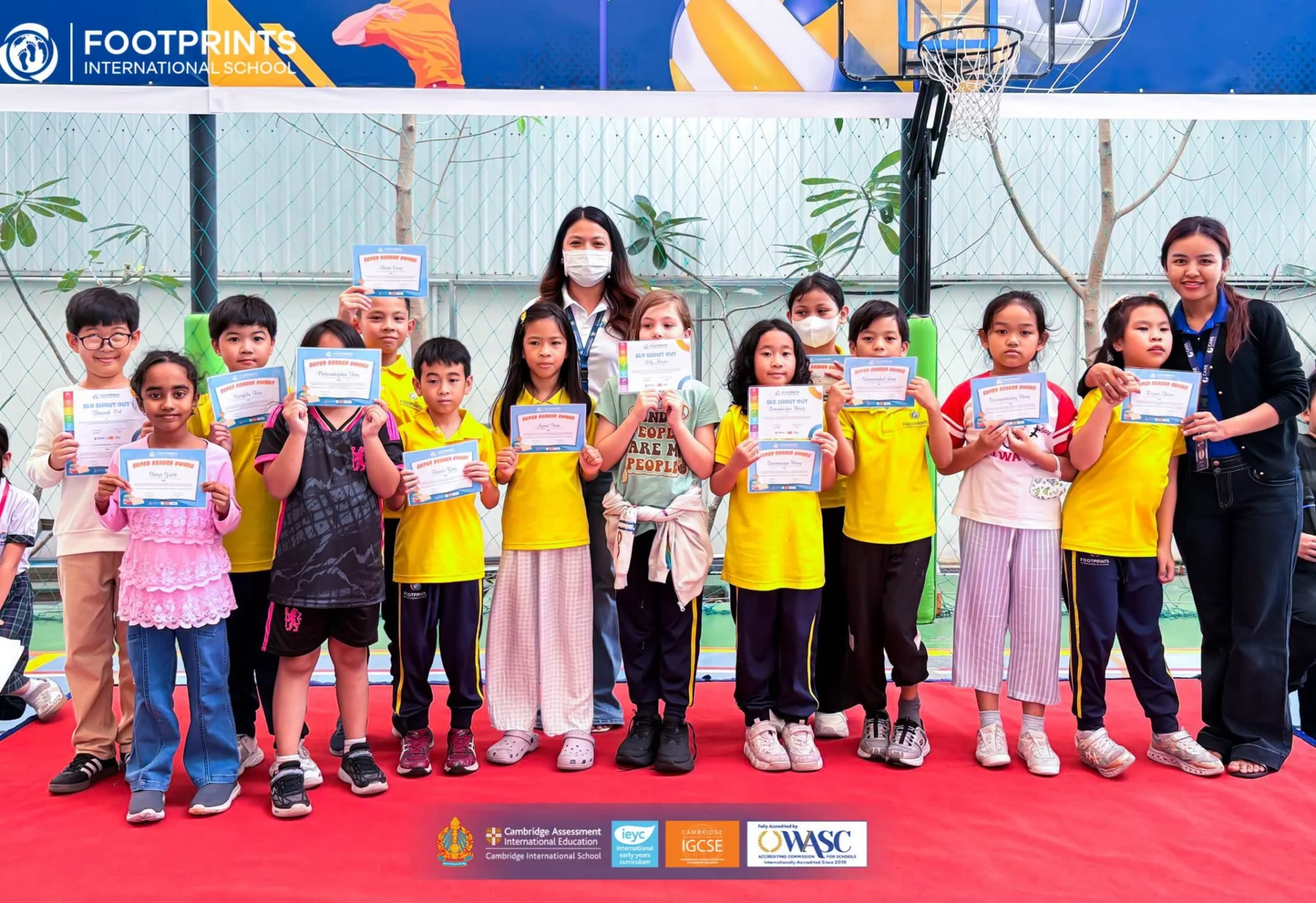

Primary students at Footprints International School led an assembly celebrating La Francophonie ahead of Cambodia’s hosting of the 20th Francophonie Summit. According to the school’s Facebook post, La Francophonie at Footprints International School gave students a chance to explore French-speaking countries, share cultural traditions, learn French expressions and take part in a trivia challenge. The school’s photos show groups of children holding certificates.
What students did at the La Francophonie assembly

The assembly brought together several ways of learning about language. Exploring countries gave students a geographic starting point, while sharing traditions made room for examples from everyday life. Learning expressions added a chance to try some French, and trivia gave students a way to revisit what they had heard. The school’s post did not list the countries, expressions or questions featured in the assembly.
The student-led format also gave primary students a role in sharing the material with others. Preparing to explain a tradition or introduce a new expression to classmates calls for choices about what to say and how to make it clear. For example, a short demonstration of a greeting can show when someone might use it, while a map can help an audience locate a place mentioned in a presentation.
How Cambodia’s Francophonie Summit connects to the assembly
The official summit programme lists the 20th Francophonie Summit for 15–16 November 2026 in Phnom Penh. A ministerial conference precedes it on 14 November. The summit is the first hosted by Cambodia. Footprints linked its school assembly to that occasion.
For primary students, the summit provides a local starting point for a wider question about how people use languages. A class might begin by locating Phnom Penh and then finding two places where French is spoken. Students can compare what they learn about those places and notice how people may use French alongside other languages. A map helps orient the discussion, while a short story or recording can give children an example of how someone uses a language in a particular setting.
Ways to continue the learning after an assembly
Teachers can ask pairs to choose one French expression and show when they would use it. A student might say bonjour as they enter a room and then ask a partner to respond. A child who prefers to speak later can first choose a picture that matches the situation or rehearse the greeting with a partner before trying it with the group.
A follow-up quiz can also ask students to explain their answers. If the question is where a particular place is, a student can point to the map and describe what helped them find it. When discussing a tradition, a class can identify whose example it is and where it comes from. This helps students talk about a specific practice without assuming that everyone in a country follows it.
At home, families can invite children to share one thing they remember from La Francophonie at Footprints International School. They could teach someone a greeting, locate a place mentioned in the assembly or make up a quiz question of their own. Asking the child to explain when the greeting is used or why the quiz answer is correct gives them another chance to put what they learned into words.
If the information about this school is inaccurate or incomplete, Contact Us.
Would you like to register your school? Click Here.
Leave A Comment