
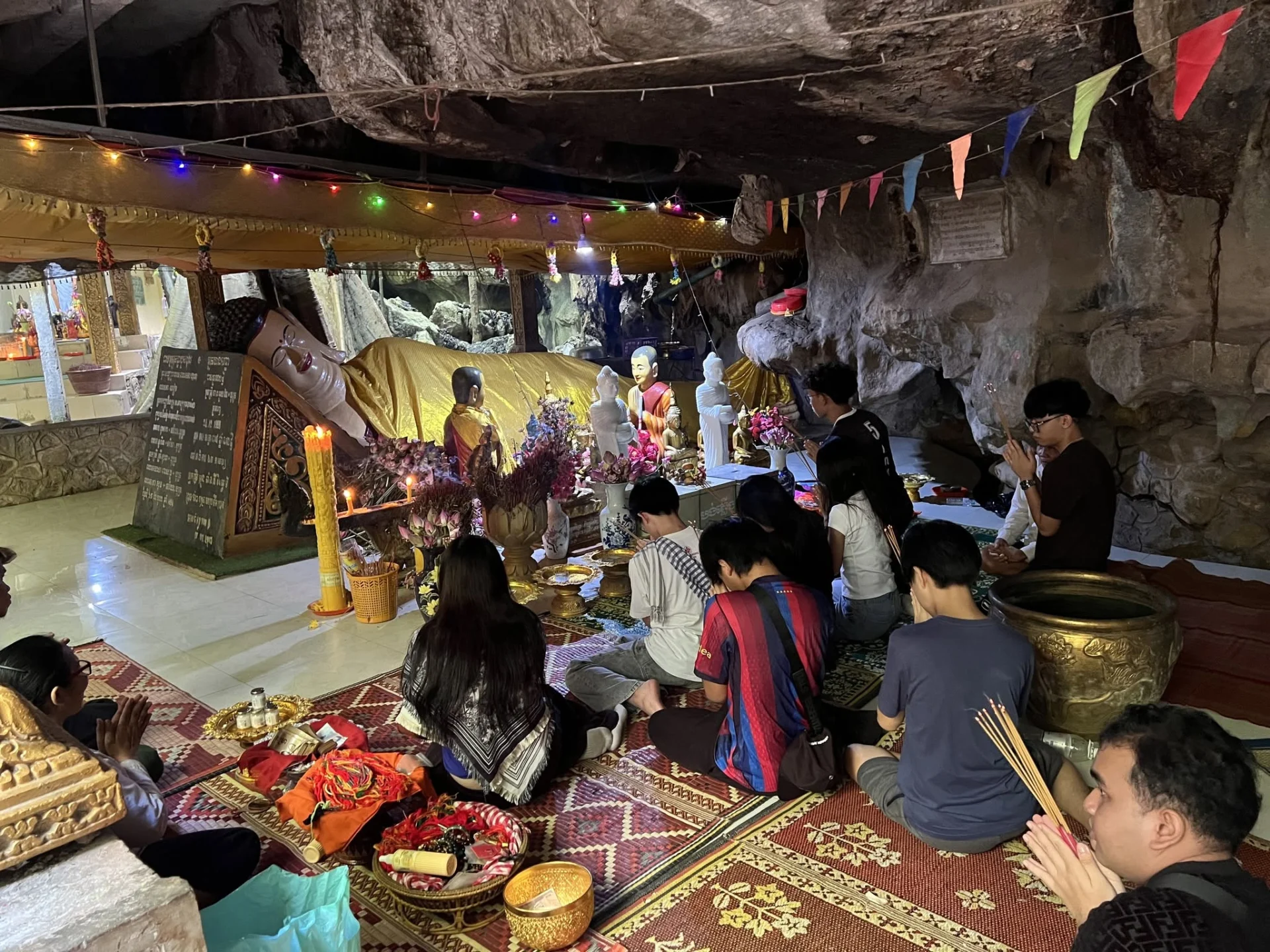

Harrods International Academy took secondary students to Kompong Trach Mountain in Kampot province during the first day of its Week Without Walls trip. In a Facebook update shared on 3 November, the school described visits to Dragon Cave and Crocodile Cave and views of Cambodia’s rice fields. The update was labelled Part 2 of the first day’s activities. The school also shared the same account of the visit on LinkedIn.
What Harrods International Academy students saw in Kampot

The two caves were the main stops named in the school’s update. Photographs show students gathered below steep rock walls and visiting a cave area with a shrine. Other images show the group beneath a low rock overhang. The school also mentioned views of rice fields, which gave students a chance to see the flatter landscape around the mountain.
The school uses the spelling Kompong Trach, while the Tourism Cambodia guide to the area uses Kampong Trach. The guide describes limestone hills rising above the rice fields in eastern Kampot. It also describes an open chamber formed when part of a cave roof collapsed. That detail gives readers a way to picture why a visit can include both enclosed passages and spaces where daylight reaches the rock walls.
Connecting caves and rice fields to geography
For a secondary geography class, Kompong Trach offers a concrete example of how different landforms sit next to one another. A teacher could use a photograph or a map to ask students to mark where steep limestone meets flatter land. Students could compare the shapes of the cave openings, the rock faces and the fields, then describe what they could see from each location.
A short follow-up task could ask students to separate observations from explanations. A student might observe that one cave area received daylight and another looked much darker. Explaining where the light came from would require looking for an opening or comparing photographs from different positions. The same approach works with the rice fields. Seeing where they lie is a starting point for asking what a map or another source can tell students about water and land use.
Discussing cultural spaces during school field trips
The photographs of the shrine offer a starting point for discussing how people use natural spaces. Before visiting a similar site, a teacher could ask students to look for posted instructions and check with a guide or site attendant before photographing people or objects used in worship. Afterward, students could describe what they observed and identify any questions that would be better answered by someone familiar with the site.
Parents reviewing an outdoor learning trip can ask what students will see, what they should bring and whether the route includes uneven ground or low passages. They can also ask how the school plans for students who need help with mobility or who find enclosed spaces difficult. Those details give families a clearer picture of what participation will involve.
Harrods International Academy’s Week Without Walls update documents one part of the secondary students’ first day in Kampot. Dragon Cave, Crocodile Cave and the surrounding rice fields give teachers and families specific places to discuss when students describe what they saw and what they would like to learn about the area.
If the information about this school is inaccurate or incomplete, Contact Us.
Would you like to register your school? Click Here.

Leave A Comment