
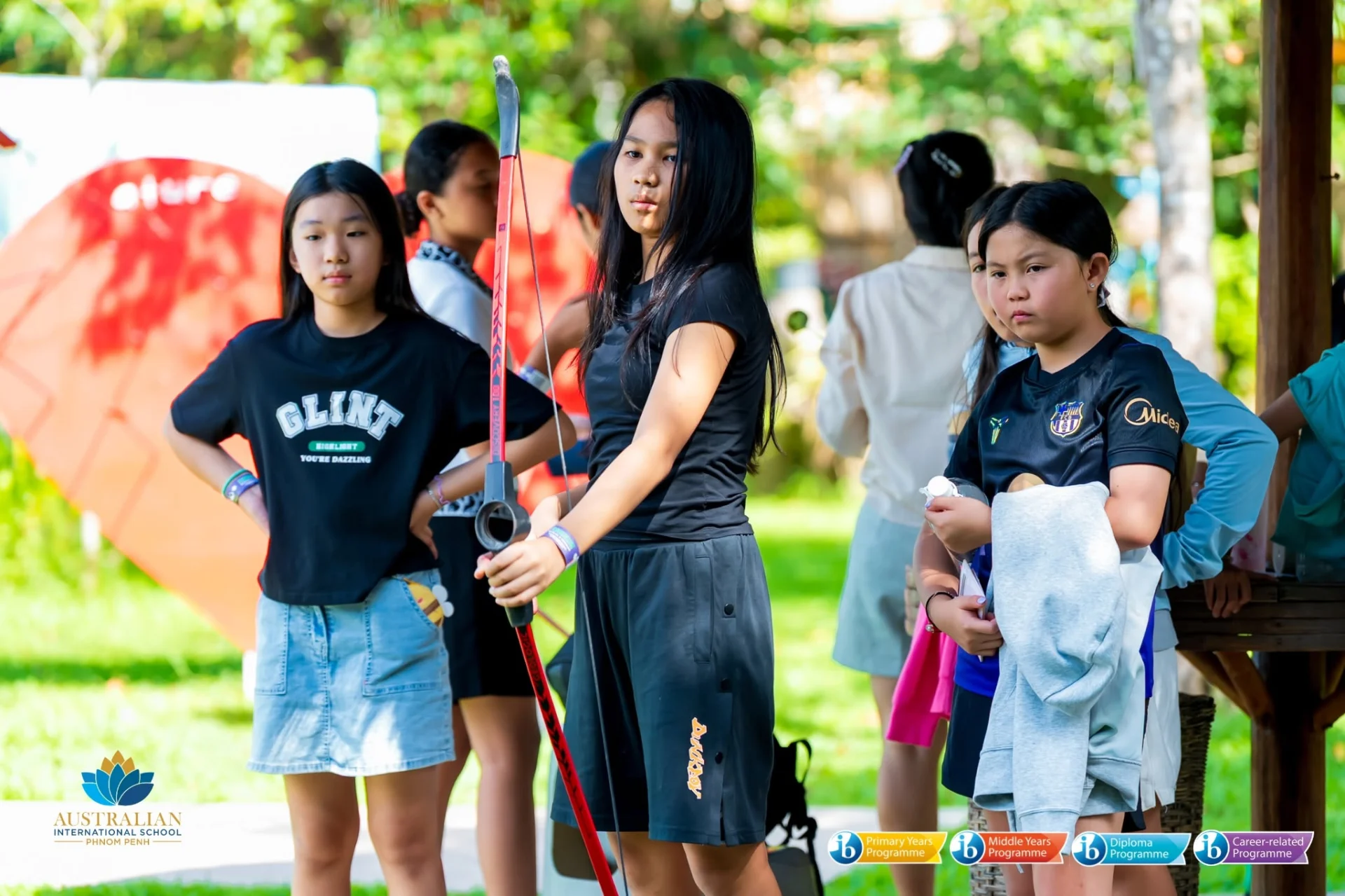
Year 5 students from the Australian International School Phnom Penh (AISPP) concluded a three-day educational adventure with a morning visit to Angkor Wildlife & Aquarium before returning to Phnom Penh. In its latest school update, AISPP shared how the trip gave students opportunities to explore unfamiliar environments, develop independence and strengthen friendships.

Exploring Angkor Wildlife & Aquarium
The final morning of the trip introduced students to wildlife and underwater environments. Visiting an aquarium offers children an opportunity to observe living organisms and consider how animals interact with their surroundings outside the usual classroom setting.

Such experiences can complement classroom science by giving students concrete examples of concepts they encounter in lessons. Observing animals can prompt questions about habitats, adaptations, feeding habits and the conditions different species need to survive.
Although the school’s announcement did not identify the individual species encountered during the visit, photographs shared by AISPP documented the group’s final day of activities.
Developing independence through school trips

According to AISPP, the three-day experience encouraged Year 5 learners to step outside their comfort zones and become more independent. Spending time away from familiar school and home routines can provide opportunities for primary students to practise managing their belongings, following schedules and taking responsibility for everyday decisions.
Educational trips can also help children become more comfortable adapting to unfamiliar situations. With appropriate adult guidance, students can practise asking for help, communicating their needs and responding to changes in their environment.
These experiences complement academic learning by allowing children to apply practical skills in settings where the routines and expectations differ from those of a regular school day.
Strengthening friendships and social skills
AISPP also described stronger friendships as one of the outcomes of the Year 5 adventure. Shared experiences outside school can give students additional opportunities to interact with classmates, cooperate and learn more about one another.
Group activities encourage children to listen, share responsibilities and consider different perspectives. They can also create opportunities for students who do not regularly work together in class to establish new connections.
After returning home, children may enjoy discussing their experiences with family members. Recalling an activity, describing an observation or explaining how they overcame a challenge can support communication and reflection.
Experiential learning in primary education
School excursions are one way educators can connect academic concepts with practical experiences. Their educational value can be strengthened when students have opportunities to ask questions before a visit, make observations during activities and reflect on their learning afterwards.
For parents comparing primary schools in Cambodia, questions about educational excursions may include how activities relate to the curriculum, how supervision is organised and how schools accommodate individual student needs. These considerations can help families understand how learning outside the classroom fits into a school’s broader educational approach.
Australian International School Phnom Penh admissions
AISPP announced that admissions are open and invited prospective families to visit the school from Monday to Friday, between 8:00 AM and 4:30 PM.
For admissions enquiries, contact 011 888 301 or 016 273 888. Families can also follow the school’s official Telegram channel for updates.
Explore more school activities and education news on Education Cambodia.
Source: Australian International School Phnom Penh, official Facebook update.
Leave A Comment