
Speech therapy through play is becoming one of the most effective approaches to supporting children’s communication development, and the recent insights shared by OrbRom Learning Support Center highlight exactly why this method works so well. Instead of relying on traditional, rigid teaching methods, therapists are creating meaningful, engaging experiences that naturally build language, confidence, and social interaction.

At OrbRom Learning Support Center, speech therapy through play is not just an activity—it is a carefully designed, evidence-based intervention. By entering the child’s world and using toys, storytelling, and imaginative scenarios, therapists create opportunities for real communication that feel natural rather than forced.
Why Speech Therapy Through Play Matters
Children learn best when they are engaged. This is a fundamental principle in both education and therapy. When a child is playing, they are more relaxed, motivated, and open to interaction. This creates the ideal environment for developing speech and language skills.
Speech therapy through play allows children to:
- Express themselves without pressure
- Practice language in real-life contexts
- Build confidence through successful interactions
Instead of memorizing words or repeating phrases, children actively use language with purpose. This leads to deeper learning and better long-term outcomes.
Building Language Through Real Experiences
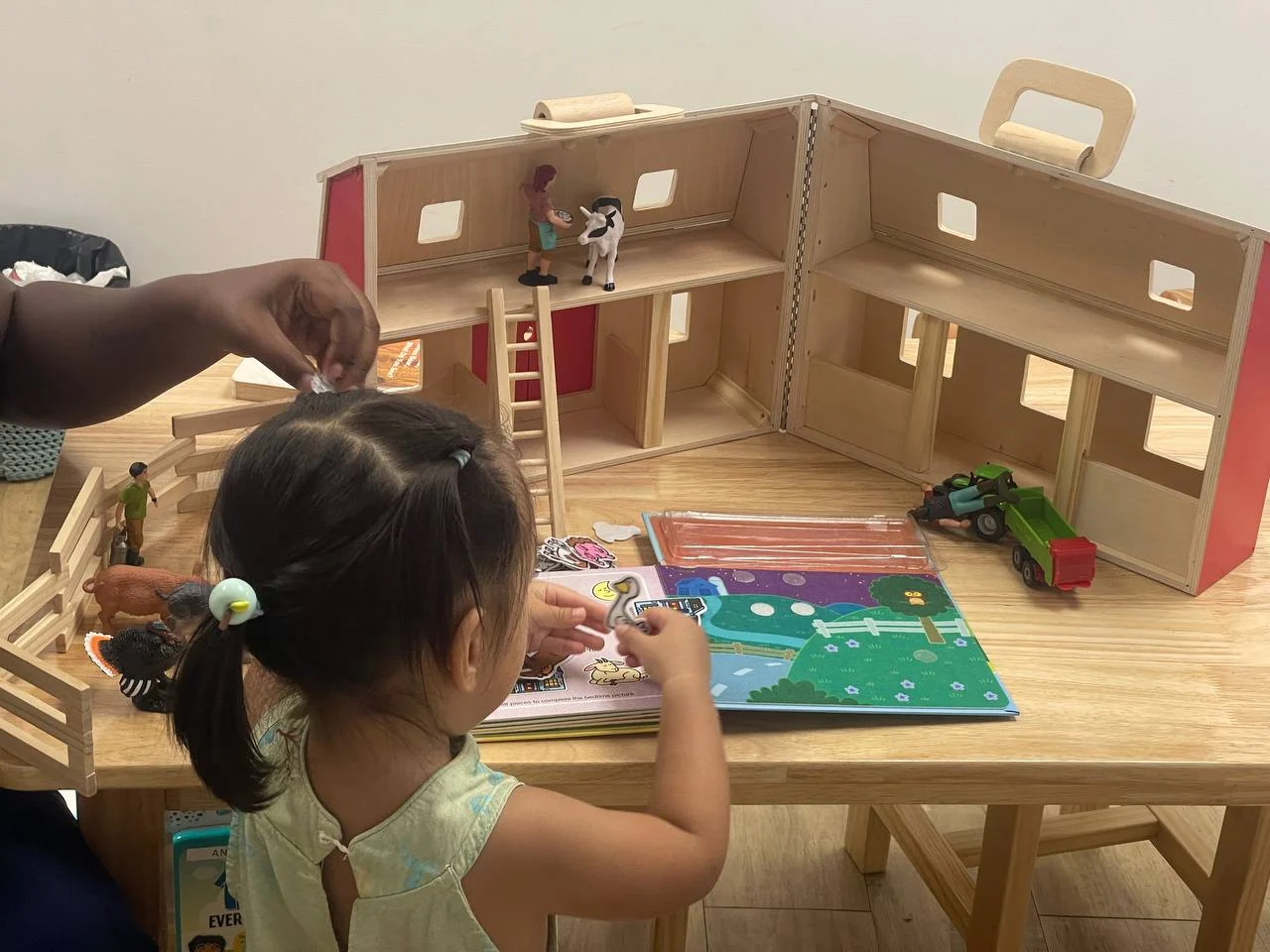
One of the key strengths of speech therapy through play is contextual learning. At OrbRom Learning Support Center, therapists use familiar themes such as farms, animals, or everyday routines to help children understand and use language in meaningful ways.
For example, rather than simply naming objects, children might:
- Describe what is happening (“The cow is in the barn”)
- Ask questions (“Where is the horse?”)
- Follow directions (“Put the pig inside”)
This approach supports vocabulary development, sentence formation, and comprehension simultaneously. It mirrors how language naturally develops in everyday life.
The Role of Storytelling in Communication Development
Storytelling is another powerful component of speech therapy through play. When children interact with books or create their own stories, they begin to understand sequencing, cause and effect, and narrative structure.
At OrbRom Learning Support Center, storytelling activities help children develop:
- Narrative skills (telling simple stories)
- Understanding of concepts (day/night, up/down)
- Emotional expression through characters and situations
These skills are essential not only for communication but also for academic success and social interaction.
Following the Child’s Lead
A defining feature of speech therapy through play is the therapist’s ability to follow the child’s lead. This does not mean the session lacks structure—in fact, it requires a high level of professional skill.
Therapists observe the child’s interests and use them as a foundation for learning. If a child is engaged with a specific toy or activity, the therapist builds language opportunities around it. This increases attention, participation, and motivation.
When children feel understood and supported, they are more likely to:
- Stay engaged for longer periods
- Attempt new words and sentences
- Develop confidence in their communication abilities
More Than Play: A Structured Intervention
While it may look like simple play, speech therapy through play is highly intentional. Each interaction is designed to target specific communication goals, including language development, social communication, and cognitive growth.
At OrbRom Learning Support Center, this approach ensures that every session is both enjoyable and purposeful. Children are not just playing—they are learning how to connect, express themselves, and navigate the world around them.
Final Thoughts on Speech Therapy Through Play
Speech therapy through play offers a powerful, child-centered approach that aligns with how children naturally learn. By combining engagement, creativity, and structured intervention, centers like OrbRom Learning Support Center are setting a strong standard for effective therapy practices.
For parents, teachers, and professionals, this method provides a clear reminder: meaningful learning happens when children are actively involved, emotionally connected, and genuinely enjoying the process.



Leave A Comment