
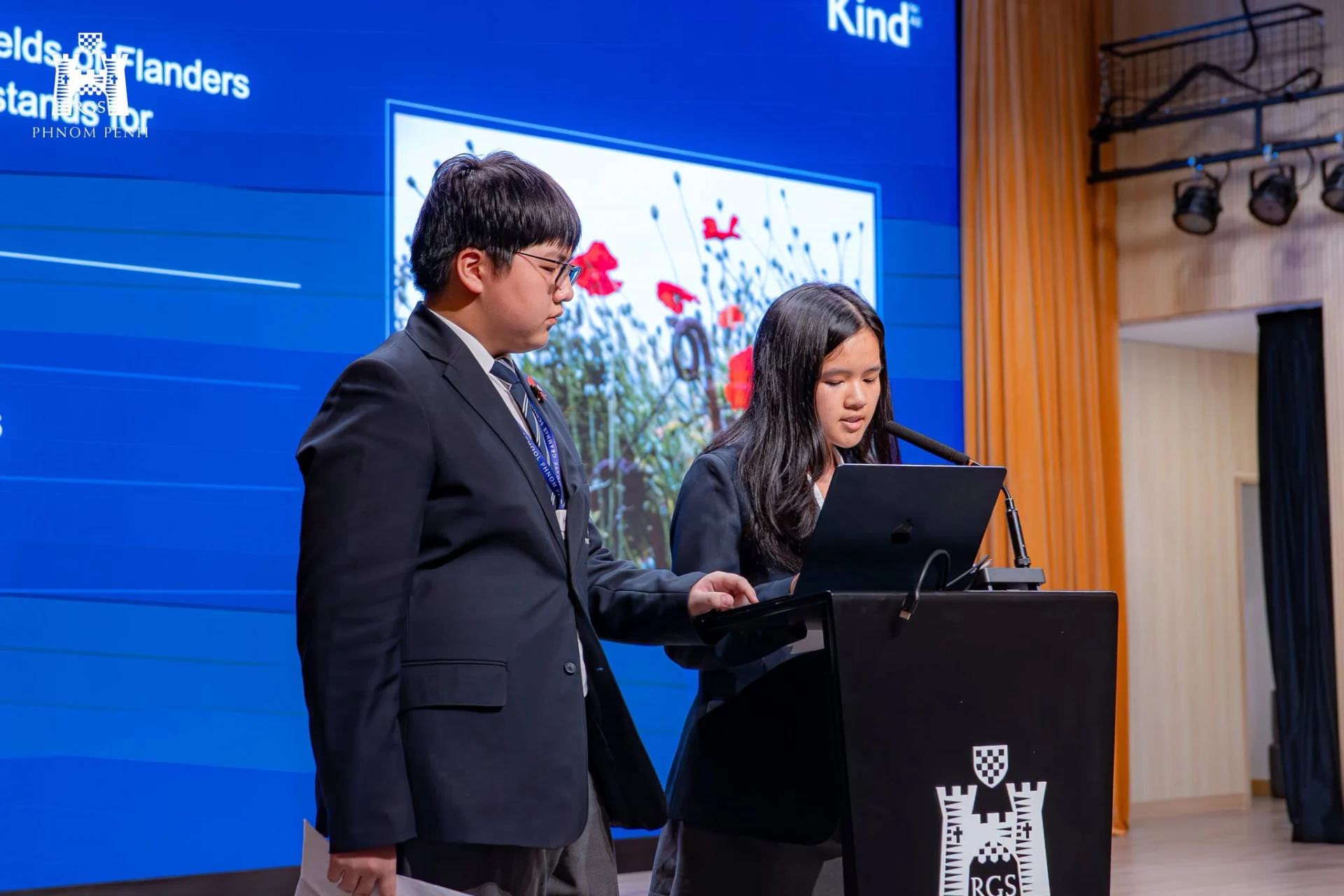

Reigate Grammar School Phnom Penh has shared how its Primary and Secondary students explored the significance of Remembrance Day through learning and school assemblies. In a Facebook post, the school explained that students spent the week reflecting on people who served during conflict, those who lost their lives and families affected by war. The activities encouraged students to consider remembrance, gratitude and peace.
Reigate Grammar School Phnom Penh Remembrance Day learning

The school’s update described a week of learning across Primary and Secondary year groups. Students considered the sacrifices of those who served in times of conflict and the different ways war can affect people long after fighting ends. The message recognised people who returned home changed by their experiences as well as families who continue to live with loss.
Assemblies were part of this learning. According to the school, they provided opportunities to explore why remembrance matters and to reflect on gratitude and peace. The Facebook post did not identify individual speakers, specific lessons or the dates of each assembly.
Photographs show students seated in an auditorium facing a stage with a large presentation screen. Other images show an additional gathering of younger students. The pictures support the school’s description of assemblies involving different age groups, although they do not establish the full sequence of activities.
What Remembrance Day can teach students
Remembrance Day is observed on 11 November, marking the anniversary of the 1918 armistice that ended fighting on the Western Front during the First World War. Today, remembrance activities also provide opportunities to reflect on the human impact of later conflicts and the experiences of military personnel, civilians and families.
For schools, the subject connects historical knowledge with questions about responsibility and empathy. Students may learn why communities commemorate the dead, how public ceremonies developed and why people from different countries remember conflict in different ways. Teachers can encourage careful discussion without presenting every family’s experience as identical.
Age-appropriate teaching is particularly important. Younger children may benefit from simple explanations of remembrance and peace, while older students can examine historical evidence, competing perspectives and the consequences of war. Discussions should acknowledge that some students may have personal or family connections to conflict.
The role of assemblies in school communities
A school assembly can create a shared moment of attention around a difficult subject. Presentations, reflection and discussion can introduce themes that teachers later explore in classrooms. Their educational value depends on how clearly ideas are explained and whether students have opportunities to ask questions.
The Reigate Grammar School Phnom Penh post emphasised gratitude, peace and remembering those whose lives were changed by conflict. These themes can help teachers move beyond dates and historical events to consider how war affects individuals and communities.
Parents can continue the conversation at home by asking what children learned and which ideas they found difficult. A calm discussion about why people gather to remember, or what peace means in everyday life, may help children process the subject. Families should adjust the level of detail to the child’s age and questions.
A shared approach to remembrance
The school’s photographs and statement document assemblies and classroom learning rather than a detailed public programme. They show how remembrance was addressed across both Primary and Secondary sections during the week.
Through its Remembrance Day assemblies, Reigate Grammar School Phnom Penh invited students to consider the experiences of people affected by war and the value of peace. The school’s account places reflection and historical understanding at the centre of this learning.
If the information about this school is inaccurate or incomplete, Contact Us.
Would you like to register your school? Click Here.


Leave A Comment