
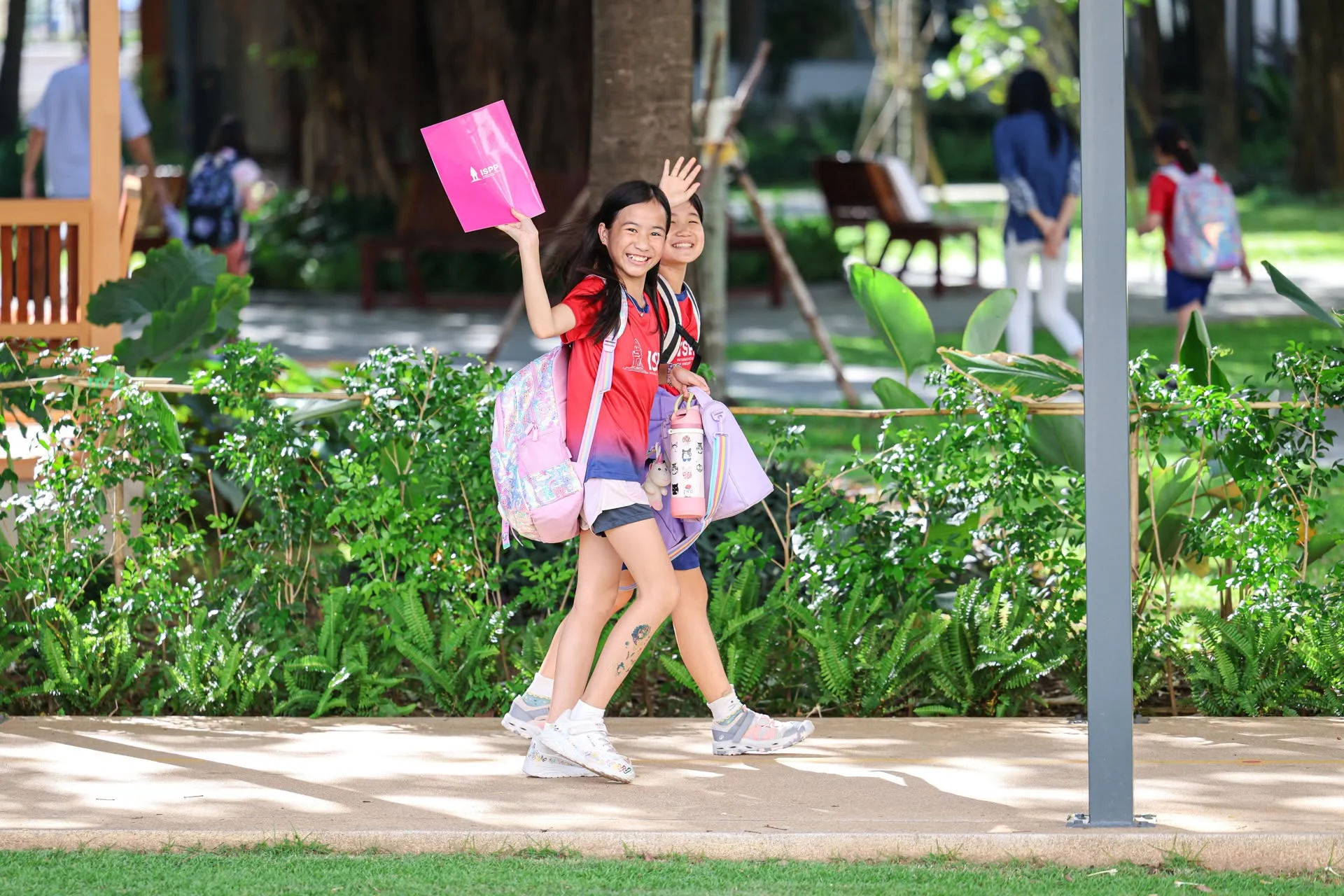
The International School of Phnom Penh (ISPP) announced a new edition of ISPP Pulse, its school magazine. The Facebook announcement previews articles on belonging, digital safety, finding our rhythm, global higher education, kindergarten in the kitchen, reading around the world, drawing from life and language acquisition. The accompanying photographs show children carrying or reading the magazine, including two readers looking at a copy together and an adult sharing a copy with a child.
Belonging and digital safety in ISPP Pulse

Belonging and digital safety are two of the subjects ISPP chose to feature in its announcement. Families can use these topics to ask children about situations they already encounter at school or online. For example, ask what helps someone join a group when they are new, or what a student might do if a class group chat starts leaving someone out.
Teachers can build on that conversation with a short scenario. If someone shares a classmate’s photo without asking, students can discuss what they would do first, which adult they could ask for help and what they could say to the person who posted it. A concrete example gives students a chance to practise the language they might need in the moment. Families can also ask their school who handles concerns that start online and carry into the classroom.
From the kindergarten kitchen to higher education
The announcement lists kindergarten in the kitchen and global higher education in the same issue. These topics give families with children at different stages two distinct places to start. With younger children, an adult can use a simple recipe to practise following instructions in order. Let the child describe what happens first, compare two amounts using the same measuring cup, or explain how the ingredients change after mixing.
For older students, the higher education topic can prompt a comparison of university options across countries. Start with one subject the student is interested in and look up two courses in that field. Use the universities’ own admissions pages to compare entry requirements, application deadlines and what students study in the first year. That last detail can help a student see whether two degrees with similar names offer the same kinds of classes.
Reading, drawing and learning languages
ISPP also names reading around the world, drawing from life and language acquisition among the issue’s topics. A family reading activity can connect two of those ideas. After reading a short passage together, invite a child to choose a scene and describe it in a language they use at home. Then ask them to point to the part of the text or illustration that helped them understand the scene. That gives the adult a way to discuss meaning while making room for the child’s own choice of words.
Drawing from life offers another activity for home or class. Set an everyday object on a table and ask two students to draw it from different seats. Comparing their drawings can help them explain which details each person could see and how their viewpoint affected the result. Students can then add a caption naming one detail they noticed only after looking closely.
Families and educators can browse previous issues on the school’s ISPP Pulse archive. For the newly announced ISPP Pulse, the topics in the Facebook preview offer several starting points. A family might choose the feature closest to a conversation they are already having, while a teacher could let students pick a topic and explain what they want to learn about it.
If the information about this school is inaccurate or incomplete, Contact Us.
Would you like to register your school? Click Here.
Leave A Comment