
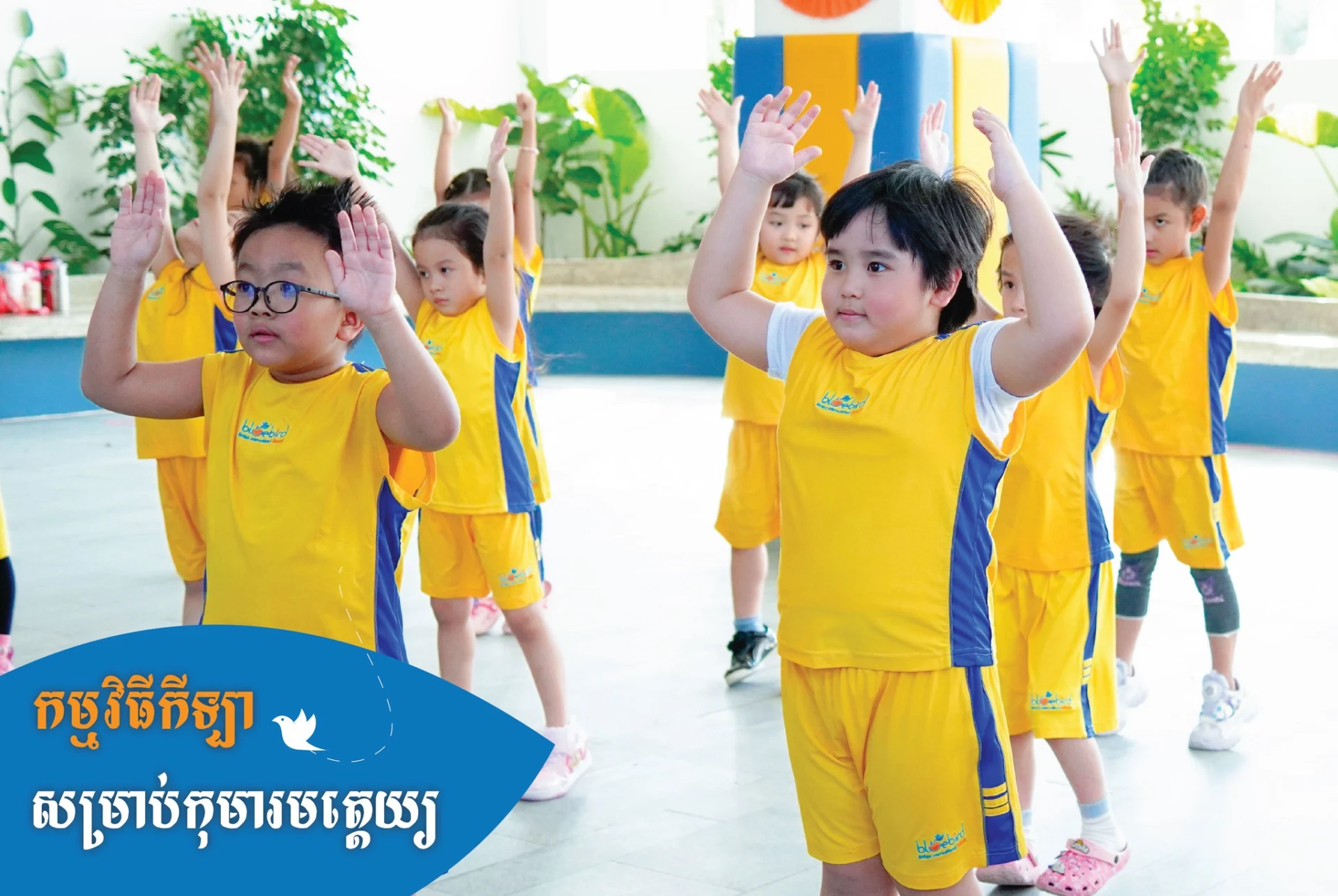

Early childhood is a critical period for physical, social, and emotional development, and Early Years Physical Education at Bluebird International School reflects how purposeful movement can shape confident, capable learners. The image shared by the school captures young children actively participating in a structured PE session, demonstrating how movement-based learning is integrated into daily school life. Through guided activities such as jumping, stretching, and coordinated arm movements, children are not only having fun but also developing essential life skills.
At Bluebird International School, Early Years Physical Education is designed to go beyond simple playtime. Qualified coaches lead age-appropriate activities that focus on building gross motor skills, balance, coordination, and body awareness. These skills are foundational for later academic learning, as physical control and posture are closely linked to attention, classroom participation, and early writing readiness. By introducing these skills early, the school helps children feel more confident in their bodies and more comfortable exploring new challenges.
Why Early Years Physical Education Matters
Research consistently shows that structured physical education in the early years supports whole-child development. At Bluebird International School, PE sessions encourage children to move in a safe, supportive environment where effort is celebrated rather than perfection. Activities like throwing, catching, climbing, and rhythmic movement help strengthen large muscle groups while also improving spatial awareness and coordination.
Equally important is the social aspect of Early Years Physical Education. Children learn to follow instructions, take turns, and participate as part of a group. These shared experiences build social confidence and emotional regulation, especially for young learners who are still developing self-control and communication skills. When children feel successful during physical activities, that confidence often transfers into the classroom and peer interactions.
Learning Through Active Play
The image highlights a structured yet joyful approach to active play. Children wear coordinated sports uniforms, reinforcing a sense of belonging and routine. Clear guidance from coaches allows children to understand expectations while still enjoying freedom of movement. This balance between structure and play is essential in early childhood education, particularly in international school settings where diverse learning needs are present.

Early Years Physical Education also supports emotional wellbeing. Physical activity helps reduce stress, supports self-regulation, and allows children to express themselves in non-verbal ways. For many young learners, movement is their primary language. Schools that prioritize physical education in the early years are better equipped to support children with different learning styles and energy levels.
A Holistic Approach to Early Learning in Cambodia
In Cambodia’s growing international education sector, parents are increasingly looking for schools that value holistic development. Early Years Physical Education at Bluebird International School demonstrates a commitment to nurturing the whole child—physically, socially, and emotionally. By investing in qualified coaches and well-planned PE sessions, the school creates an environment where children feel safe, engaged, and motivated to learn.
This approach aligns with global best practices in early childhood education, where movement is recognized as a key driver of cognitive growth and emotional resilience. For educators and parents alike, Bluebird International School’s Early Years PE program serves as a strong example of how active learning can be meaningfully embedded into the school day.


Leave A Comment