
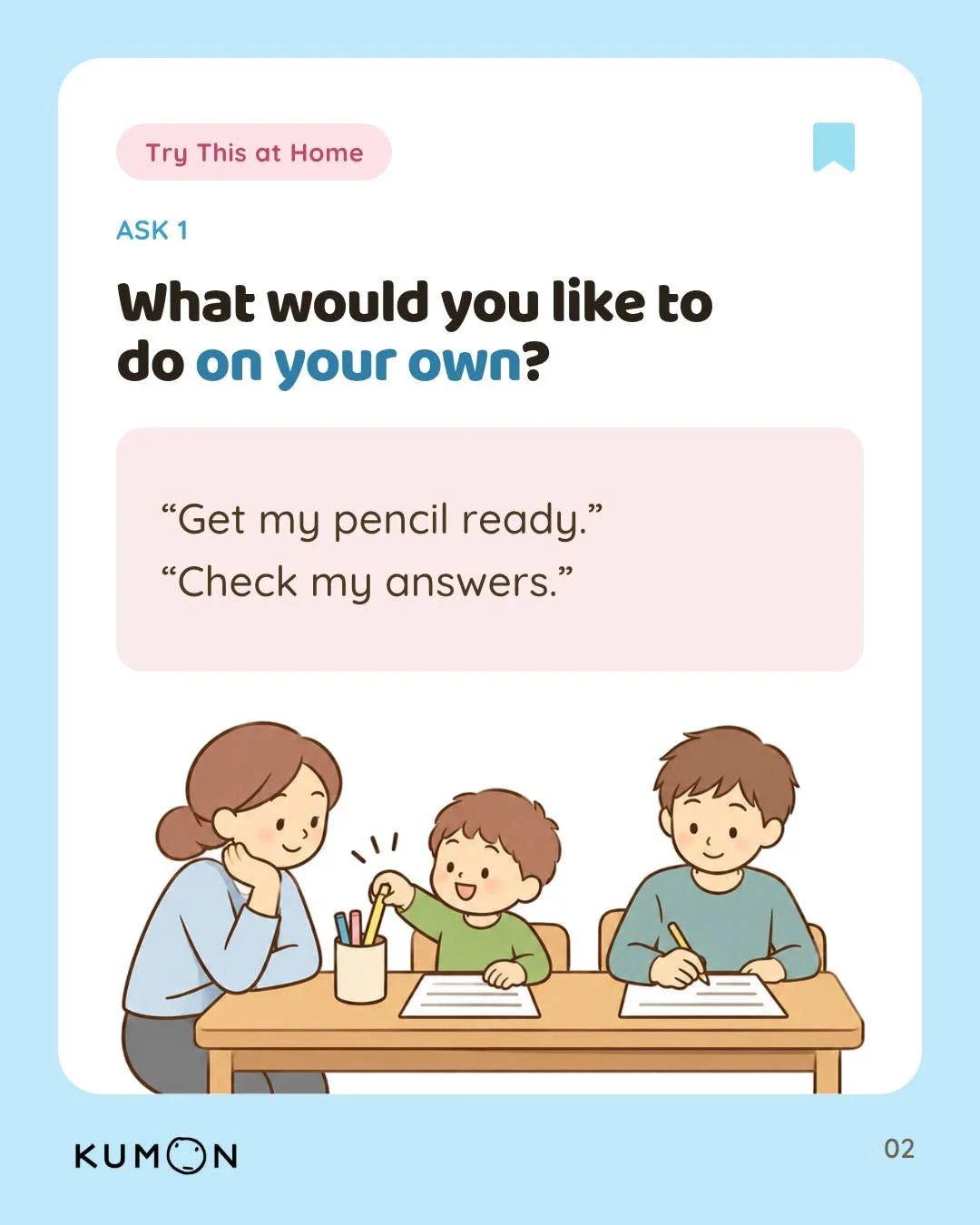

Kumon Cambodia is encouraging parents to involve children in choosing their next learning goal rather than deciding every study target for them. In a recent Facebook post, the education provider suggested starting with a simple conversation about what children would like to do independently, such as preparing their pencils or checking their own answers. The advice follows an earlier post about maintaining study habits while travelling.
Kumon Cambodia encourages children to choose learning goals

The post asks parents to listen to children’s ideas before agreeing on one small goal together. Its illustrated slides introduce three questions intended to support that discussion, although the visible screenshot clearly shows only the first: “What would you like to do on your own?”
Examples in the illustration include getting a pencil ready and checking answers independently. Both tasks are modest, observable actions that a child can practise during regular study time. The announcement does not claim that a particular child achieved these goals or provide results from a formal study.
The central message is practical: when children contribute to choosing a goal, adults can better understand what they feel ready to try. Parents still provide guidance, but the child has an opportunity to express a preference and participate in the decision.
Why small learning goals can help build independence
A learning goal is easier to understand when it describes a specific action. “Become more responsible” may be difficult for a young child to interpret, while “put my pencil and workbook on the table before starting” makes the expected behaviour clear.
Small goals also allow children to notice progress. A child who remembers to prepare materials on several occasions can see what has changed and decide whether to continue practising or try another task. Progress may be uneven, especially when routines change or children are tired.
Independence develops through opportunities to attempt tasks with appropriate support. Adults can demonstrate a skill, provide reminders and gradually reduce assistance when the child is ready. A goal should remain achievable without turning every study session into a test.
How parents can choose a goal with their child
Parents can begin by asking which part of studying the child would like to manage. Some children may choose to organise supplies; others might want to read instructions first or review their work before asking for help. The best starting point depends on the child’s age, skills and current routine.
After listening, parent and child can agree on one action and decide when to practise it. For example, preparing stationery before a short homework session creates a predictable opportunity to try. Adults can offer a visual reminder or model the steps when necessary.
A brief check-in after several attempts can reveal whether the goal is manageable. If it is too difficult, the task can be broken into smaller steps. If it has become routine, the child may be ready to choose another goal.
Supporting positive study habits at home
Kumon Cambodia connects this advice with its previous discussion of study habits during travel. Changes in location or daily schedule can interrupt routines, so a small portable goal may be more realistic than expecting a full study session every day.
Parents can recognise effort without comparing siblings or classmates. Specific feedback, such as noticing that a child remembered their materials, explains what went well and encourages reflection. Children who need additional support may benefit from pictures, predictable routines or extra practice.
The Kumon Cambodia learning goals message offers families a straightforward way to discuss independent learning. By asking children what they want to try and agreeing on one manageable action, parents can make study routines more collaborative while keeping expectations suited to each learner.
If the information about this school is inaccurate or incomplete, Contact Us.
Would you like to register your school? Click Here.



Leave A Comment