
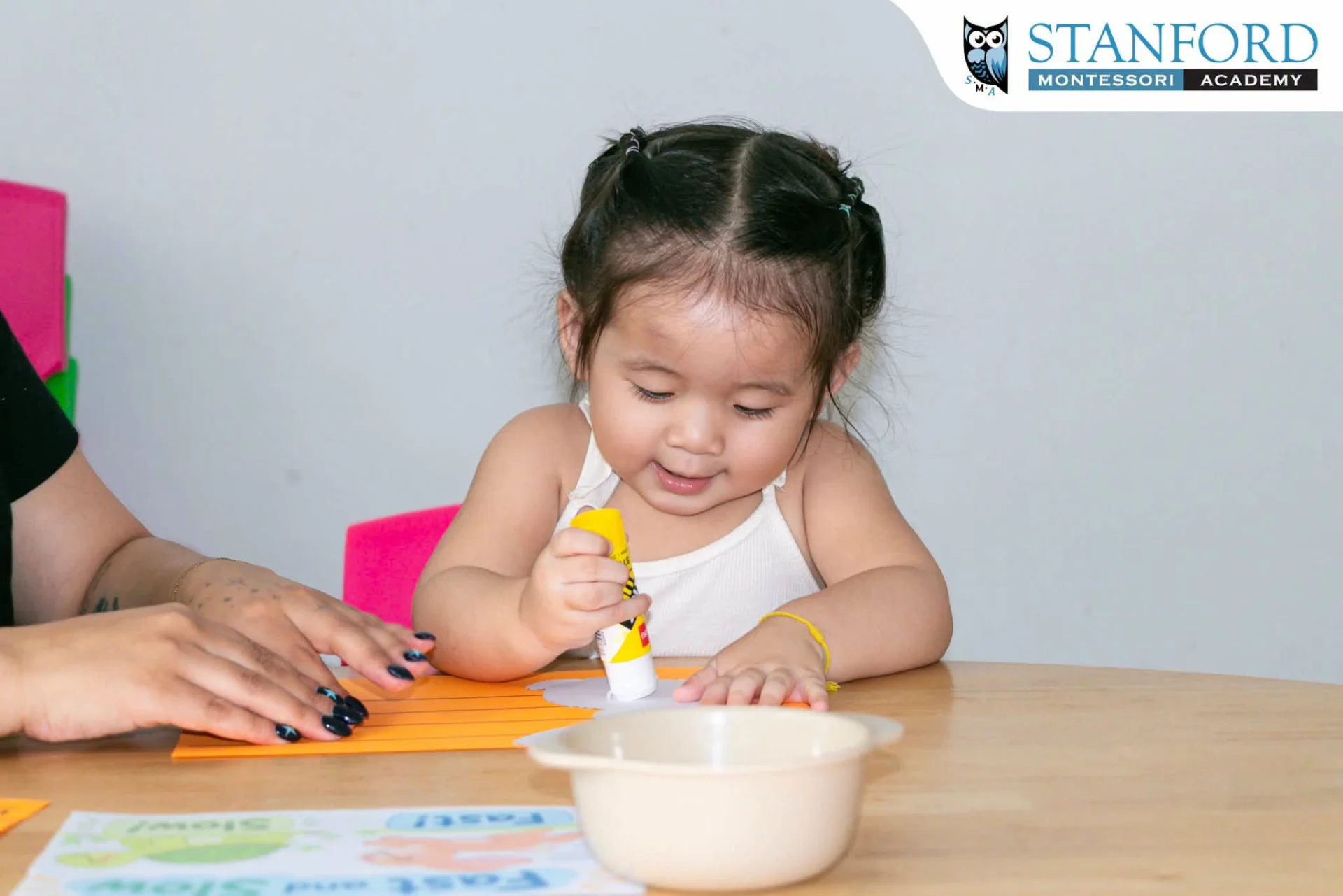

Stanford Montessori Academy has shared a classroom activity in which Sunshine Class children explored the difference between fast and slow through a tortoise-and-hare theme. In its Facebook post, the school explained that children decorated their own tortoise and hare using colourful paper pieces, then practised fast and slow movements by rolling their arms together. The lesson combined craft, movement and early vocabulary in a playful setting.
Stanford Montessori Academy Sunshine Class explores fast and slow

The school’s activity used two familiar animals, the tortoise and the hare, to introduce contrasting speeds. Children worked on decorated animal pictures by sticking coloured paper pieces onto their creations. They also practised movements at different speeds, using their arms to demonstrate the concepts.
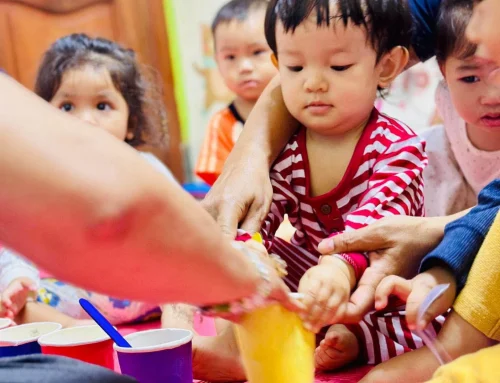
Photographs accompanying the announcement show young children seated at tables, handling craft materials with support from adults. The images illustrate the hands-on nature of the lesson, although they do not establish how each child responded or how long the activity lasted.
Fast and slow are useful early concepts because children encounter them in everyday movement. Walking, rolling a ball or moving a toy vehicle can all provide examples. Linking the words to actions helps make an abstract comparison easier to understand.
Learning speed concepts through movement
Children often learn new vocabulary more readily when they can connect a word to something they see or do. Teachers can demonstrate a fast movement and then a slow movement, giving learners time to notice the difference and imitate the action.
Rolling arms at different speeds, as described in the Sunshine Class post, offers a simple way to practise this distinction. Adults can use consistent words and clear demonstrations, then invite children to choose which movement matches a spoken instruction.
Movement-based activities can also provide opportunities to practise attention, listening and self-regulation. For example, children may need to pause, wait for a cue or change their speed when asked. These are potential learning opportunities rather than measured outcomes reported by the school.
How craft activities support early learning
Decorating the tortoise and hare added a creative element to the lesson. Picking up pieces of paper, applying adhesive and positioning materials can give children practice with small hand movements and hand-eye coordination.
Craft activities can also support language development when adults name colours, shapes and actions during the task. Children might hear words such as stick, press, turn and finish while working with familiar materials.
The activity does not require every child to produce an identical picture. Allowing some choice in colour or placement can encourage participation, while adult guidance can help children who need additional support handling materials.
Simple fast-and-slow activities for families
Parents can reinforce the same concept at home with safe, familiar games. Rolling a soft ball quickly and slowly, moving toy animals across a table or clapping at different speeds can help children compare actions.
Adults can begin with exaggerated differences before introducing more subtle changes. Asking children to show a slow movement or identify which object moved faster encourages active responses without requiring lengthy explanations.
The tortoise-and-hare theme also creates an opportunity to discuss how different animals move. Families can keep the focus on observation and play rather than treating speed as a competition between children.
Stanford Montessori Academy programmes and campuses
In the same announcement, Stanford Montessori Academy listed a Montessori programme for ages 1.5 to 6 and Primary and Secondary programmes for Grades 1 to 12. It identified Sen Sok as its Kindergarten campus and Intradevi as its Primary and Secondary campus, both in Phnom Penh. Families should confirm current programme availability and admissions details directly with the school.
The Stanford Montessori Academy Sunshine Class activity shows how fast-and-slow vocabulary can be introduced through craft and movement. Its combination of decorated animal pictures and arm-rolling gave young learners different ways to explore the same concept.
If the information about this school is inaccurate or incomplete, Contact Us.
Would you like to register your school? Click Here.
Leave A Comment