
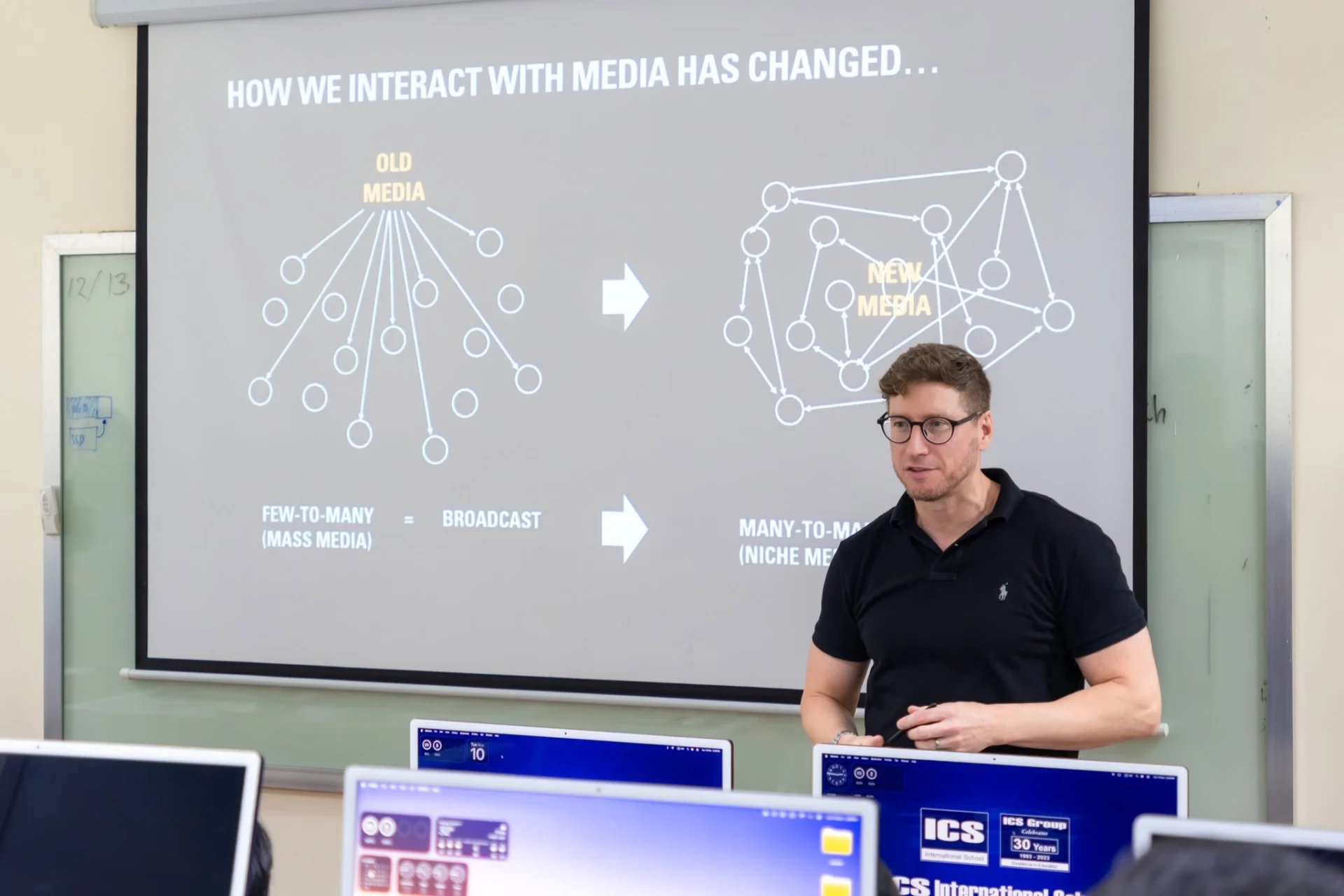
ICS International School in Cambodia recently welcomed professors from the University of Melbourne and Trinity College for a student learning session on social media and digital information. The school shared the visit through a post from its Main Campus Facebook page, describing a discussion titled “Social Media, Narrow-Casting, Echo Chambers & Beating the Algorithm.” The ICS International School media literacy session explored how online platforms shape what students see, share and believe.
ICS International School media literacy session with Australian educators

According to the school’s announcement, visiting professors from the University of Melbourne and Trinity College worked with ICS students to examine the benefits and drawbacks of social media. The discussion also covered fake news, misinformation and ways to step outside familiar streams of algorithm-driven content.
Photographs accompanying the Facebook post show a visiting speaker presenting a slide about changes in media interaction, alongside a group photograph with students. The announcement does not identify the professors or specify the visit date or students’ grade levels.
The involvement of educators from Australian institutions gave students an opportunity to consider online information in an academic setting. Students encounter recommendation systems across their daily digital activities.
Understanding narrow-casting and echo chambers
Traditional mass media generally distributes the same message to a broad audience. Narrow-casting refers to delivering content to more specific groups, often based on interests, demographics or previous engagement. Online platforms can personalize what individual users encounter.
An echo chamber can develop when people repeatedly see similar ideas and encounter limited disagreement. Recommendation systems may reinforce those patterns by suggesting material similar to what someone previously watched, liked or shared. Choices about whom to follow and which sources to trust also matter.
For students, understanding these concepts creates a basis for asking why a particular video, article or opinion appears in their feed. It also encourages them to recognize that two people using the same platform may receive very different information.
How students can evaluate misinformation online
The ICS session included learning how to identify fake news and misinformation. These terms deserve careful attention. Misinformation is incorrect or misleading information shared regardless of intent, while disinformation involves deliberate deception. Both can spread quickly when posts generate strong emotional reactions.
Students can develop practical habits by checking the original source of a claim, reading beyond a headline and comparing reporting across reliable publications. Reverse image searches may help reveal whether a photograph has been taken from an unrelated event. Looking for publication dates and distinguishing factual reporting from personal opinion are equally useful.
Teachers can support these skills through classroom exercises that compare coverage of the same subject. Rather than asking learners to accept one explanation immediately, educators can encourage them to explain what evidence supports their conclusions.
Why digital literacy matters for families and schools in Cambodia
Social media offers ways to communicate, collaborate and discover educational resources. At the same time, personalized feeds can make misleading content seem familiar or widely accepted. Digital literacy therefore involves understanding both opportunities and risks.
Parents can discuss online content without assuming that every unfamiliar source is unreliable. Useful conversations include asking children who created a post, what the creator might gain from attention and whether a claim can be independently confirmed.
For schools, discussions of algorithms fit naturally into media studies, citizenship education and research assignments. Teaching students to question sources helps them develop responsible habits for academic work and everyday communication.
The ICS International School media literacy session with the University of Melbourne and Trinity College provides a specific example of these subjects being addressed with students in Cambodia. The post does not report measured learning outcomes or future collaborations.
If the information about this school is inaccurate or incomplete, Contact Us.
Would you like to register your school? Click Here.
Leave A Comment