
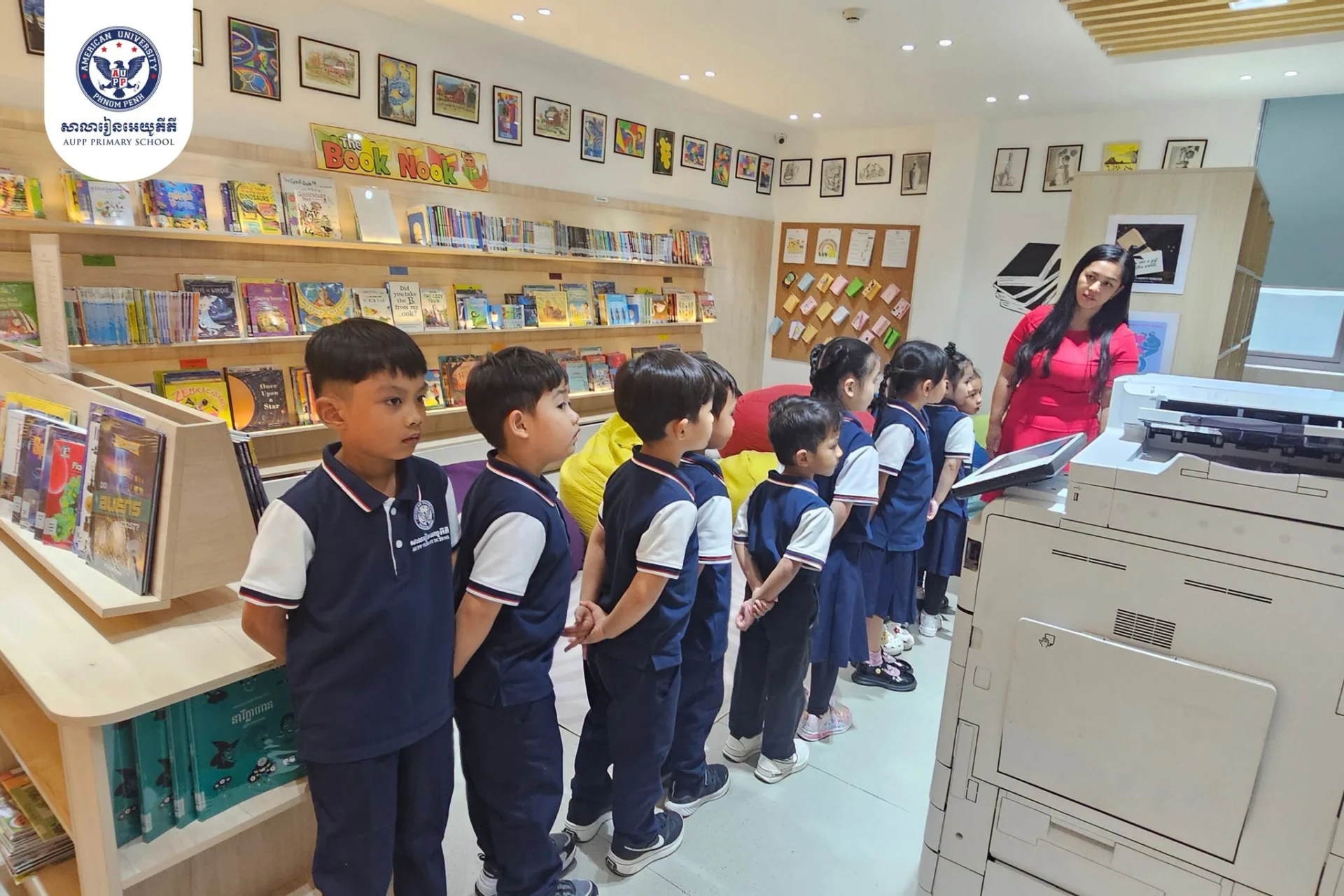
AUPP Primary School K3 learners practised going up and down the stairs and visited the school library, according to a Facebook post shared by AUPP High School – Foxcroft Academy. The update described these everyday experiences as ways for children to become more familiar with the school and practise moving through it with confidence. Photos accompanying the post show children using the handrail as they walk along the stairs.
How AUPP Primary School K3 learners explored their school

The school identified safe movement, balance, body awareness, and coordination as goals of the stair activity. The photos show children moving in a line, with some reaching for the rail. Using the stairs as part of a familiar school routine gives children a chance to practise where to place their feet and how to leave space for the person ahead. It also gives adults a chance to see when a child is ready to move with less prompting.
A routine like this can be broken into small steps. An adult might show a child where to wait before the group starts moving, then give a short reminder to hold the rail. Some children may feel more comfortable watching a classmate go first. Others may already know what to do and simply need enough time to move at their own pace. The aim is for each child to know what to do when the group reaches the stairs again.
Getting to know the school library
The update also described a library visit where children could explore books and become familiar with a place set aside for reading. For a young child, learning to use the library can begin with finding a place to sit, choosing a book, and working out where it goes afterward. Familiarity with those routines can make it easier for a child to choose something independently on a later visit.
Adults can give children time to look at the covers before asking what they would like to read. A child might choose a book because they recognize an animal on the front or want to know what a character is doing. The adult can follow the child’s interest by asking them to point to a picture, describe what they see, or guess what might happen next. Each gives the child a way to take part, even before they read the words.
What families and educators can build on
At home, families can ask children to recall one part of the visit. A specific prompt about what they saw in the library may be easier to answer than a broad question about school. A child can describe a picture, draw a scene, or show how they carried a book. What they choose to share can help adults understand which parts of the experience caught their attention.
Teachers planning a similar activity can use the same route or library routine on another day and see which steps children remember. A child who needed a reminder to wait may begin to pause when they reach the stairs. Another may remember where to find a favourite book. Families interested in the school can find its primary programme and admissions information on the official website.
The AUPP Primary School K3 update shows how ordinary parts of the school day can give children practice with movement and choice. Repeating a familiar routine gives them another chance to try a step for themselves, ask for help when they need it, and see what they can do more independently.
If the information about this school is inaccurate or incomplete, Contact Us.
Would you like to register your school? Click Here.

Leave A Comment