
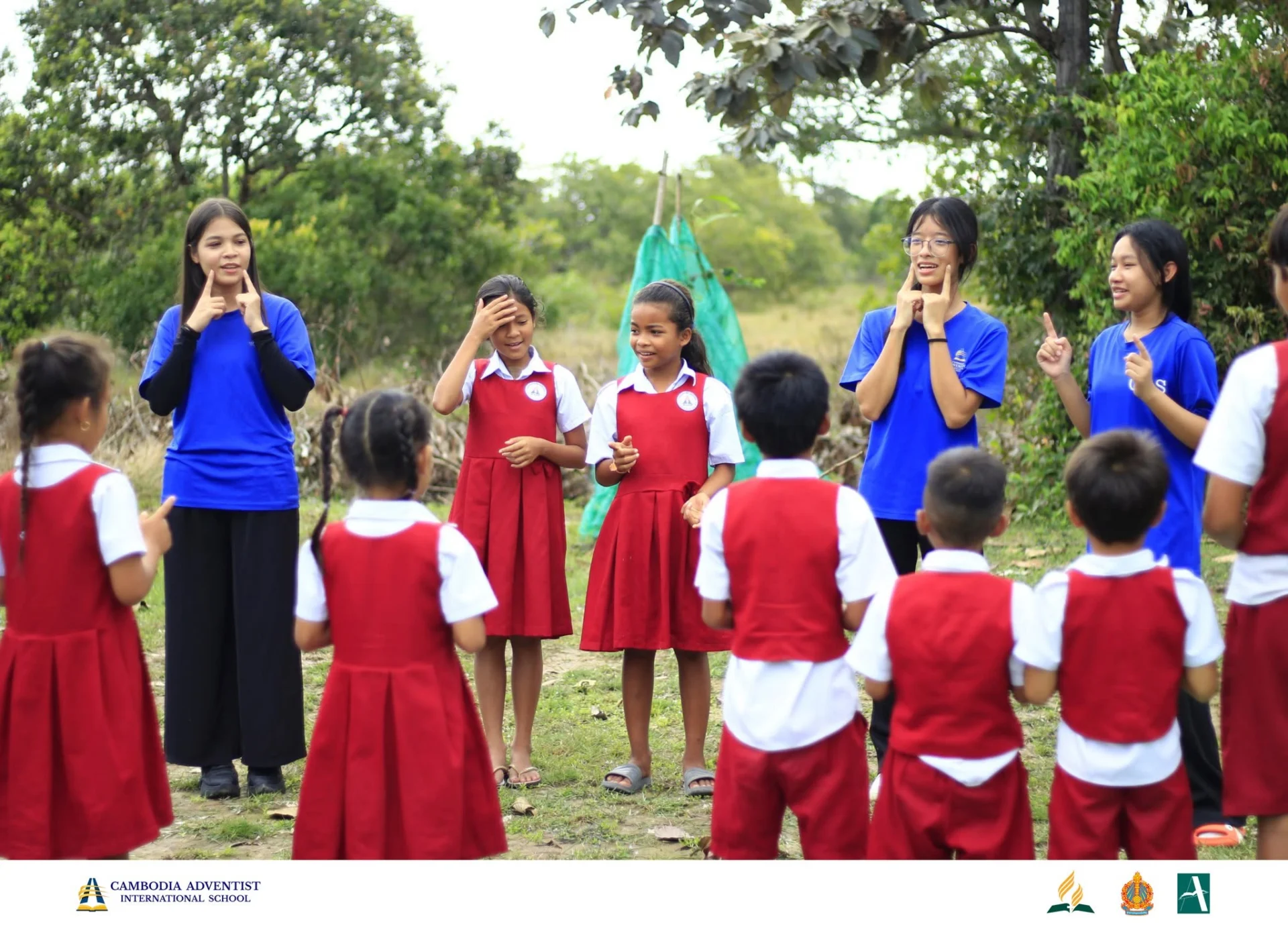

A Cambodia Adventist International School field trip took students in Grades 9–12 to Adventist Trapang Ompel elementary school in Kampong Chhnang province for a day of community service. In a Facebook update, Cambodia Adventist International School (CAIS) said students worked in groups to prepare garden soil, plant flowers, and dig post holes for a wooden fence. Other groups helped teach younger pupils and prepared snacks.
What students did on the Cambodia Adventist International School field trip

The school described several jobs taking place around the grounds. One group dug post holes for a wooden fence around the courtyard. Another worked organic fertilizer into the soil. Students also planted rows of flowers in front of the school gate. Each job served a different purpose, from preparing a place for plants to grow to helping shape how the courtyard would be used.
The post also describes work with the elementary pupils. Some older students took part in teaching while others helped prepare snacks. The photos show visitors interacting with younger children in a classroom and outdoors. The school did not specify what lessons the students taught. The pictures do show how the visit included time with the pupils alongside work on the grounds.
How different jobs contribute to a shared project
A group project gives students a chance to see how one task affects another. Before flowers can go into the ground, for example, someone has to prepare the soil and decide where the rows will go. Students taking on these tasks can see what is ready, what still needs doing, and when another group needs their help.
Students doing classroom activities have a different set of decisions to make. They may need to give a short instruction, show an example, and wait to see how younger children respond. If a child is unsure what to do, the older student can demonstrate the first step or check whether the instructions made sense. That gives the visitor practice adapting an activity to the people taking part.
For teachers planning a similar visit, a short conversation with the host school can help establish which jobs are useful and what needs to happen afterward. A garden, for instance, needs someone to care for it after planting day. Agreeing on the location and upkeep in advance can help ensure that the work suits the school’s routines and that pupils can use the space once the visiting group leaves.
What students can reflect on after a service visit
Back in class, students can describe one task they completed, a difficulty they encountered, and how they responded. A student who helped prepare the soil might explain how their group divided the work. Someone who taught younger pupils might describe what they changed after seeing how the children responded. A specific example gives teachers and classmates something concrete to discuss.
Students can also consider which parts of the visit depended on help from other people. That might mean noticing who supplied tools, who organised the groups, or who explained what the host school needed. Families who want to learn more about CAIS can find the visiting school’s details on its official contact page.
The Cambodia Adventist International School field trip gave secondary students practical jobs and time with younger pupils. A useful follow-up would be for students to ask the host school which parts of the work were most helpful and what they would change if they planned another visit together.
If the information about this school is inaccurate or incomplete, Contact Us.
Would you like to register your school? Click Here.
Leave A Comment