
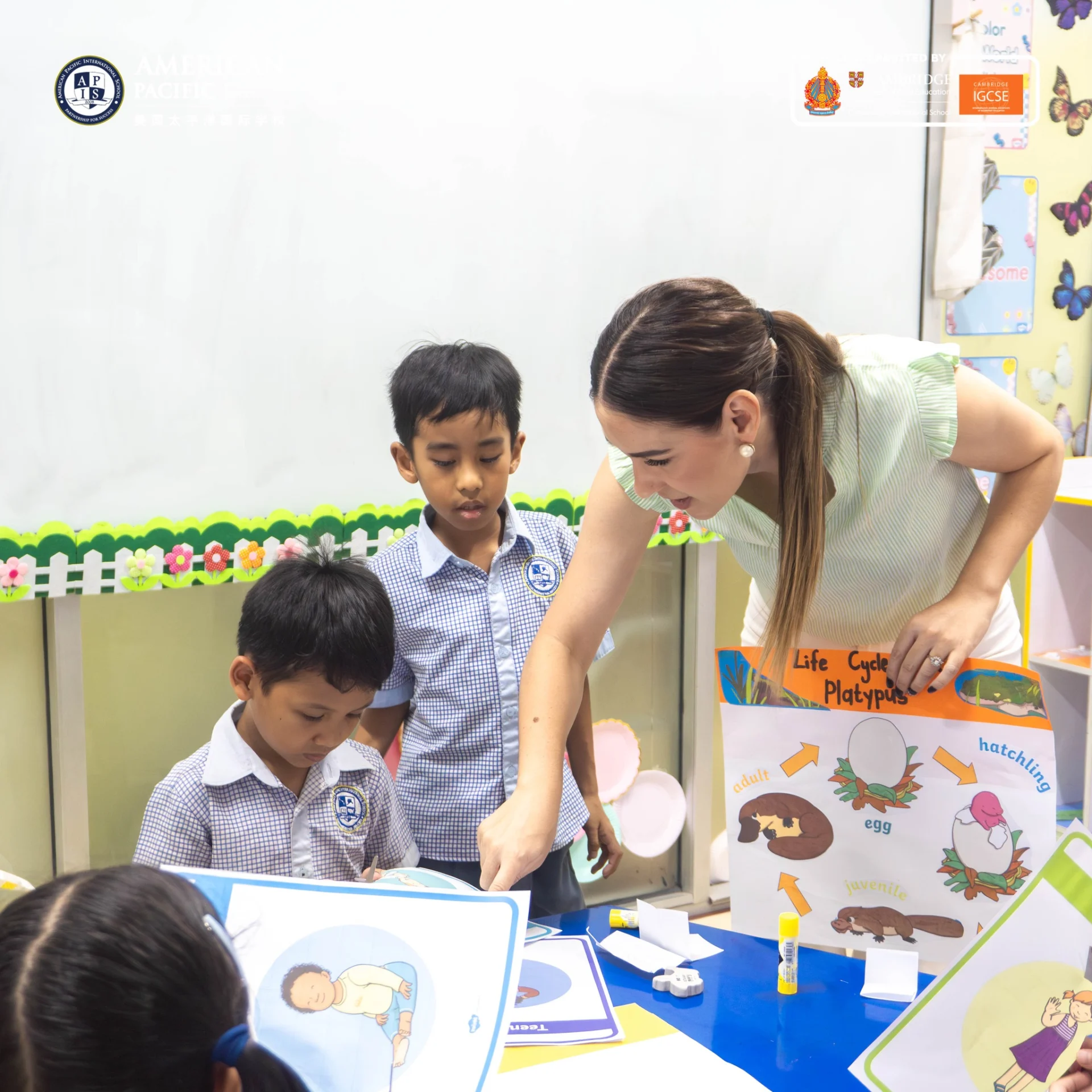
American Pacific International School Cambodia (APIS) continues to create meaningful classroom experiences that help young learners connect academic concepts with the real world. In a recent Grade 2 activity, students explored the fascinating topic of life cycles, learning how seeds grow into plants and caterpillars transform into butterflies. This type of hands-on learning approach is becoming increasingly important in modern education in Cambodia, especially in international and bilingual schools that focus on inquiry-based learning.

The classroom activity highlighted how children learn best when they are actively involved in the learning process. Instead of simply reading about plants and insects from a textbook, the students at American Pacific International School Cambodia had the opportunity to observe, discuss, and participate in interactive lessons that brought science to life.
Why Hands-On Science Activities Matter in Primary Education
Science education in primary school should go beyond memorization. Young learners develop stronger understanding when they can see concepts happening in front of them. Activities related to life cycles are especially effective because they naturally spark curiosity among children.
At APIS Cambodia, Grade 2 learners explored the stages of plant growth and butterfly transformation through engaging classroom activities. These experiences encourage observation skills, critical thinking, and communication. When students interact with visual materials and participate in discussions, they are more likely to remember the information and develop a genuine interest in science.
Hands-on learning also supports different learning styles. Some children learn best through visuals, while others benefit from movement, conversation, or direct interaction with materials. Activities like planting seeds or observing insects allow teachers to meet the needs of diverse learners in one classroom setting.
Building Curiosity and Confidence in Young Learners
One of the strongest benefits of inquiry-based education is the confidence it builds in children. Students are encouraged to ask questions, share predictions, and explain what they observe. This creates a positive learning environment where curiosity is valued.
The life cycle project at American Pacific International School Cambodia demonstrates how schools can combine creativity with academic learning. Students are not only learning science vocabulary, but they are also developing communication skills, teamwork, and independent thinking.
Interactive classroom environments are particularly important in early primary education because they help children stay engaged. Lessons that involve visuals, crafts, experiments, and storytelling often create stronger emotional connections to learning. This can lead to greater motivation and improved classroom participation.
International Schools in Cambodia Are Adopting Experiential Learning
Many international schools in Phnom Penh are moving toward experiential and student-centered education models. Parents today are increasingly looking for schools that focus on creativity, problem-solving, and practical learning experiences instead of rote memorization.
American Pacific International School Cambodia appears to embrace this educational philosophy by integrating engaging activities into everyday lessons. Science projects related to life cycles help students understand natural processes while also making the classroom enjoyable and memorable.
Experiential learning also prepares students for future academic success. Children who learn to observe, question, and analyze information at an early age often develop stronger reasoning skills later in school. These classroom experiences can also inspire future interest in biology, environmental science, or sustainability.
Supporting Holistic Education in Cambodia
Education in Cambodia is evolving rapidly, with more schools recognizing the value of balanced academic and social development. Activities like the life cycles project support not only academic growth but also emotional and social learning.
Students working together on science activities learn patience, collaboration, and respect for nature. They begin to understand the importance of living things and the environment around them. This type of holistic education helps children become more thoughtful and engaged learners.
Parents searching for schools in Phnom Penh often value institutions that provide engaging classroom environments and modern teaching approaches. Interactive science lessons, creative activities, and inquiry-based projects can significantly enrich a child’s educational journey.
If the information about the school is not accurate and insufficient Contact us.
Do you want to register your school, Click Here.

Leave A Comment