
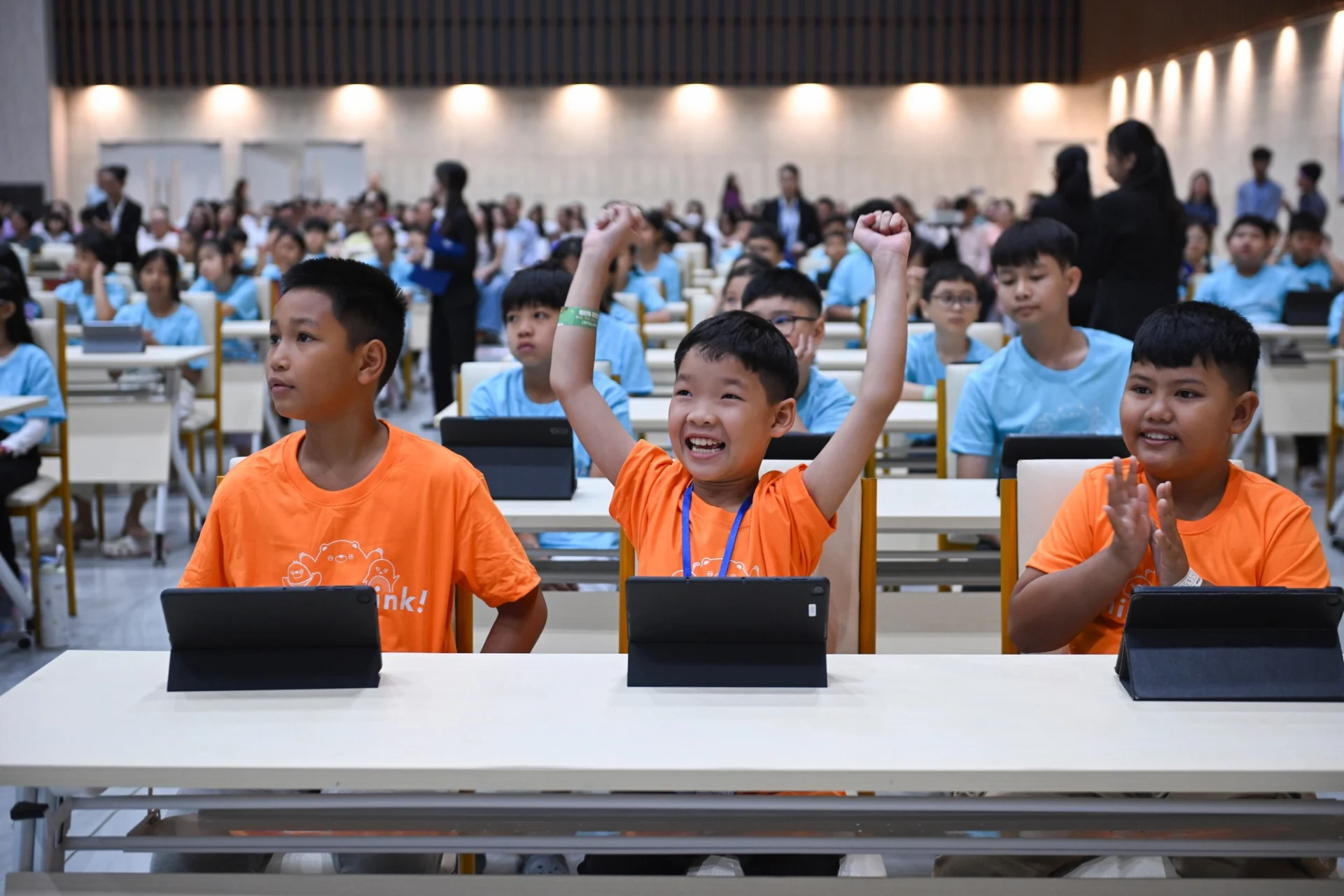

STEM education in Cambodia is gaining momentum as schools and education partners introduce programs that build critical thinking, creativity, and problem-solving skills. The recent event shared by ThinkThink Cambodia highlights how innovative learning experiences can engage students at scale while strengthening international cooperation in education. Through initiatives like this, STEM education in Cambodia is moving beyond textbooks and into practical, student-centered learning.

The image from the event shows a large group of students actively participating in a structured learning experience, using digital tools and responding with excitement and confidence. This reflects a growing shift in Cambodian education toward interactive and inquiry-based methods that encourage learners to think independently and collaborate with peers.
ThinkThink Cambodia and Innovative Learning
ThinkThink Cambodia is part of a broader educational movement that introduces technology-enabled learning to classrooms. By focusing on logic, reasoning, and problem-solving, the program supports students in developing skills that are essential for future academic and career success. STEM education in Cambodia benefits greatly from such approaches, especially when learning is designed to be enjoyable rather than intimidating.
The ThinkThink model emphasizes consistency and progression. Students work through carefully designed challenges that adapt to their ability levels, helping them build confidence while strengthening cognitive skills. For teachers, this approach provides a structured way to support diverse learners within the same classroom environment.
Building Cambodia–Japan Collaboration Through Education
A key element highlighted in the event is the collaboration between Cambodia and Japan in advancing education. Partnerships like these play an important role in shaping STEM education in Cambodia by sharing expertise, educational technology, and long-term vision. Such cooperation helps local schools adopt global best practices while still aligning with the Cambodian context.
These initiatives also send a strong message to parents and educators: investing in quality education is not just about academic outcomes, but about preparing children to navigate complex problems, work creatively, and adapt to change.
Why STEM Education Matters for Cambodian Students
STEM education in Cambodia supports more than science and mathematics knowledge. It strengthens logical reasoning, perseverance, and analytical thinking—skills that benefit students across all subjects. Programs like ThinkThink Cambodia demonstrate how structured digital learning can complement traditional teaching methods without replacing them.
When students are exposed to STEM concepts early, they develop curiosity and confidence. This is especially important in a rapidly changing world where technology and innovation shape many career paths. Schools that integrate STEM programs help students become active learners rather than passive recipients of information.
What This Means for Schools and Parents
For schools, adopting STEM-focused programs offers an opportunity to modernize teaching practices and meet the expectations of today’s families. For parents, seeing children engaged and motivated in learning builds trust in the school’s educational approach. STEM education in Cambodia continues to evolve as more institutions explore innovative tools and international partnerships.
If the information about the school is not accurate or sufficient, please Contact us to update or verify details.
Do you want to register your school and be visible to parents and educators? Click Here to add your listing.
Leave A Comment