
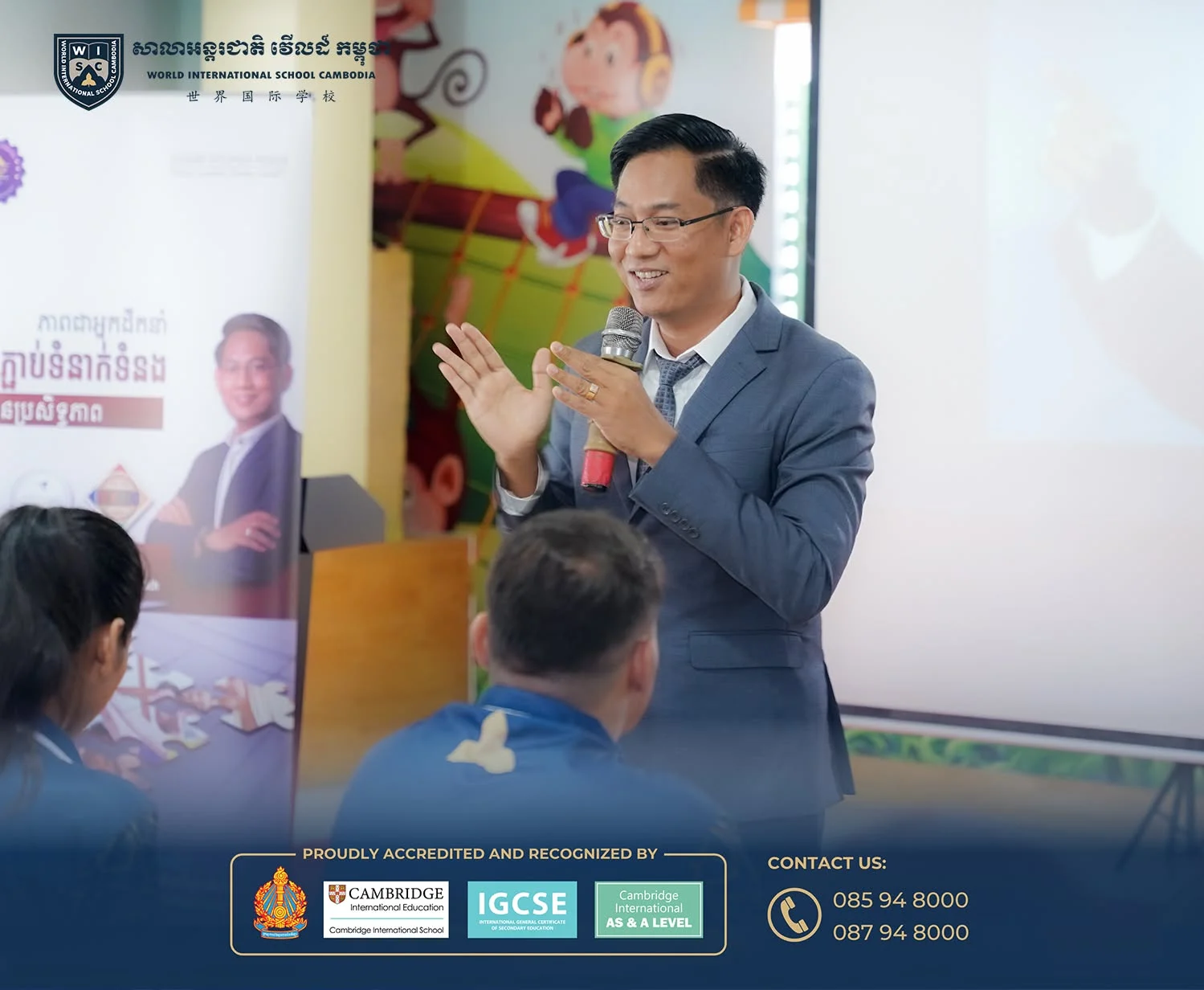

World International School Cambodia (WISC) shared a recap of a workshop on leadership, communication, and motivating students. According to the school’s Facebook post, the WISC leadership workshop took place on November 7, 2026, at its Toul Kork campus and featured guest speaker Om Sopheap. The school described the event as part of its effort to develop teachers’ professional skills and create a positive learning environment for students.
What the WISC leadership workshop focused on

The school’s announcement connects leadership with the way educators communicate and encourage students. Its photos show a speaker addressing seated participants and a group posing together after the session. The post gives the workshop theme and the speaker’s name. It does not include a session outline, so the examples below illustrate ways educators can work on those themes in their own classrooms.
The school’s campus directory lists the Toul Kork campus on Street 528 in Phnom Penh. The workshop took place at that campus, according to WISC. For school leaders considering similar professional development, one starting point is to ask teachers to bring a classroom situation they want to handle differently. A specific case gives colleagues something they can discuss and revisit after the session.
How clearer communication can help students get started
When a student hesitates at the beginning of a task, the teacher can ask what the student thinks they need to do first. The answer may reveal that the instruction was unclear, that the student is unsure how to use a resource, or that they need to see an example. A teacher can respond to that specific difficulty and then observe whether the student can take the next step independently.
The same approach can make feedback more useful. In a writing lesson, a teacher might point out that a student has stated a clear opinion and ask them to add an example that supports it. The student has a concrete revision to try. A short check later in the lesson can show whether the student understood the feedback and used it in their work.
What encouraging students can look like in practice
Motivation can be easier to discuss when adults ask students what helped them keep going. One student might say that a partner’s example made the task clearer. Another might say that a short checklist made a longer assignment feel manageable. Those answers give teachers information about the learning conditions they can adjust the next time students face a similar task.
Families can use a similar conversation at home. After a child completes a challenging assignment, a parent can ask which part took the most effort and what helped them finish. If the child is still stuck, asking them to show where they stopped can make it easier to decide whether to reread the directions, try a smaller example, or seek help from the teacher.
A practical follow-up to the WISC leadership workshop would be for educators to choose one communication habit to practise over the next week. For example, a teacher could ask students to explain the first step of a task in their own words before beginning. Colleagues could then compare what students understood, where instructions needed clarification, and which changes helped more students get started. That gives staff a classroom example to discuss when they next meet.
If the information about this school is inaccurate or incomplete, Contact Us.
Would you like to register your school? Click Here.


Leave A Comment