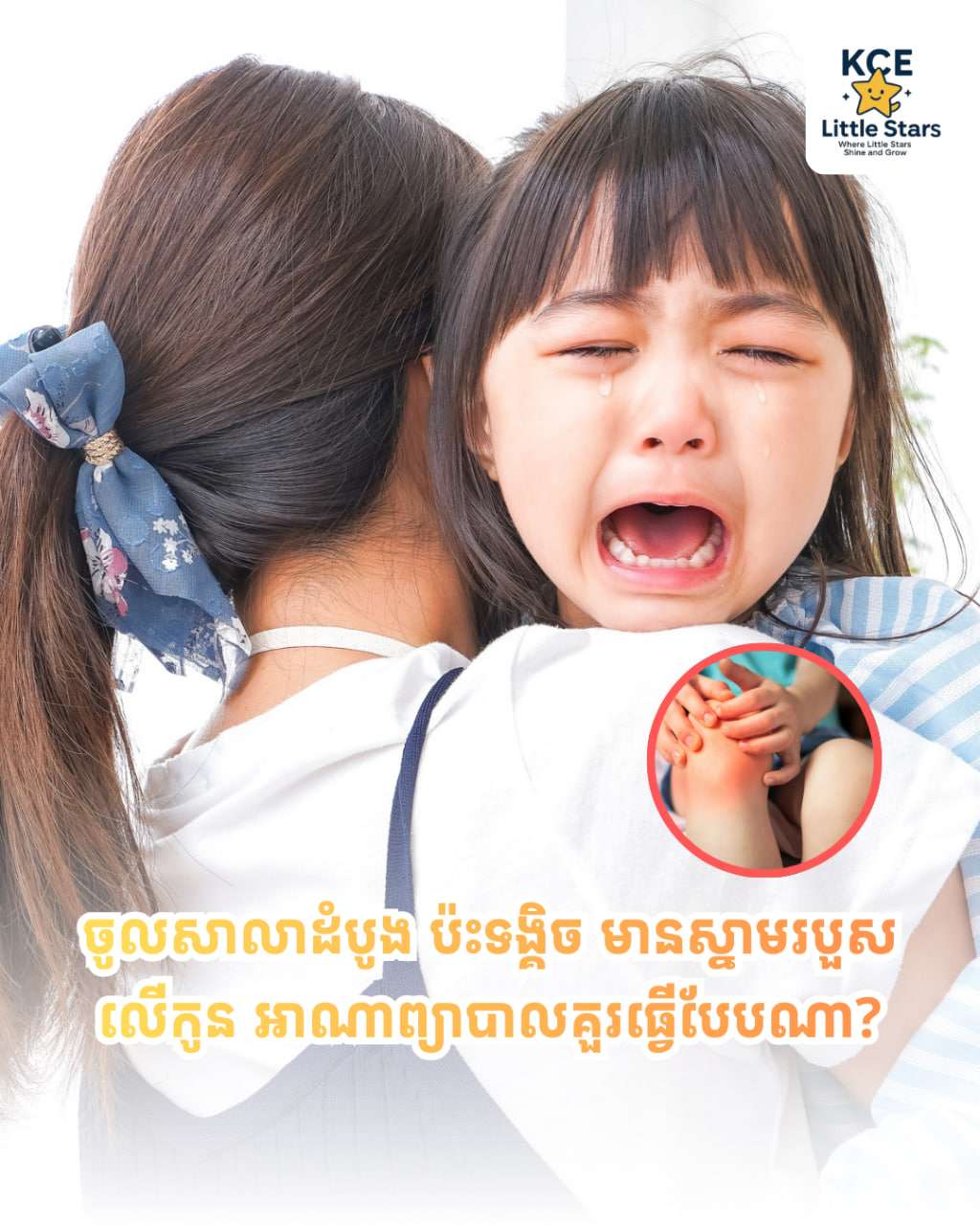

Childhood is full of emotions, discoveries, and small challenges. A recent post shared by KCE Little Stars highlights a situation many parents recognize immediately: a child coming home with tears, a small scratch, or a minor bump after a day at school. While these moments can be upsetting for families, they are also an important part of early childhood learning Cambodia, especially in preschool and early years settings where children are learning how to navigate the world around them.
At KCE Little Stars, this message is communicated clearly and thoughtfully. The school reassures parents that while no one wants to see their child upset, these experiences often happen as children adapt to a new environment and begin to build essential life skills. In the context of early childhood learning Cambodia, such moments are not signs of failure, but signs of growth.
Understanding Big Emotions in Early Childhood
Young children are still developing emotional regulation. When a child cries after a disagreement with a peer or reacts strongly to a minor injury, it reflects their stage of development rather than a lack of care or supervision. Early childhood educators understand that emotions are part of learning. Feeling sad, frustrated, or overwhelmed helps children recognize emotions and gradually learn how to manage them.
At KCE Little Stars, teachers acknowledge these emotions rather than dismiss them. This approach supports emotional development and helps children feel safe expressing themselves. Over time, children begin to develop resilience, a key goal in early childhood learning Cambodia.
Social Skills Are Learned Through Real Experiences
One of the strongest points highlighted in the KCE Little Stars post is social learning. Preschool environments naturally involve sharing, negotiating, and sometimes conflict. Children learn how to socialize not through lectures, but through guided experiences. Small disagreements help children understand boundaries, take turns, and respect others.

In early childhood learning Cambodia, schools play an essential role in teaching these skills in a structured yet caring environment. Teachers supervise closely, step in when needed, and guide children toward positive interactions rather than simply preventing all challenges.
Building Confidence Through Guided Support
Confidence does not come from avoiding difficulty; it comes from overcoming it with support. When children are encouraged to express themselves, understand rules, and resolve small conflicts, they gain confidence in their abilities. KCE Little Stars emphasizes that teachers are present to guide, teach, and support children through each situation, ensuring learning happens safely.
This philosophy aligns well with best practices in early childhood learning Cambodia, where educators focus on holistic development rather than just academics.
The Importance of School–Parent Communication
Another key message from the post is the value of open communication between teachers and parents. When schools explain why these moments happen and how they are handled, parents gain trust and understanding. Strong communication ensures that children receive consistent support both at school and at home, reinforcing emotional and social growth.
As children grow, these early experiences contribute to long-term development. Small tears today often lead to stronger emotional skills tomorrow.
If the information about the school is not accurate or sufficient, please Contact us.
Do you want to register your school? Click Here.