
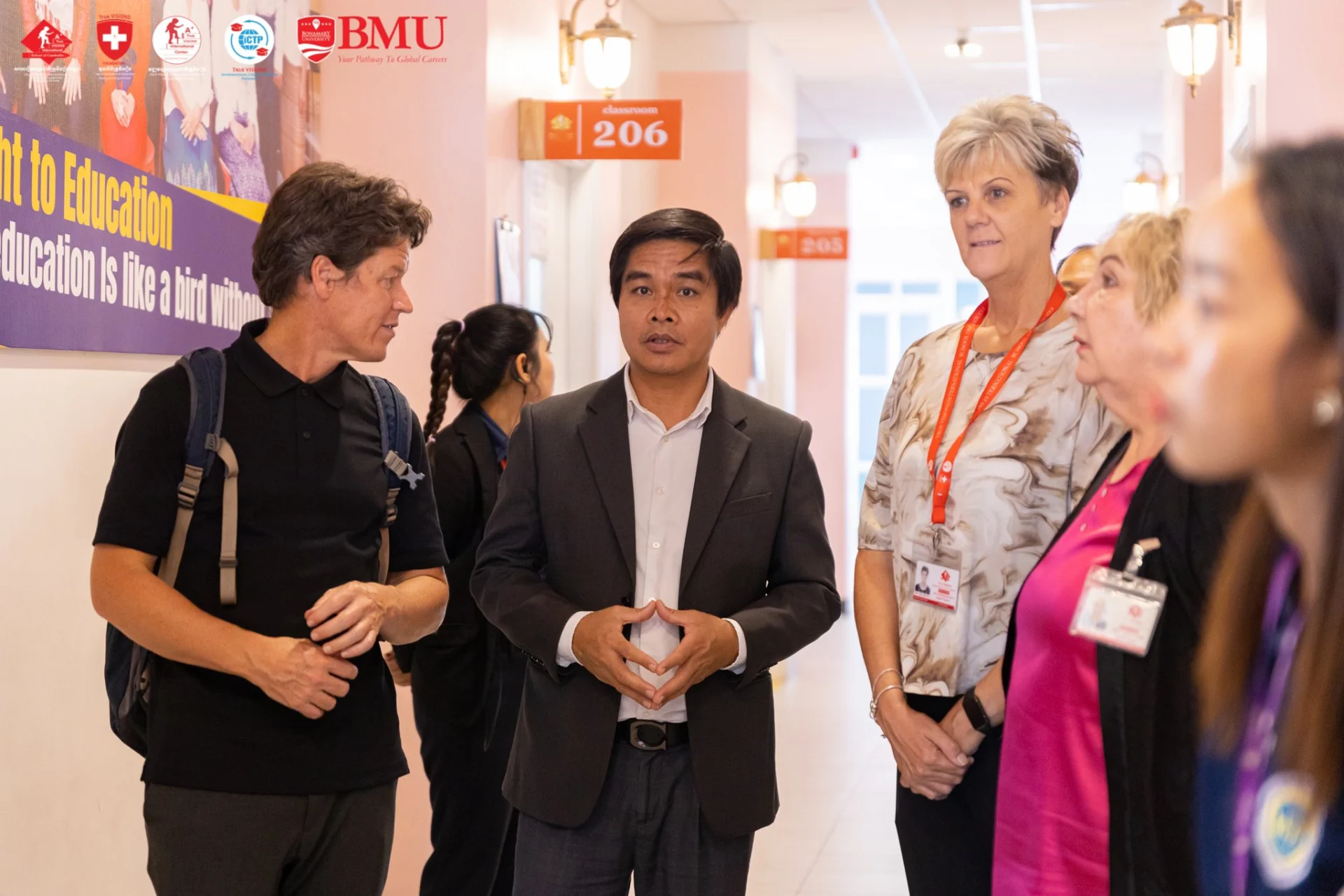
True VISIONS International School of Cambodia continues to strengthen its position within Cambodia’s international education landscape by building meaningful global partnerships. A recent courtesy meeting between the school’s leadership team and representatives from Momoyama Gakuin University in Osaka highlights how international collaboration is shaping new academic pathways for students and expanding cultural understanding across borders. For families, educators, and school leaders, this type of partnership reflects a growing trend toward globally connected education models that prepare students for higher education beyond Cambodia.
Building International Academic Pathways
One of the most important outcomes of the collaboration at True VISIONS International School of Cambodia is the exploration of academic exchange opportunities. Schools in Cambodia are increasingly focusing on preparing graduates for overseas universities, and partnerships with institutions in Japan offer a practical bridge between local learning and international higher education systems. By creating discussions around university access, curriculum alignment, and student readiness, the school is positioning itself as a forward-thinking institution that understands the importance of long-term academic planning.
For parents evaluating international schools, these collaborations provide reassurance that their children are not only receiving strong classroom instruction but also gaining exposure to global opportunities early in their educational journey. Establishing relationships with universities helps students envision future pathways while encouraging academic motivation during their secondary years.
Strengthening Cultural Connections Through Education
Beyond academics, the meeting demonstrates a strong commitment to cultural exchange. Cambodia’s international schools play an essential role in fostering global citizenship, and initiatives like this encourage students to develop intercultural communication skills and broader worldviews. Exposure to Japanese educational perspectives introduces students to different teaching philosophies, innovation-driven programs, and leadership development approaches.
Cultural connection is more than a symbolic gesture; it influences how students learn collaboration, adaptability, and respect for diverse perspectives. As schools in Cambodia expand partnerships across Asia, these initiatives contribute to a more inclusive and internationally minded learning environment that benefits both local and expatriate families.
Future Partnerships and Collaborative Innovation
The discussion around future collaborations suggests that True VISIONS International School of Cambodia is exploring long-term initiatives rather than one-time events. Potential programs may include student exchanges, joint academic projects, or leadership workshops that connect Cambodian youth with peers abroad. These experiences often encourage critical thinking, creativity, and innovation—skills that are increasingly valued by universities and employers worldwide.
International partnerships also enhance a school’s reputation within Cambodia’s competitive education sector. For parents researching schools, seeing active engagement with global institutions signals a commitment to continuous growth and educational excellence. It reflects a vision that extends beyond traditional classroom learning and embraces a more holistic approach to student development.
What This Means for Cambodia’s Education Community
The collaboration represents a broader movement within Cambodia’s international education scene, where schools are prioritizing global exposure and strategic partnerships. As more institutions build relationships with universities and organizations abroad, students gain access to a wider network of opportunities that support academic success and personal growth.
For educators and school leaders, these initiatives serve as examples of how international cooperation can enrich local education systems. By integrating global perspectives into daily learning, schools create environments where students are better prepared to navigate an interconnected world.


Leave A Comment