
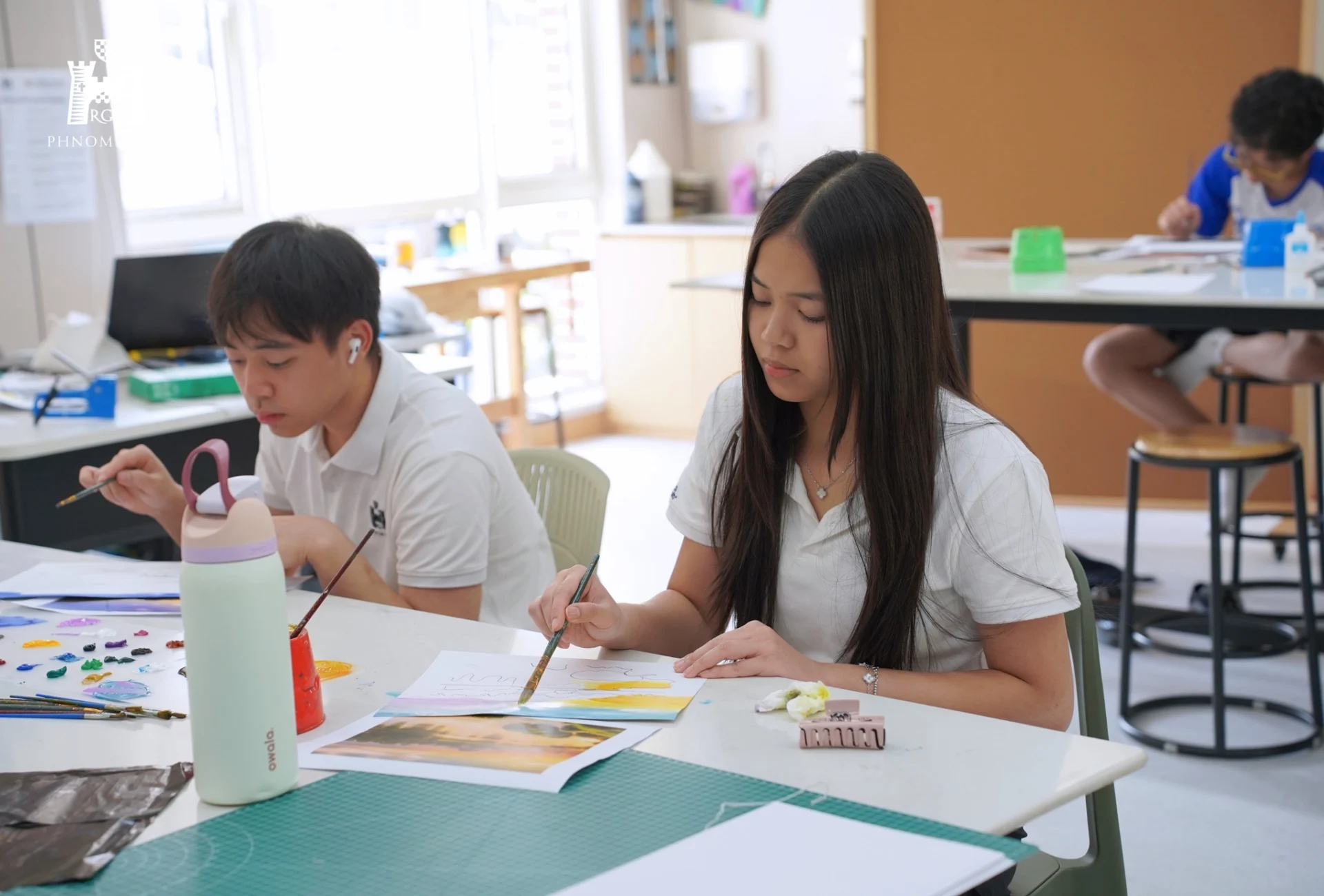
Reigate Grammar School Phnom Penh continues to demonstrate how creative education can strengthen academic learning through its Year 11 & 12 Impressionism Art and Design program. This approach combines AS-level art simulations with practical exploration, allowing students to develop technical skills while building confidence in artistic expression. For families and educators looking for international schools in Cambodia that value both academic excellence and creativity, programs like this highlight how visual arts can play a meaningful role in student development.
How Impressionism Enhances Advanced Art Education
The focus on impressionism offers more than just painting techniques. Students explore how colour, tone, and movement can communicate ideas beyond words. By experimenting with brushwork and landscape-inspired compositions, learners begin to understand artistic decision-making rather than simply copying a style. This type of inquiry-based learning encourages critical thinking, which aligns well with international secondary education standards and prepares students for higher-level art studies.
Building Skills Through AS-Level Learning Experiences
One of the most valuable aspects of the Reigate Grammar School Phnom Penh art program is its alignment with AS-level expectations. Year 11 and Year 12 students engage in structured projects that mirror advanced coursework, helping them build portfolios while strengthening observation skills. Exposure to real-world artistic challenges encourages learners to take creative risks, a key component of growth in visual arts education. Teachers guide students through experimentation with colour theory, composition, and personal interpretation, ensuring that technical progress remains balanced with self-expression.
Encouraging Confidence and Creative Thinking in Teenagers
Art and Design education at this level is not only about producing visually appealing work; it is also about helping teenagers develop resilience and independent thinking. Working with impressionist techniques pushes students to move beyond perfectionism and embrace experimentation. This mindset can transfer into other academic subjects, supporting problem-solving and innovative thinking. Parents often look for schools where students can discover personal strengths while still maintaining strong academic performance, and creative programs like this help bridge that gap.
Why Art Programs Matter in International Schools in Cambodia
In Cambodia’s growing international education landscape, art education is becoming an increasingly important part of holistic development. Schools that integrate creative learning alongside academic rigor help students build communication skills, cultural awareness, and emotional intelligence. The Year 11 & 12 Art and Design initiative at Reigate Grammar School Phnom Penh reflects a broader shift toward experiential learning, where students learn by doing rather than memorizing.
Supporting Artistic Expression Without Fear
A standout feature of impressionist learning is the emphasis on freedom and momentum. Students are encouraged to explore different perspectives and styles without fear of mistakes. This environment helps young artists develop a strong creative voice while still meeting academic expectations. As international schools in Phnom Penh continue to expand their offerings, programs that nurture artistic confidence alongside structured learning will remain highly valuable for both students and parents.
For professionals and educators reviewing school programs across Cambodia, initiatives like this demonstrate how creative subjects can complement traditional academic pathways. By giving students opportunities to explore impressionism and advanced art concepts, Reigate Grammar School Phnom Penh provides a learning environment that balances discipline with imagination.


Leave A Comment