
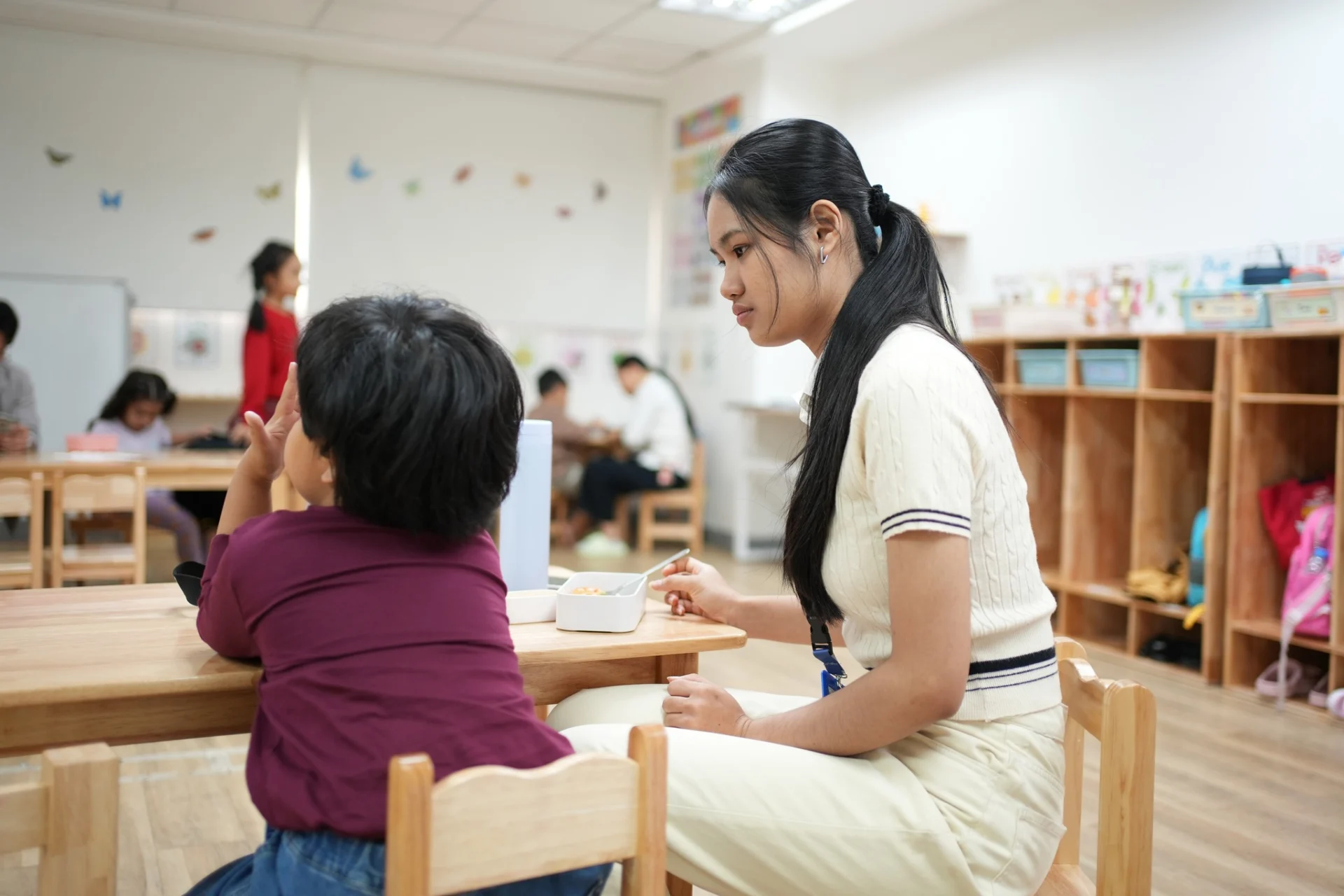

In the growing landscape of Preschool Phnom Penh education, parents and professionals are increasingly interested in how early learning environments shape children’s social, emotional, and academic development. A recent glimpse into daily life at OrbRom Learning Support Center highlights how structured routines, meaningful interactions, and supportive teaching practices can turn ordinary classroom moments into powerful learning experiences.

Understanding Daily Life in a Preschool Phnom Penh Classroom
At OrbRom Learning Support Center, the preschool environment appears centered on engagement, independence, and social connection. Simple routines like lunchtime or small group activities are more than just breaks in the day; they are opportunities for children to practice communication, turn-taking, and peer interaction. For young learners, these shared experiences help build confidence and strengthen foundational social skills.
Many early childhood educators recognize that consistent routines support emotional regulation. When children know what to expect, they feel safer exploring new tasks or participating in group activities. In a Preschool Phnom Penh setting, where families often seek both academic readiness and social growth, these daily practices play a key role in shaping a balanced learning experience.
Why Social Learning Matters in Early Childhood
Beyond structured lessons, early education programs emphasize social learning because it lays the groundwork for later academic success. Observing a teacher guiding a child through a simple interaction shows how educators scaffold communication. Small gestures, such as encouraging eye contact or helping children take turns, gradually build independence.
Professionals in early childhood education understand that these interactions are not accidental. They are intentional strategies designed to help children develop problem-solving skills, empathy, and self-confidence. In Cambodia’s evolving education landscape, many parents are searching for programs that focus not only on academics but also on holistic child development.

Building Independence Through Routine and Play
Daily classroom routines often include transitions between activities, collaborative play, and opportunities for children to make small choices. These moments help children practice self-help skills and develop a sense of responsibility. In a Preschool Phnom Penh environment, fostering independence early can support smoother transitions into primary school.
Teachers who integrate guided play into learning allow children to explore concepts naturally. Whether it is participating in a group activity or engaging in quiet learning time, the goal is to create a supportive atmosphere where children feel encouraged to try new things without fear of failure. Parents looking at preschool options may notice that classrooms focusing on structured independence often promote stronger long-term engagement.
The Role of Teachers in Creating Supportive Learning Spaces
A strong early learning program relies heavily on teacher-child relationships. Educators who sit at the child’s level, observe carefully, and respond to individual needs help create a sense of trust. This connection encourages children to participate more actively and develop a positive attitude toward learning.
In Cambodia, where early childhood education continues to expand, families are becoming more aware of how important trained educators and structured environments are for developmental growth. Observing how teachers guide small moments throughout the day can offer valuable insight into the overall philosophy of a preschool program.
What Parents and Educators Can Learn from This Preschool Phnom Penh Example
The daily activities at OrbRom Learning Support Center demonstrate that meaningful learning does not always require complex materials or long academic sessions. Instead, thoughtful routines, responsive teaching, and opportunities for social engagement can create a rich educational experience.
For parents, this highlights the importance of choosing programs that balance play, structure, and emotional support. For educators, it serves as a reminder that even simple daily interactions can have a lasting impact on a child’s development.


Leave A Comment