
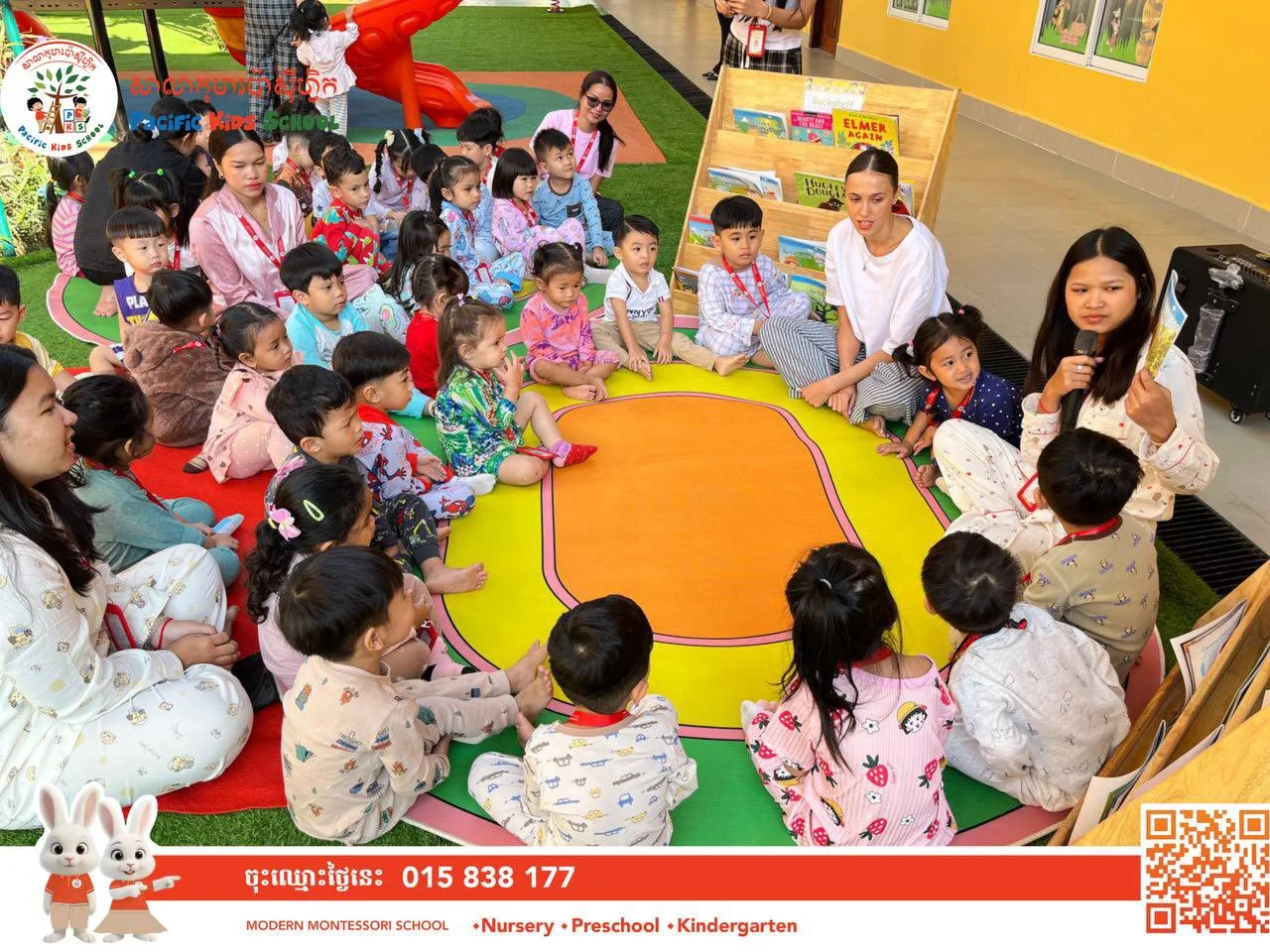

Pacific Kids School Chbar Ampov recently shared a joyful snapshot of preschool life through its Pajama Day celebration, highlighting how comfort, play, and intentional teaching can come together in early childhood education. The Facebook post shows children dressed in colorful pajamas, participating in group activities that feel relaxed yet structured—an approach that reflects thoughtful early years practice rather than simple fun days alone.
Learning Through Comfort at Pacific Kids School Chbar Ampov
At Pacific Kids School Chbar Ampov, Pajama Day is more than a themed event. Allowing children to wear pajamas creates a familiar and emotionally safe environment, especially for preschool-aged learners who are still developing self-regulation and independence. When children feel comfortable, they are more likely to engage, communicate, and participate actively in classroom routines.
In early childhood settings, comfort supports learning readiness. Activities such as group movement, circle time, and storytelling—visible in the shared images—help children build listening skills, attention, and social awareness, all while feeling relaxed in their own clothes.
Social and Emotional Development in the Preschool Years
Events like Pajama Day at Pacific Kids School Chbar Ampov play an important role in social and emotional learning. Children practice sitting together, following group instructions, waiting for turns, and interacting respectfully with peers and teachers. These moments may appear simple, but they form the foundation for classroom behavior, cooperation, and empathy.
For teachers, themed days also provide valuable opportunities to observe children in a less formal setting. Educators can notice which children thrive in group movement, who prefers quiet participation, and who may need additional support with transitions or sensory input.
Integrating Play-Based Learning Environments

The images show large indoor spaces, colorful mats, and teachers guiding children through structured play. This reflects a play-based learning philosophy commonly used in quality preschool programs. At Pacific Kids School Chbar Ampov, integrating different learning environments helps children develop motor coordination, listening skills, and early cognitive abilities without pressure.
Movement-based activities support gross motor development, while seated group activities strengthen attention and early communication. When combined with playful themes, children experience learning as enjoyable rather than demanding.
Preschool Community and Teacher Engagement
Another key takeaway from the Pajama Day post is the visible involvement of teachers. Educators are actively guiding, modeling, and participating alongside the children. Strong teacher presence builds trust and reinforces routines, which is especially important in nursery and preschool classrooms.
At Pacific Kids School Chbar Ampov, this teacher-child interaction suggests a learning environment where adults are facilitators rather than passive supervisors—an approach aligned with modern early childhood education standards.
Why Themed Days Matter in Early Education
Themed events such as Pajama Day help bridge home and school life. Children recognize familiar routines from home while learning to adapt them to a school setting. This connection supports smoother transitions, particularly for younger children or those new to school environments.
For parents, seeing activities like Pajama Day provides reassurance that learning is happening in a nurturing, age-appropriate way. For professionals, it demonstrates how intentional planning can turn simple ideas into meaningful developmental experiences.
In summary, Pacific Kids School Chbar Ampov uses Pajama Day to reinforce comfort, engagement, and purposeful preschool learning—showing how thoughtful early education practices can be both joyful and effective.


Leave A Comment