
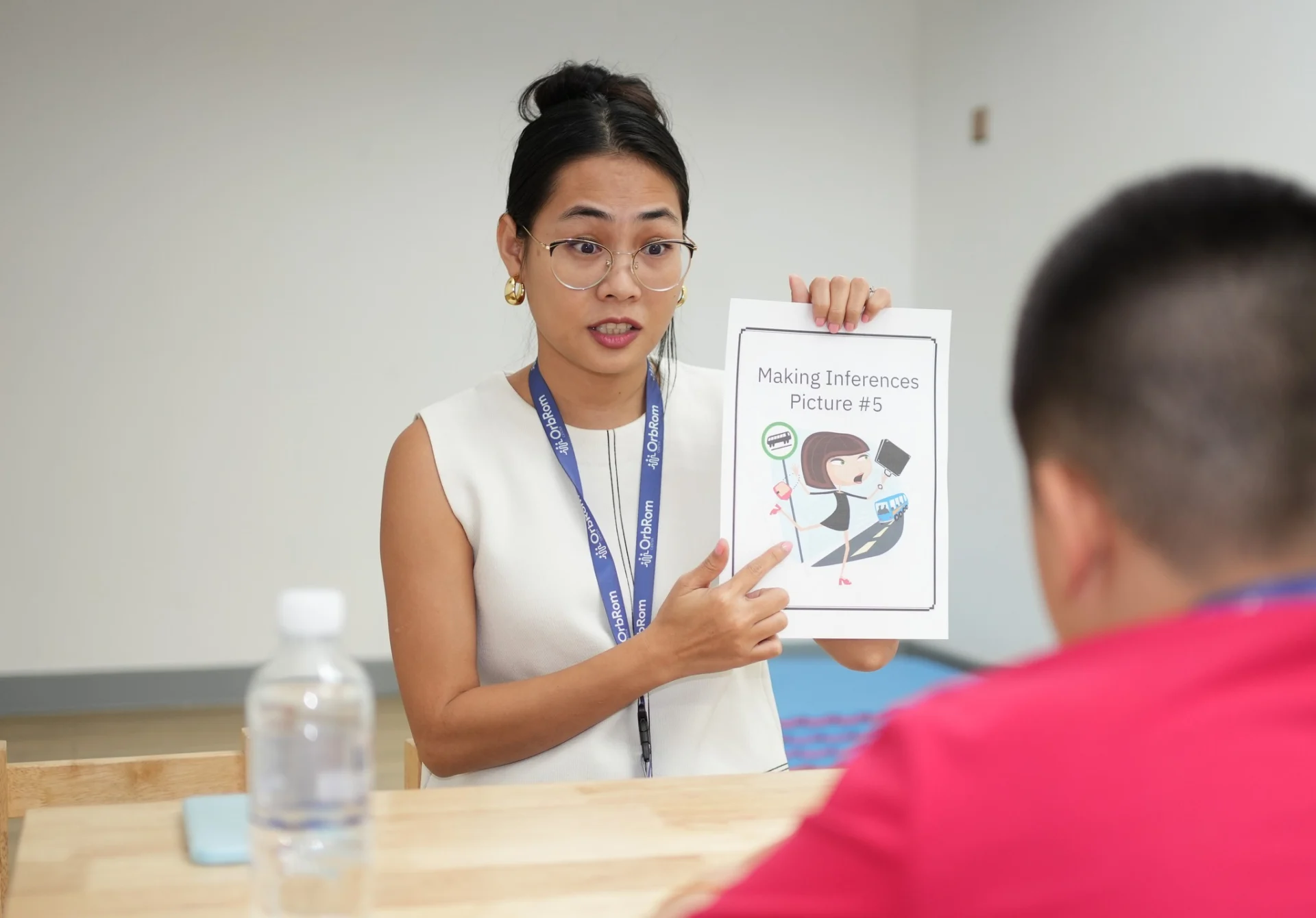

At OrbRom Learning Support Center, a growing example of Special Education Phnom Penh practices, structured lessons and visual supports are helping students develop deeper thinking skills. The classroom moment shown in this session highlights a teacher guiding a learner through an inference activity using clear visuals and structured questioning. For parents, teachers, and professionals in Cambodia, this approach reflects how specialized education environments can nurture comprehension, participation, and confidence through intentional teaching strategies.
Why Inference Activities Matter in Special Education Phnom Penh
Inference skills allow students to go beyond surface-level answers and interpret meaning from context, visuals, and social situations. In a Special Education Phnom Penh setting, inference tasks are often scaffolded with picture prompts, guided questions, and predictable routines.
This structured approach is especially helpful for learners who benefit from visual learning or explicit teaching methods. Instead of expecting students to guess meaning independently, educators model the thinking process step by step. Over time, students begin to connect ideas, interpret emotions, and build flexible problem-solving skills that transfer beyond the classroom.
Structured Teaching Builds Confidence and Engagement
One key takeaway from the lesson shared by OrbRom Learning Support Center is the emphasis on predictability and clarity. Special education is not only about completing academic worksheets; it focuses on helping learners understand situations, build social awareness, and develop independence.
Teachers use visual materials and consistent routines to reduce anxiety and help students stay focused. For example, presenting a visual story or scenario allows learners to practice identifying clues and making connections. This structured method strengthens attention and supports students who may struggle with abstract instructions.

In many Special Education Phnom Penh classrooms, educators also use individualized questioning techniques. Rather than asking broad questions, teachers guide students through smaller, manageable steps. This encourages participation while respecting each learner’s pace and communication style.
Supporting Skills That Transfer Beyond the Classroom
Effective special education programs aim to build skills that extend into everyday life. Lessons like the inference activity described in this session help students improve social understanding, communication, and executive functioning.
When students practice interpreting visuals and responding to guided prompts, they develop abilities that are useful during conversations, group work, and community interactions. These strategies can also help children strengthen listening skills, increase independence, and engage more confidently in structured learning environments.
Parents often notice that structured learning experiences improve their child’s ability to follow routines at home as well. Clear guidance, visual supports, and consistent expectations create a sense of stability that supports long-term growth.
Collaboration Between Teachers, Parents, and Specialists
Another important element reflected in this example from OrbRom Learning Support Center is collaboration. Special education programs thrive when educators, families, and therapists work together to reinforce strategies across different environments.
Teachers may recommend similar visual supports at home or encourage caregivers to use structured language during everyday activities. This continuity helps students generalize skills more effectively and maintain progress over time. For schools across Cambodia looking to strengthen inclusive education practices, structured inference-based lessons provide a practical model for supporting diverse learners.
The Future of Special Education Phnom Penh
As awareness of inclusive education continues to grow, classrooms like those at OrbRom Learning Support Center show how thoughtful teaching methods can transform learning experiences. By combining visual supports, individualized guidance, and meaningful routines, educators help students develop academic skills alongside social and emotional growth.
If you are exploring Special Education Phnom Penh options or learning about innovative teaching practices, understanding how inference activities and structured questioning work can provide valuable insight into effective support strategies for children with diverse learning needs.



Leave A Comment