
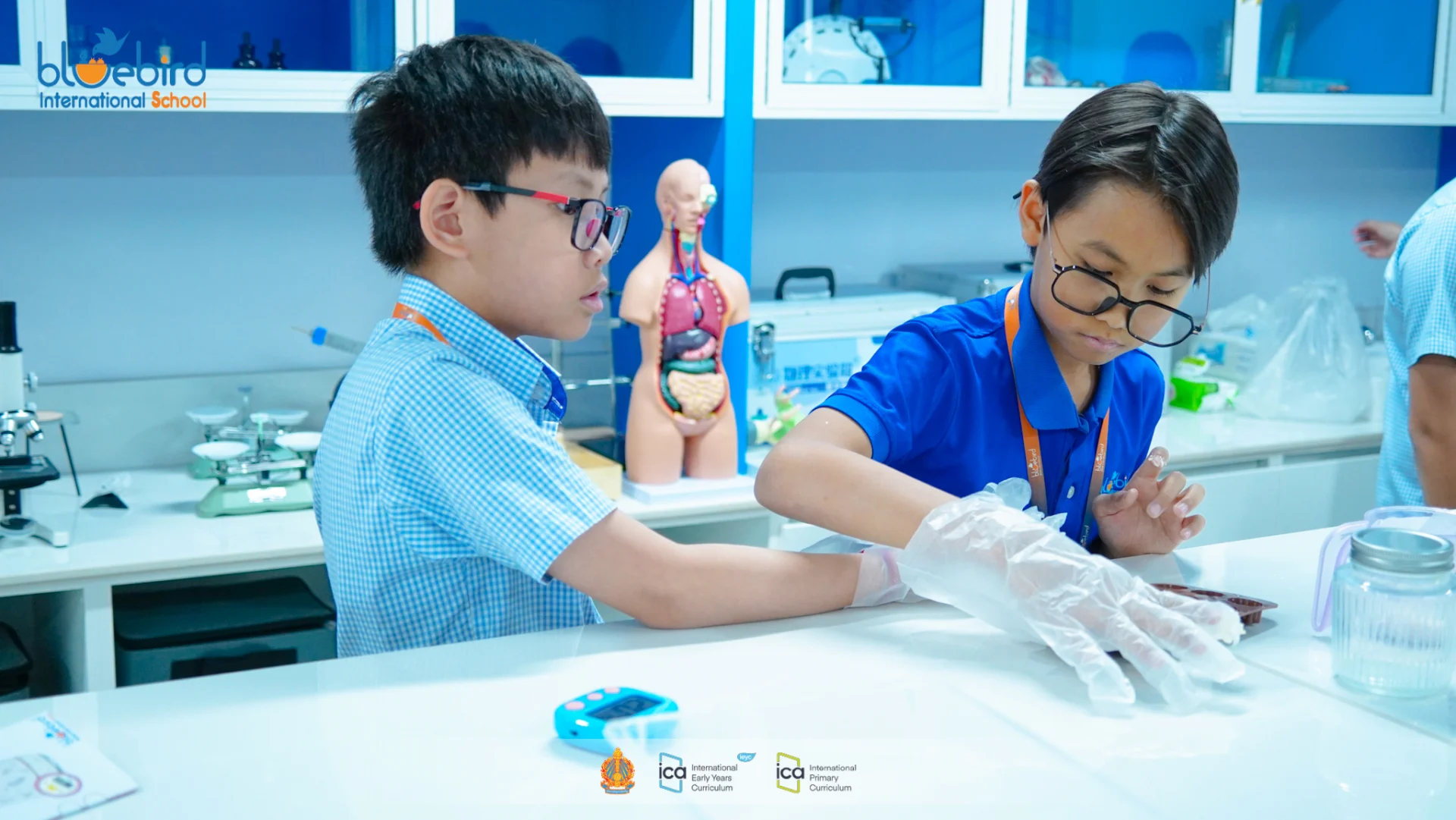

Bluebird International School Cambodia continues to show how meaningful learning happens when theory meets practice. In a recent classroom activity highlighted on their social media, Primary 5 students explored scientific concepts through a hands-on experiment focused on states of matter. This approach reflects a broader shift in international education across Cambodia, where schools are moving beyond passive learning and encouraging inquiry-based exploration.
At Bluebird International School Cambodia, science is not just about memorizing definitions. Instead, students engage directly with materials, observing how physical changes occur through force and movement. Activities like making butter through shaking and motion allow children to connect classroom knowledge with real-world experiences. For parents and educators, this is a reminder that STEM education works best when students actively participate rather than simply watch demonstrations.
Why Hands-On STEM Learning Matters
The experiment shared by Bluebird International School Cambodia highlights the value of tactile learning. When students manipulate materials themselves, they develop a deeper understanding of scientific processes. Concepts such as solid, liquid, and transformation become tangible, reducing the gap between theory and application.
Hands-on STEM activities also promote critical thinking. Students must predict outcomes, test hypotheses, and reflect on results. This process encourages problem-solving skills that extend far beyond the science classroom. In Cambodia’s growing international education landscape, experiential learning has become an important strategy for preparing students for future academic and professional challenges.
Encouraging Curiosity Through Real-World Science
One of the strengths of Bluebird International School Cambodia’s approach is the emphasis on curiosity. By turning a simple kitchen process into a science experiment, teachers create a learning environment that feels both familiar and exciting. Students are more likely to stay engaged when lessons connect to everyday experiences.

For teachers and school leaders, this example demonstrates how structured experimentation can support multiple learning goals at once. Students practice measurement, observation, teamwork, and communication skills while exploring scientific principles. These integrated outcomes align well with international curricula that emphasize holistic development.
What Parents and Educators Can Learn from This Approach
Parents often ask how schools can make science more accessible for young learners. The activity at Bluebird International School Cambodia provides a clear model. Instead of focusing only on textbook explanations, educators can design interactive experiences that allow children to explore, make mistakes, and discover answers independently.
In addition, collaborative experiments encourage social learning. Students discuss findings with peers, compare results, and build confidence in expressing their ideas. For professionals working in education across Phnom Penh, this reinforces the importance of designing lessons that balance structure with creativity.
Building a Strong Foundation for Future Learning
STEM activities like the one featured by Bluebird International School Cambodia contribute to long-term academic development. When children understand scientific concepts through experience, they retain information more effectively. This foundation supports future studies in physics, chemistry, and engineering while nurturing a lifelong interest in discovery.
As more international schools in Cambodia adopt experiential learning strategies, examples like this highlight the positive impact of well-designed classroom activities. Bluebird International School Cambodia demonstrates that even simple experiments can transform learning into an engaging and memorable journey.


Leave A Comment