
Educational field trips offer students more than a day outside the classroom—they provide meaningful learning, context, and connection to the world around them. The recent educational field trip organized by Berkeley International School demonstrates how experiential learning can strengthen cultural identity, creativity, and curiosity in students. This specific experience focused on exploring Cambodian architecture and artistic expression through an exhibition celebrating the life and influence of Vann Molyvann, one of Cambodia’s most iconic architects.
The keyword Berkeley International School in Cambodia reflects how schools today are exploring more hands-on learning approaches to support student development and national pride. Instead of learning solely through textbooks, students gain deeper insight and personal interpretation by interacting with real works of art and design.
Connecting Students With Cambodia’s Cultural Heritage
The purpose of this educational field trip was not only to expose students to creative environments, but to help them understand how Cambodian history, design, and cultural identity have evolved. Vann Molyvann’s work has shaped Cambodia’s modern architectural landscape, and by visiting an exhibition dedicated to him, students witnessed firsthand how creativity can tell a story about a nation’s past, present, and future.
Field trips like this allow children to ask questions, form opinions, and engage in meaningful discussions. By viewing architectural drawings, paintings, and historic design concepts, students learned more than dates and facts—they explored ideas relating to identity, heritage, and innovation. These opportunities increase confidence, enrich learning, and make academic subjects more relevant and engaging.
Modern Education and Hands-On Learning
Schools in Cambodia are increasingly incorporating active learning experiences into their annual curriculum. Berkeley International School demonstrates strong commitment toward meaningful, high-quality education by planning activities that bridge theory and experience. Such experiences support critical thinking, visual analysis, communication skills, and emotional connection to learning.

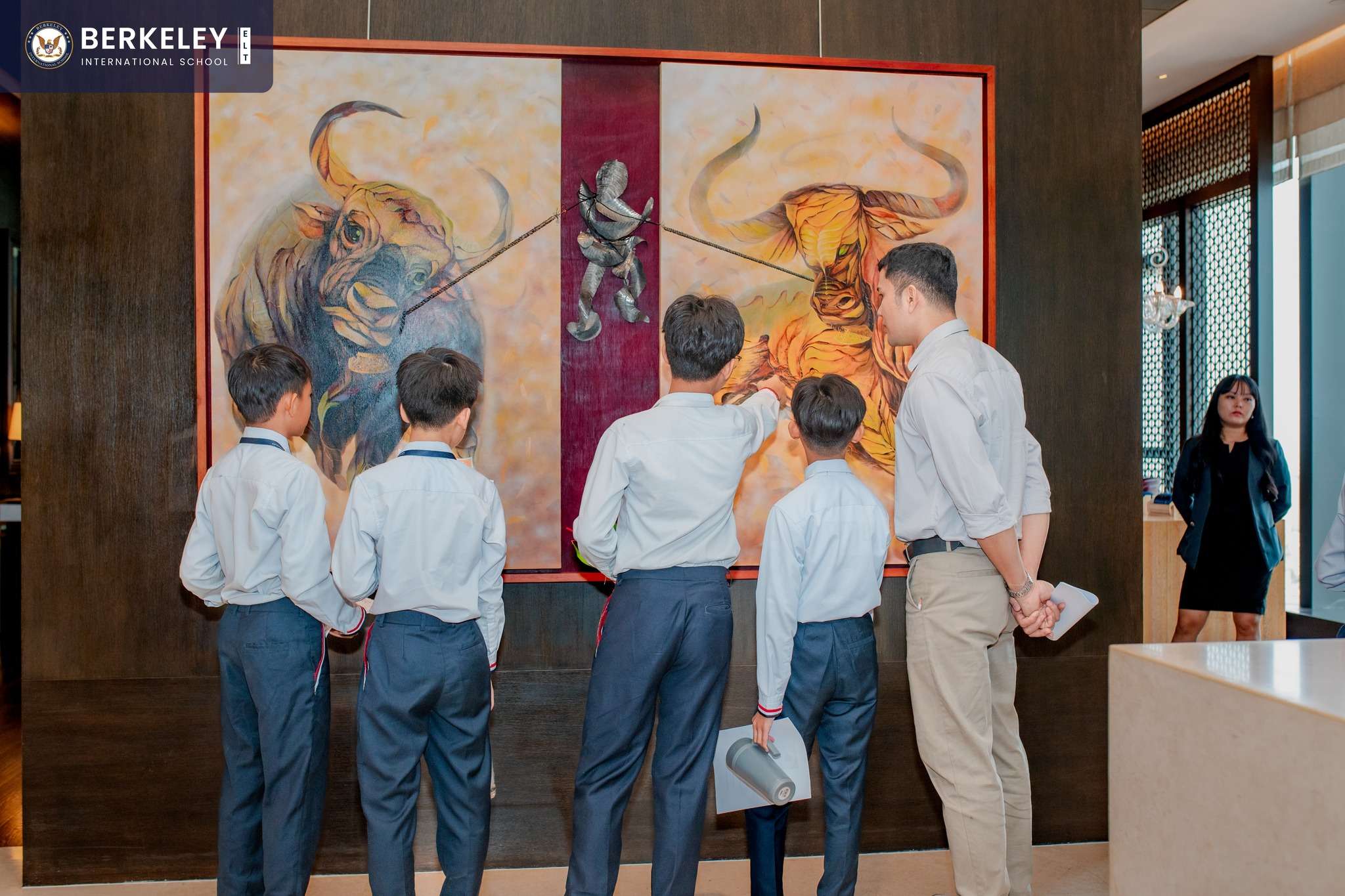
During the trip, students participated in guided observation, note-taking, and group discussions. Photos from the event show students engaged with artworks and speaking confidently with their teachers and peers—clear indicators of an enriching and student-centered learning environment.
Why Art and Cultural Exploration Matter
Art has the power to support child development beyond academic content. When young learners view professional artwork or architectural designs, they begin to understand scale, composition, symbolism, and historical context. More importantly, they discover how heritage and creativity are connected.
For many children, this type of learning experience awakens new interests—whether in architecture, history, art, or creative communication. Not every student will become an architect or artist, but all students benefit from exposure to creativity, cultural learning, and real-world problem-solving.
By integrating cultural education into school programs, Berkeley International School is helping shape future adults who appreciate tradition, value innovation, and take pride in Cambodia’s cultural richness.
Final Thoughts
Educational trips such as this highlight the value of learning beyond the classroom. Schools that invest in cultural exposure and creative learning provide students with unforgettable and meaningful experiences that help shape who they become as thinkers, citizens, and future leaders.
If your school also offers innovative learning experiences and is not yet listed on our platform, we invite you to share your information so families across the country can learn about the great work you do.
If the information about the school is not accurate and insufficient, Contact Us
Do you want to register your school? Click Here