
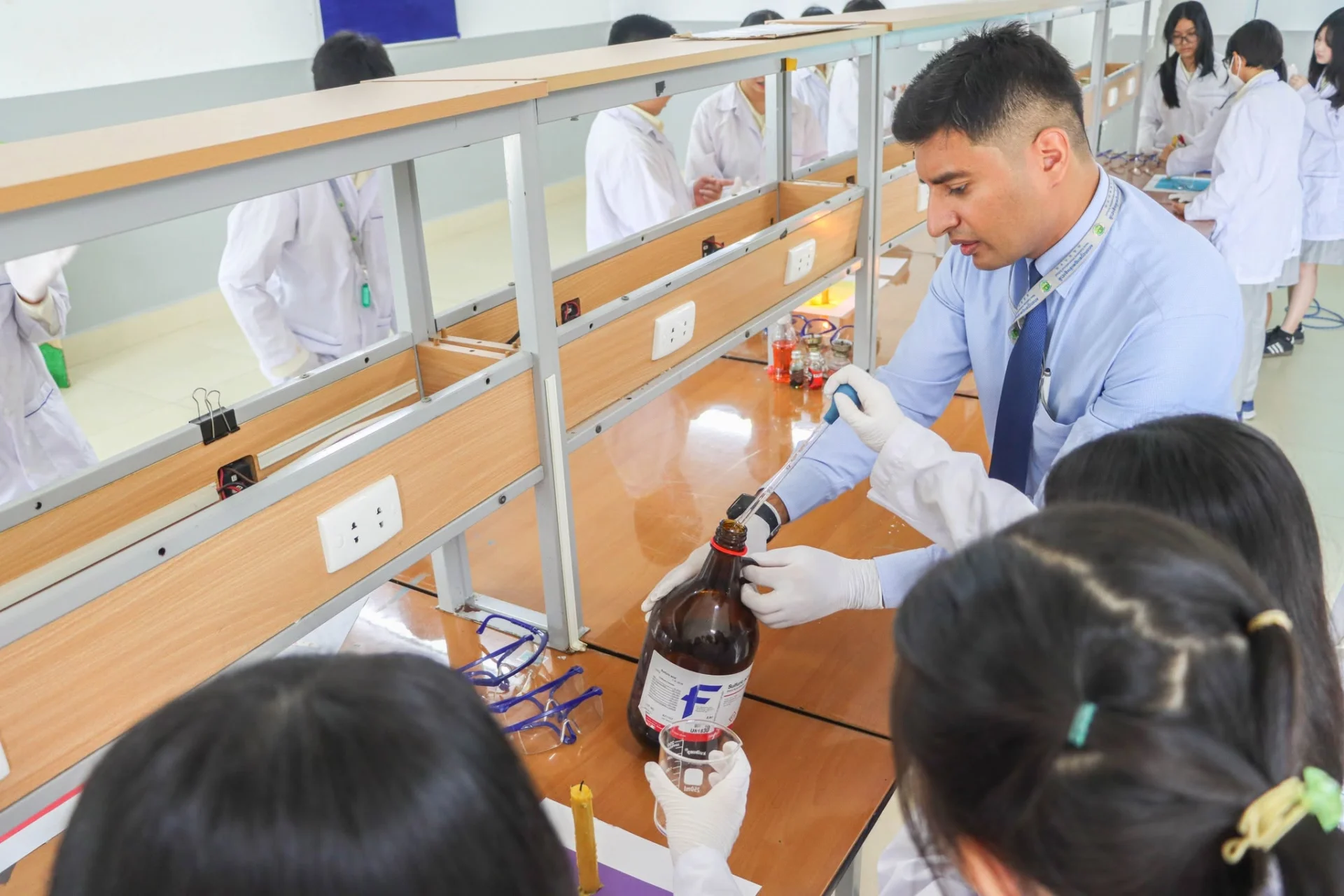

Detecting chemical reactions was the focus of a Grade 8A lesson shared by New Gateway International School II on Facebook. Students compared several changes, including vigorous fizzing when magnesium reacted with hydrochloric acid, a slower reaction between copper oxide and sulfuric acid, and bright light when a strip of magnesium burned. The examples gave the class different kinds of evidence to discuss and a chance to consider what each observation could tell them.
Detecting chemical reactions through different observations

The school reported that the magnesium and hydrochloric acid mixture fizzed and released gas. The bubbles were something students could see. Identifying the gas takes a further step. The Royal Society of Chemistry’s account of the reaction explains that it produces hydrogen. In a class discussion, students can separate what they observed from what they know about the substances involved. That distinction helps them give a reason for their conclusion.
The copper oxide and sulfuric acid reaction was slower, according to the school. The Facebook post says a new compound formed and gives no measurements for that part of the lesson. Comparing it with the fizzing example can prompt students to ask what they would record if a change were gradual. They might describe the starting appearance, note changes at intervals, and compare the final appearance with their first observation.
In the third example, students saw bright light when magnesium burned. The post describes this as a release of energy. A useful follow-up is to ask students to put the three observations side by side. The comparison helps them see why a single phrase such as “it fizzed” would describe one example well while leaving out what happened in the other two.
Turning observations into explanations
Students can organize their notes into two columns, one for observations and one for interpretations. In the first column, they might record that bubbles appeared. In the second, they can write that gas was produced and explain why they identify it as hydrogen in the magnesium and hydrochloric acid reaction. If they recorded only a visual change, they can say so directly and identify what evidence they would need to make a more specific claim.
Teachers can also ask students to compare their notes with a partner’s. One student might describe an event as immediate, while another might use a more precise phrase such as “within a few seconds.” Discussing the difference helps the class decide what it would need to measure to compare reaction rates fairly. In its published example, the Royal Society of Chemistry measures gas volume over time. The school’s announcement does not report using that method.
Questions families can ask after the lesson
At home, a parent can invite a child to describe which change was easiest to observe and why. Asking the child to sketch the three examples or label a drawing gives them another way to recall the sequence. A short explanation of what they saw can be a starting point for discussing what they think happened.
For Grade 8A, detecting chemical reactions meant comparing evidence across experiments. A useful follow-up is to choose one observation, explain what it suggests, and identify a question the observation leaves open. That gives students practice making a claim they can support and recognizing where more evidence would help.
If the information about this school is inaccurate or incomplete, Contact Us.
Would you like to register your school? Click Here.




Leave A Comment