
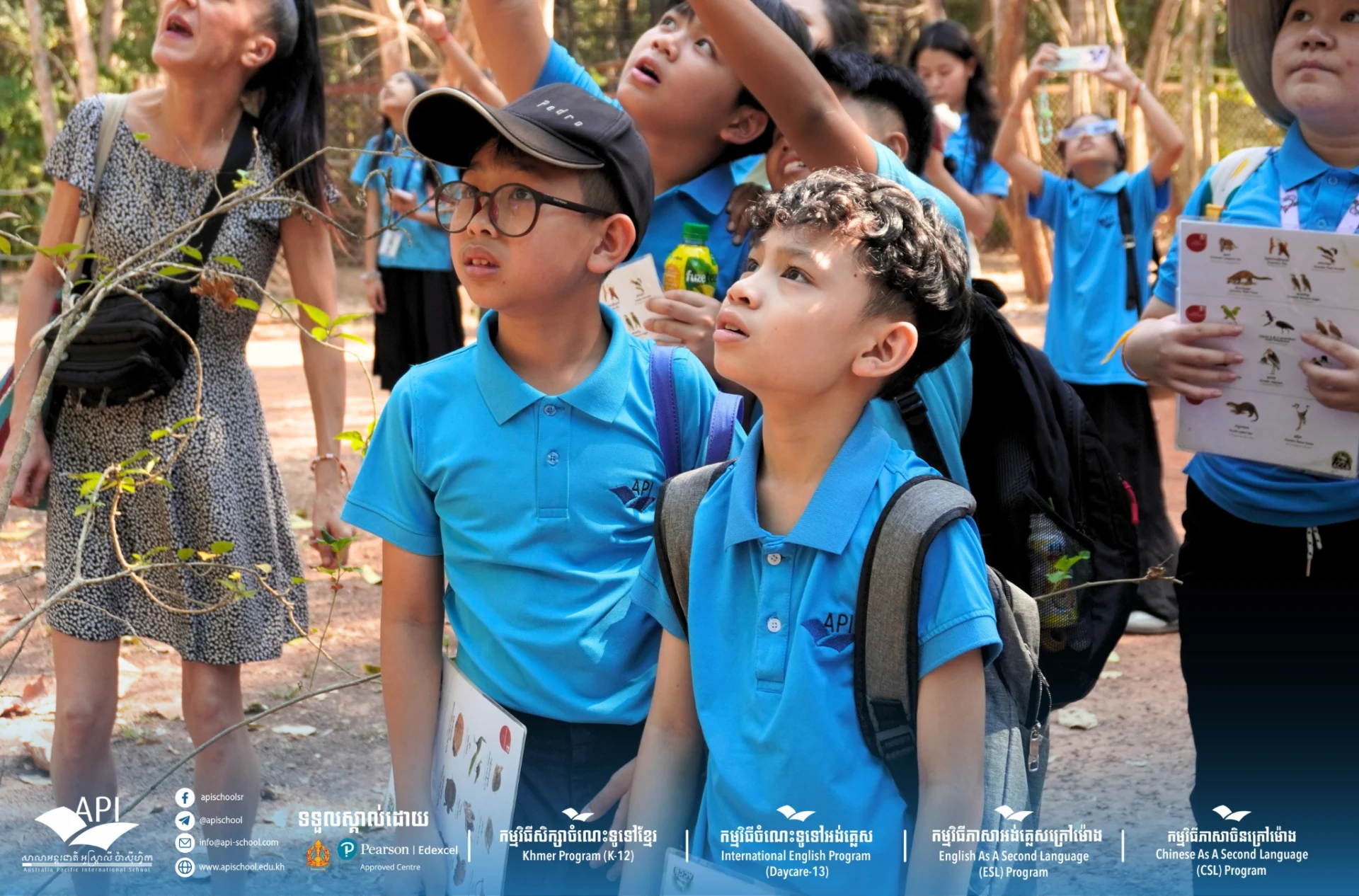

Experiential learning is becoming increasingly important in modern education, and API School in Siem Reap is demonstrating how powerful outdoor learning can be. Recently, primary students from API School participated in an educational field trip to the Angkor Centre for Conservation of Biodiversity (ACCB), where they explored Cambodia’s unique wildlife and ecosystems firsthand. This API School field trip provided students with an opportunity to connect classroom knowledge with real-world environmental experiences.

The visit combined environmental education, wildlife observation, and interactive learning activities. For many students, it was their first close encounter with rare animals and conservation initiatives in Cambodia.
Learning Beyond the Classroom
Field trips like this are more than just a day outside the classroom. They play an important role in helping students develop curiosity, awareness, and a deeper understanding of the natural world. During the API School field trip, students were able to observe wildlife species, explore forest environments, and learn about conservation programs designed to protect Cambodia’s biodiversity.
Teachers often emphasize that outdoor learning environments stimulate critical thinking and engagement in ways that traditional classrooms sometimes cannot. Seeing animals, habitats, and conservation efforts in person allows students to connect academic concepts with meaningful experiences.
At the Angkor Centre for Conservation of Biodiversity, students were introduced to the importance of protecting endangered species and preserving natural habitats. Conservation educators explained how wildlife rescue programs operate and how communities can contribute to protecting biodiversity.
Why Environmental Education Matters

Environmental education has become an essential component of modern schooling, particularly in regions rich in biodiversity like Cambodia. Schools such as API School recognize that students should not only learn academic subjects but also understand their responsibility toward the environment.
Through initiatives like this field trip, students learn:
-
The importance of protecting wildlife
-
How ecosystems function and support life
-
The role of conservation centers in rescuing and rehabilitating animals
-
How individuals and communities can contribute to environmental protection
These experiences help cultivate responsible global citizens who appreciate nature and understand the need for sustainable practices.
Building Curiosity and Inspiration in Young Learners
One of the most noticeable outcomes of educational field trips is the excitement and curiosity they spark among students. When children observe wildlife up close or walk through natural habitats, their learning becomes immersive and memorable.
For many students from API School, the visit to ACCB was filled with moments of discovery—from spotting animals to learning about conservation work happening in Cambodia. These moments often inspire long-term interest in science, environmental studies, and wildlife protection.
Parents and educators frequently note that students return from such trips with new questions, ideas, and enthusiasm for learning.
The Role of Schools in Promoting Experiential Learning
Schools across Cambodia are increasingly incorporating experiential learning opportunities into their educational programs. Institutions like API School in Siem Reap demonstrate how field-based learning can complement academic instruction and enrich student development.
Educational trips encourage teamwork, observation skills, and environmental awareness. They also provide opportunities for teachers to integrate multiple subjects—science, geography, and social responsibility—into one meaningful experience.
As Cambodian schools continue to modernize their teaching approaches, initiatives like the API School field trip to the Angkor Centre for Conservation of Biodiversity highlight how experiential education can shape well-rounded learners.
If the information about the school is not accurate or sufficient, Contact us
Do you want to register your school? Click Here


Leave A Comment