
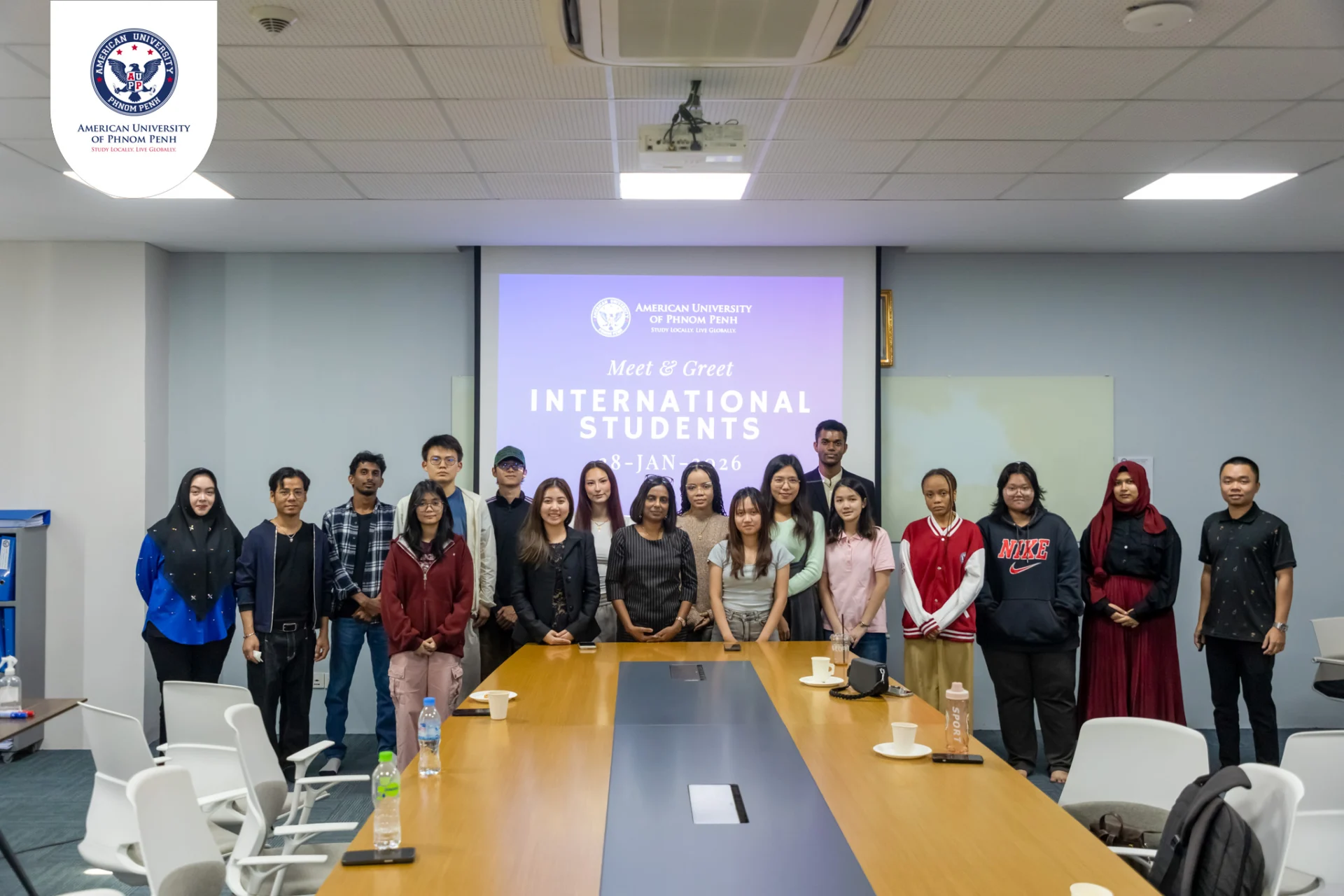

The American University of Phnom Penh international students community continues to grow as a vibrant and essential part of Cambodia’s higher education landscape. Recently, the American University of Phnom Penh (AUPP) hosted an International Students Meet & Greet that brought together students from diverse backgrounds for open dialogue, shared experiences, and meaningful connection with university leadership. Events like this highlight how international education in Cambodia is evolving beyond academics to focus on belonging, inclusion, and student engagement.

At the heart of the event was the opportunity for international students to interact directly with senior academic leaders. This type of access is particularly valuable for students who are studying far from home and navigating a new education system, culture, and social environment. By creating a space where questions, concerns, and ideas can be shared openly, AUPP demonstrates a commitment to listening and responding to the needs of its international student body.
Supporting International Students in Cambodia
For many families and education professionals, choosing a university is no longer only about rankings or degrees. Support systems, student wellbeing, and campus culture play a major role. The American University of Phnom Penh international students meet & greet reflects a broader trend among leading universities in Cambodia: recognizing that international students need structured opportunities to connect, feel heard, and build relationships early in their academic journey.
Such gatherings help students exchange experiences about adapting to life in Phnom Penh, understanding academic expectations, and balancing cultural differences. Peer connections formed during these events often extend beyond campus life, supporting students academically and socially throughout their studies.
Leadership Engagement and Open Communication
One of the most impactful aspects of this event was the presence of university leadership. When students can speak directly with vice presidents and senior administrators, it sends a strong message that their voices matter. For international students, this reassurance is critical, especially when adjusting to a new education system.

Open discussions also allow universities to gather real-time feedback on student services, academic support, and campus facilities. This feedback loop strengthens institutional planning and ensures that international education programs remain responsive and relevant.
Creating an Inclusive Campus Environment
An inclusive campus does not happen by accident; it requires intentional planning and ongoing engagement. The American University of Phnom Penh international students initiative reflects a campus culture that values diversity and inclusion as strengths. Bringing students together in a welcoming, informal setting helps reduce barriers and encourages participation from students who may otherwise feel isolated.
For educators and school leaders across Cambodia, this approach offers a useful example. Creating regular touchpoints between students and leadership fosters trust, transparency, and a stronger sense of community.
Why This Matters for Education in Cambodia
As Cambodia positions itself as a regional hub for international education, universities must demonstrate not only academic excellence but also student-centered practices. Events like this meet & greet contribute to the reputation of Cambodian higher education institutions as supportive, globally minded, and student-focused.
For parents and education professionals exploring international study options locally, these initiatives provide reassurance that universities are investing in the holistic development of their students, not just classroom outcomes.



Leave A Comment