
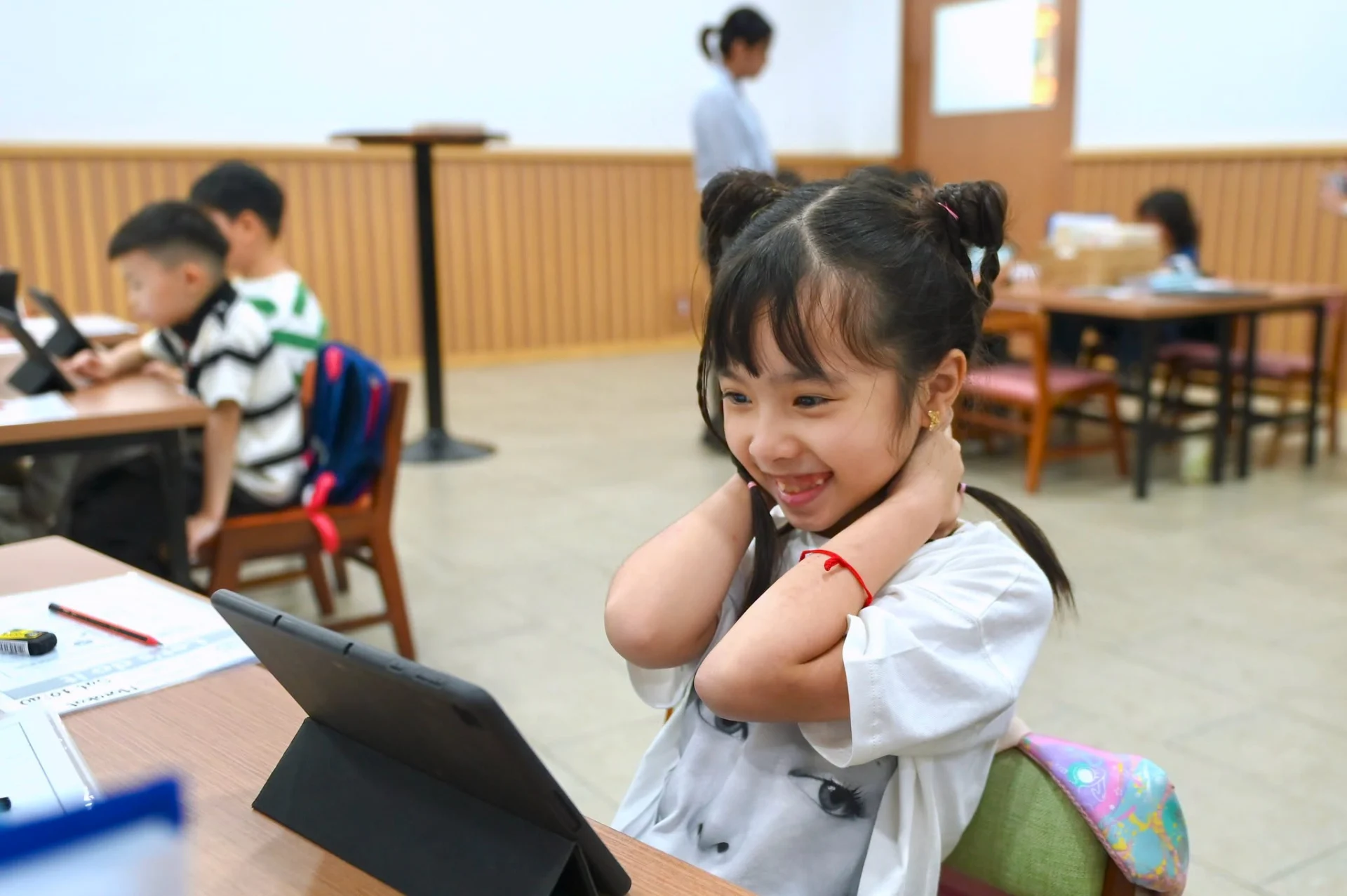

Think!Think! Cambodia has shared a look inside its learning classes, where children take part in activities intended to develop curiosity, logical thinking and problem-solving. The programme uses active learning materials and classroom tasks to encourage students to think through challenges while enjoying the process.
Think!Think! Cambodia introduces active learning classes

In its announcement, Think!Think! Cambodia invited families to explore classes designed around participation and discovery. The centre described students as actively engaged in learning activities, sometimes so absorbed in the tasks that they may not realise they are learning.
The photographs accompanying the post show children writing on worksheets, working with wooden blocks and participating in group classroom activities. Some learners are shown concentrating on individual tasks, while others are pictured in shared learning spaces with teachers nearby.
The centre presents these experiences as part of an active learning approach, in which children engage directly with educational materials and tasks rather than only listening to explanations.
Logical thinking and problem-solving through activities
Think!Think! Cambodia identifies logical thinking and problem-solving as important learning goals. These skills involve recognising patterns, considering possible solutions and making decisions when completing a task.
For example, working with blocks can require a child to consider how objects fit together and what arrangement will achieve a desired result. A drawing or written task may encourage careful observation, planning and checking of answers. These are general examples of the skills such activities can practise; the school’s post does not provide individual assessment results.
The centre also highlights curiosity. When students are encouraged to explore different approaches, they have opportunities to ask questions, test ideas and reconsider a solution after an unsuccessful attempt.
Building motivation and critical thinking
According to Think!Think! Cambodia, its classes aim to cultivate motivation and critical thinking. The centre describes these as foundations for learning across different subjects and situations.
Motivation can be supported when a task offers a clear challenge and children can see their own progress. Critical thinking involves considering information and possible answers before making a choice. In a classroom, teachers may encourage these processes by asking learners to explain their reasoning or try another strategy.
The announcement does not report measured improvements or comparisons with other programmes. It describes the educational intentions behind the activities and invites families to observe the learning environment.
Learning materials developed in Japan
Think!Think! Cambodia states that it offers active-learning classes featuring educational materials from Japan. The materials are described as being designed specifically for students aged 4.5 to 12.
This age range includes children at different stages of cognitive and academic development. Tasks may therefore need to vary in difficulty, instructions and the amount of support provided. Families can ask the centre how activities are selected for different ages and learning levels.
The centre’s photographs show a combination of tabletop work, hands-on materials and classroom participation, illustrating the kinds of activities included in its promotional announcement.
Free trial class at Think!Think! Cambodia
Think!Think! Cambodia invites interested families to join a free trial class to experience its active learning environment. Parents considering the programme can use the trial to ask about class structure, teaching methods, age suitability and how students are supported during activities.
The announcement does not specify a trial schedule, class duration or enrolment fee. Families should contact Think!Think! Cambodia directly for current arrangements and eligibility.
Through its classroom activities, Think!Think! Cambodia aims to provide children aged 4.5 to 12 with opportunities to practise curiosity, logical thinking and problem-solving. Its free trial invitation gives families a way to learn more about the programme before deciding whether to enrol.
For corrections or additional information, Contact Us. To register your school, Click Here.
Leave A Comment