
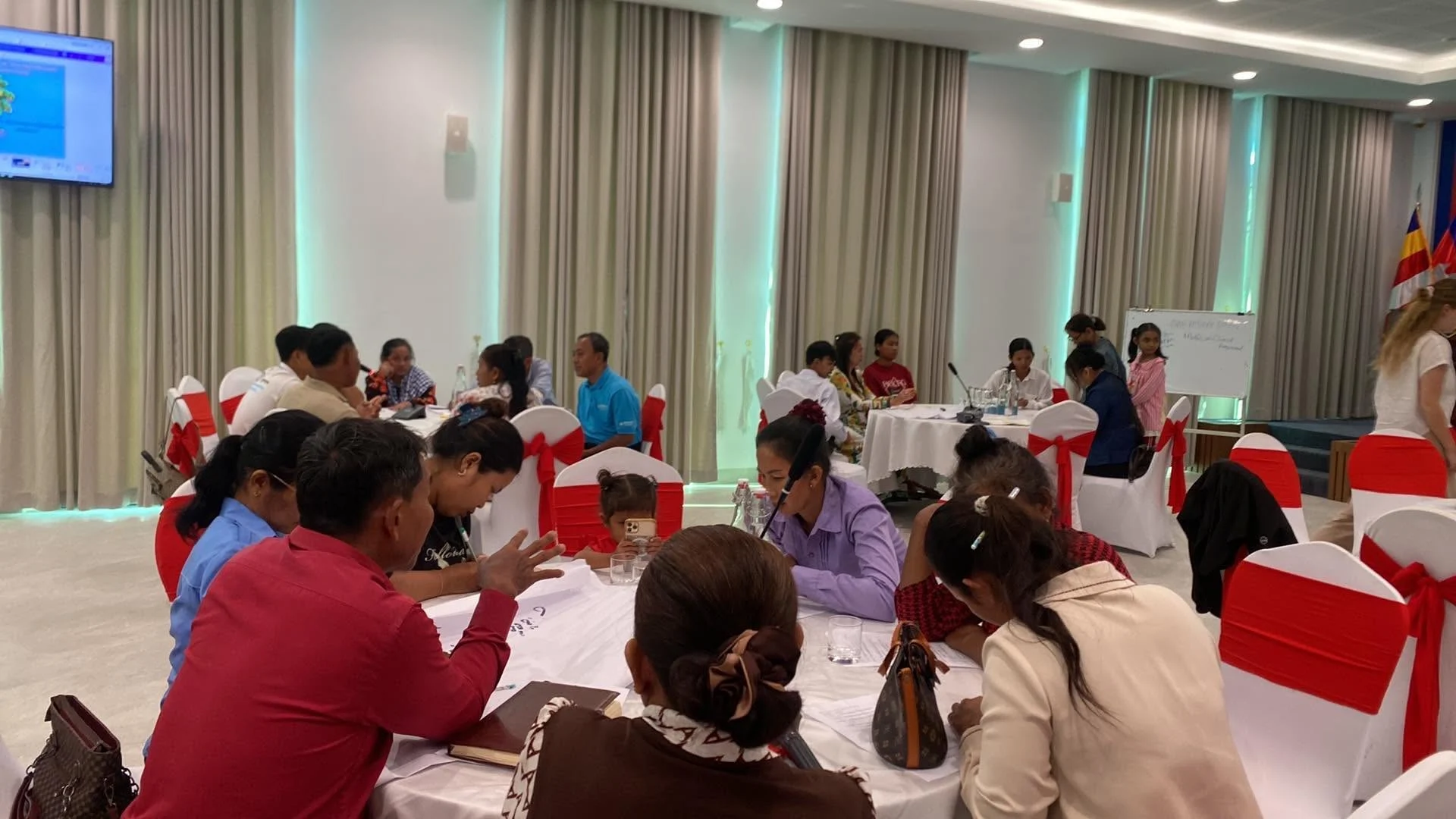

Kampuchea Sela Handicap (KSH) and Damnok Toek Organization (DT) organised a two-day workshop in Kep on 12–13 October, bringing together parents of people with intellectual disabilities from three provinces. According to KSH, the event received technical and financial support from LEV Inclusion Denmark and focused on strengthening parents’ collective voice.

The workshop marked an initial step toward establishing a parents’ association in Cambodia. Organisers also sought to build on existing peer support groups, helping families connect, exchange experiences and consider how to advocate for their children’s rights and inclusion.
Parents from three provinces meet in Kep
KSH described the gathering as an opportunity for parents to work together across provincial boundaries. Parents raising children with intellectual disabilities may have different experiences with education, community participation and access to services. Bringing families into the same discussion creates a space to identify concerns they share and learn from one another.
The photographs accompanying the announcement show participants seated in group discussions, listening to presentations and contributing to workshop activities. They document a collaborative setting, although the announcement does not specify how many parents attended or identify the three provinces represented.
Building on existing peer support groups
Rather than beginning without a foundation, the organisers intend to strengthen connections among existing peer support groups. Such groups can provide opportunities for families to exchange practical information, discuss challenges and maintain contact with others who understand similar circumstances.
The workshop aimed to develop these relationships into a stronger collective voice. A coordinated network could allow parents to communicate shared priorities and engage more consistently in discussions affecting children with intellectual disabilities.
KSH did not announce a formally registered association or a completed organisational structure. Its description presents the workshop as an early step in that process, with further coordination still needed.
Developing a collective voice for inclusion
The organisers highlighted parents’ ability to advocate for their children’s rights and inclusion in Cambodian society. Collective advocacy can involve communicating families’ experiences, identifying barriers to participation and seeking dialogue with schools, service providers and public institutions.
Parents are often closely involved in decisions about their children’s education, daily support and community participation. Sharing those experiences can help ensure that discussions about disability inclusion take account of practical needs identified by families themselves.
The workshop’s emphasis on connection and experience-sharing is therefore relevant to the longer-term goal of parent representation. However, KSH’s announcement does not report specific policy proposals, formal commitments from authorities or changes to services resulting from the meeting.
Support from LEV Inclusion Denmark
KSH credited LEV Inclusion Denmark with technical and financial support for the two-day event. Damnok Toek Organization partnered with KSH in organising the workshop. The announcement did not provide a detailed breakdown of each organisation’s responsibilities or the funding allocated.
This collaboration brought together local organisations and an international supporting partner around a defined objective: helping parents develop connections and a shared platform for advocacy.
Next steps for parent representation in Cambodia
Establishing a sustainable parents’ association would require further decisions about membership, representation, communication and how participating families set priorities. These are potential next steps, rather than outcomes confirmed by the workshop announcement.
For now, the reported outcome is the gathering itself and the organisers’ intention to build on existing support networks. KSH concluded its post with the message that parents working together can become a stronger force for change.
The Kep workshop provides an example of efforts to involve families directly in discussions about intellectual disability and inclusion in Cambodia. Future updates from the organisers may clarify how the proposed parents’ association develops and how additional families can participate.
Leave A Comment