
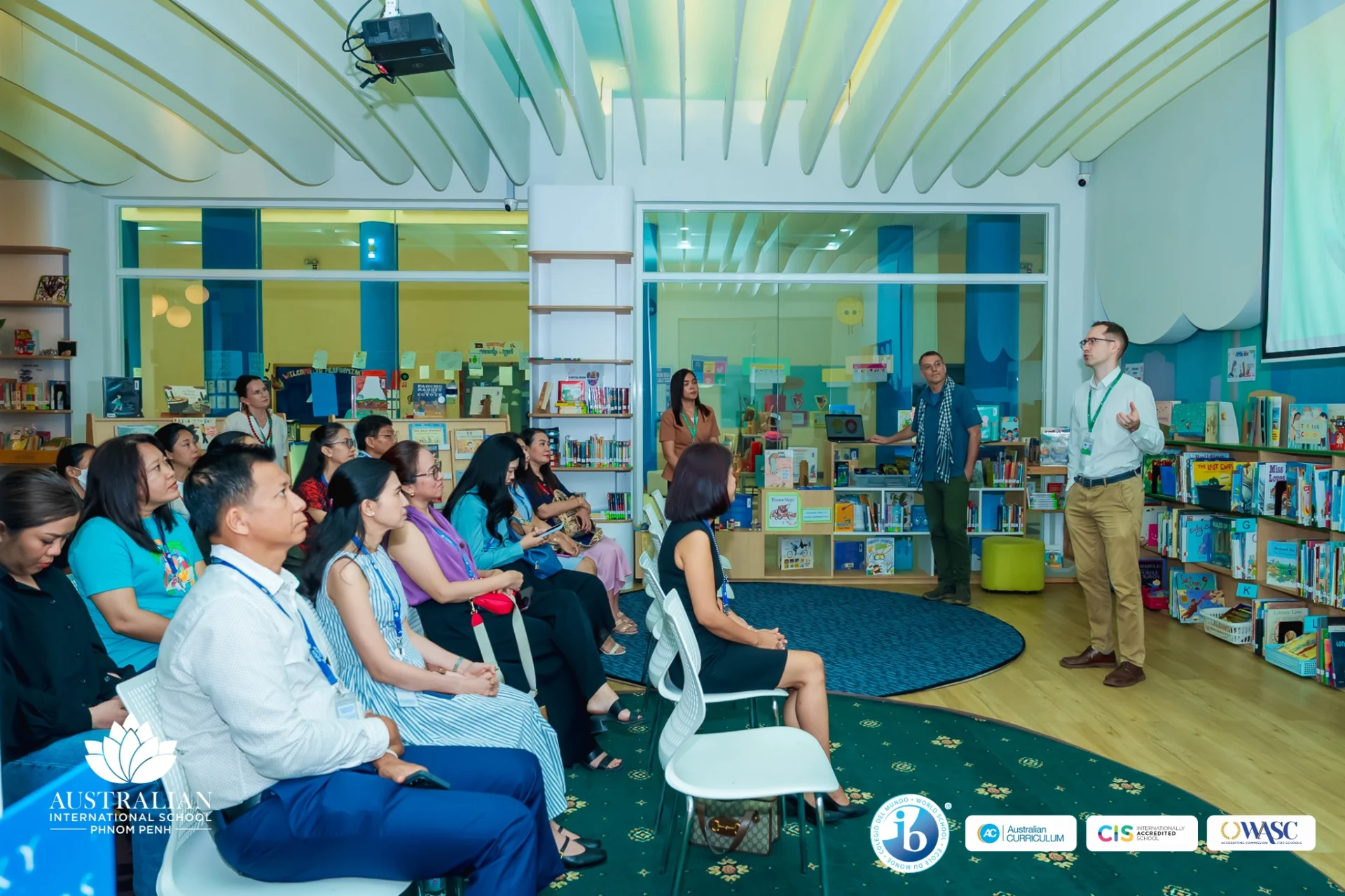

AISPP Phnom Penh recently welcomed Year 5 parents to an informative workshop focused on helping students transition from the Primary Years Programme (PYP) into the Middle Years Programme (MYP). As international schools in Cambodia continue to strengthen academic pathways and student support systems, events like this reflect the growing importance of collaboration between schools and families during key educational transitions.

Moving from PYP to MYP can be a significant adjustment for many students. Academic expectations become more demanding, independent learning skills become increasingly important, and students are expected to manage more complex schedules and responsibilities. AISPP Phnom Penh’s workshop aimed to prepare parents for these changes while helping them better understand how they can support their child’s success both academically and emotionally.
For many families in Phnom Penh, international education offers a unique opportunity to expose children to inquiry-based learning, global perspectives, and critical thinking skills. However, transitions between programmes within international schools can still feel overwhelming for students. Workshops like the one hosted by AISPP Phnom Penh help reduce uncertainty by giving parents practical strategies and a clearer understanding of what lies ahead.
One of the most valuable aspects of the session was the focus on communication between home and school. Research consistently shows that students perform better when parents remain actively involved in their educational journey. By engaging families early, schools can create stronger partnerships that help students navigate academic pressure, social adjustments, and changes in classroom expectations.
The transition from PYP to MYP often includes changes in teaching styles and assessment methods. Students are introduced to more subject-specific learning, greater independence, and longer-term projects that require planning and organizational skills. Parents who understand these shifts are better equipped to support routines at home and encourage positive study habits.
International schools in Phnom Penh are increasingly recognizing the importance of emotional readiness alongside academic preparation. While curriculum changes are important, students also need support in developing resilience, confidence, and adaptability. Events like this workshop create opportunities for parents to ask questions, share concerns, and gain reassurance about the next stage of their child’s learning journey.
Educational workshops also contribute to stronger school communities. Parents become more connected with teachers, administrators, and other families, helping to build a supportive environment around students. This sense of community can play an important role in helping children feel secure and motivated during periods of transition.
Schools across Cambodia are placing greater emphasis on holistic education, balancing academics with social-emotional development and student wellbeing. AISPP Phnom Penh’s initiative reflects a broader trend among international schools to provide families with more guidance and transparency throughout the educational process.
Parents looking to support their child during major school transitions can also benefit from additional services outside the classroom. Some children may require support with executive functioning, emotional regulation, communication, or confidence-building during periods of change. Services such as speech therapy and occupational therapy can sometimes help students strengthen the skills needed for successful participation in academic environments. Families who want a broader understanding of their child’s learning profile may also explore educational assessments.
As Phnom Penh’s international education sector continues to grow, workshops like the one organized by AISPP Phnom Penh highlight how schools are becoming more proactive in supporting families beyond traditional classroom instruction. Preparing students for academic transitions is not only about curriculum alignment but also about building confidence, communication, and long-term learning success.
For parents, teachers, and school leaders, this serves as a reminder that educational transitions work best when schools and families work together. Strong collaboration creates smoother adjustments for students and helps them approach new academic challenges with greater confidence and readiness.
If the information about the school is not accurate and insufficient Contact us
Do you want to register your school, Click Here
Leave A Comment