
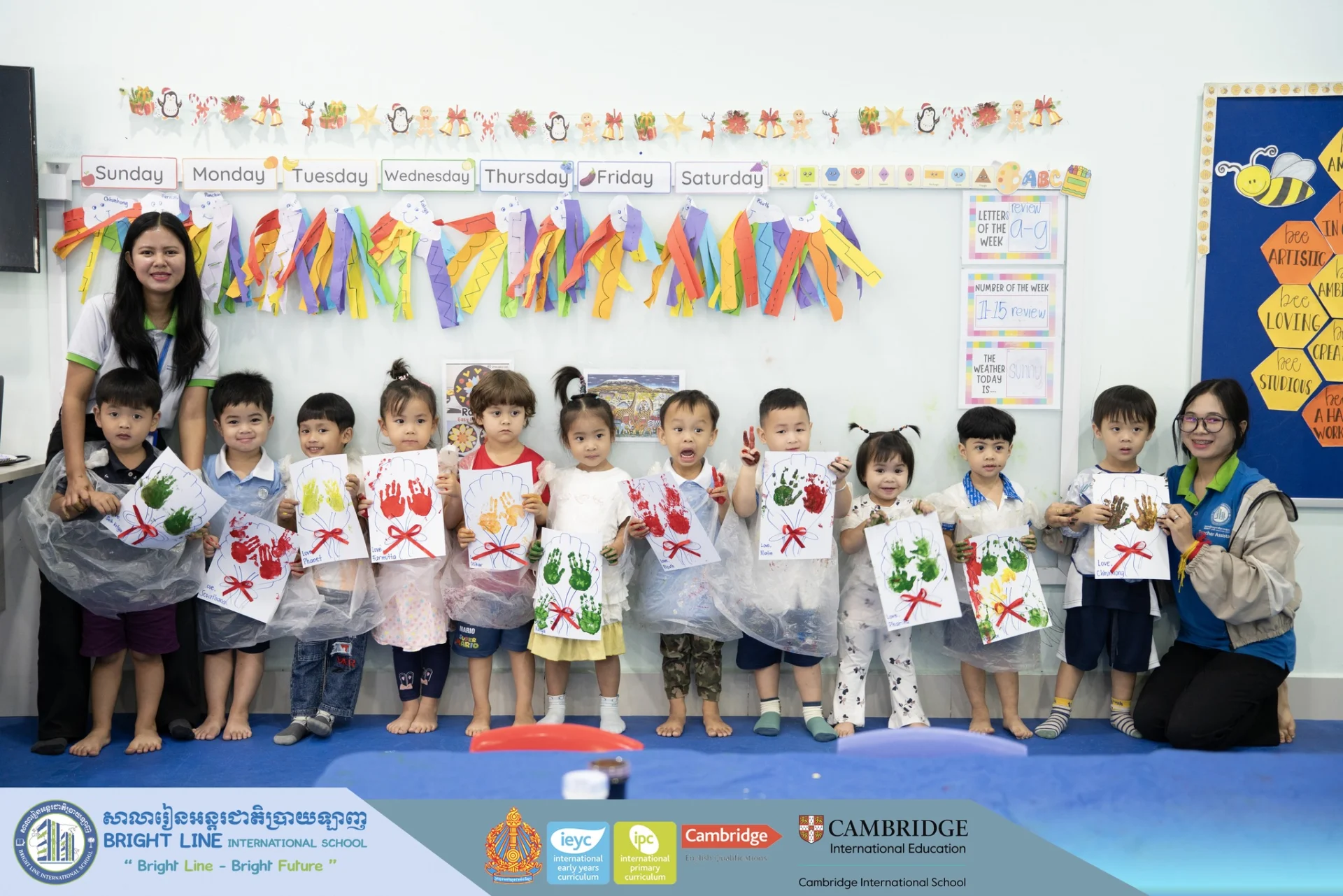

Bright Line International School recently highlighted the importance of family, creativity, and emotional development through a meaningful Mother’s Day celebration organized by its Early Years students. The event showcased how schools in Cambodia are increasingly focusing on learning experiences that go beyond academics by encouraging children to express gratitude, empathy, and connection through hands-on classroom activities.

In the photos shared by Bright Line International School, young learners proudly presented handmade gifts and artwork prepared especially for their mothers and families. These activities demonstrate how early childhood education can support not only academic growth but also social-emotional learning, communication skills, and creativity.
Why Mother’s Day Activities Matter in Early Childhood Education
Mother’s Day celebrations in schools are more than simple arts and crafts projects. For preschool and kindergarten students, these activities help build important developmental skills. Children practice fine motor coordination while cutting, drawing, and decorating cards. They also strengthen language and emotional expression as they learn how to communicate appreciation and love.
At Bright Line International School, students appeared actively engaged in collaborative classroom activities that encouraged creativity and participation. Teachers guided the children through structured projects while still allowing room for personal expression. This balance is essential in modern early childhood education because it promotes both independence and confidence.
In Cambodia’s growing international education sector, many schools are now emphasizing experiential learning. Activities connected to real-life events such as Mother’s Day help students understand relationships, traditions, and emotional awareness in practical and memorable ways.
Learning Beyond the Classroom
One of the key messages shared by Bright Line International School is the importance of learning beyond the classroom. This educational philosophy is becoming increasingly popular among international schools in Phnom Penh and across Cambodia. Schools are recognizing that young children learn best through interaction, creativity, and meaningful experiences rather than passive instruction alone.
Hands-on projects help children stay motivated and engaged. They also create opportunities for parents to become part of the learning process. When children bring home handmade gifts or artwork, families can see firsthand how schools nurture emotional intelligence alongside academic development.
For younger learners, these classroom experiences also support communication and social interaction. Children learn to share materials, follow instructions, take turns, and celebrate each other’s work. These are foundational skills that support long-term academic and personal success.
The Role of Teachers in Creative Learning Environments
The classroom environment shown at Bright Line International School reflects the growing emphasis on student-centered learning. Teachers in early childhood programs play a critical role in creating spaces where children feel safe, supported, and encouraged to participate.
Creative learning activities often require thoughtful planning and classroom management. Teachers must adapt activities to different learning styles while ensuring all children remain engaged. In many international schools in Cambodia, educators are increasingly incorporating interactive teaching strategies that combine academic goals with emotional and social development.
Parents also value schools that provide opportunities for children to develop confidence and self-expression. Activities such as storytelling, art projects, and celebration days contribute to a positive school culture and help strengthen the connection between home and school.
Early Childhood Education in Cambodia Continues to Evolve
The Mother’s Day celebration at Bright Line International School reflects broader changes happening in Cambodia’s education landscape. More schools are investing in child-centered learning approaches that prioritize creativity, communication, collaboration, and emotional growth.
Families today are looking for schools that support the whole child rather than focusing only on test performance. Early years education programs that integrate arts, play-based learning, and social-emotional development are becoming increasingly attractive to parents seeking high-quality international education options.
As Cambodia’s international school community continues to grow, events like these highlight how schools are creating meaningful learning experiences that leave lasting impressions on students and families alike.
If the information about the school is not accurate and insufficient Contact us
Do you want to register your school, Click Here
Leave A Comment