
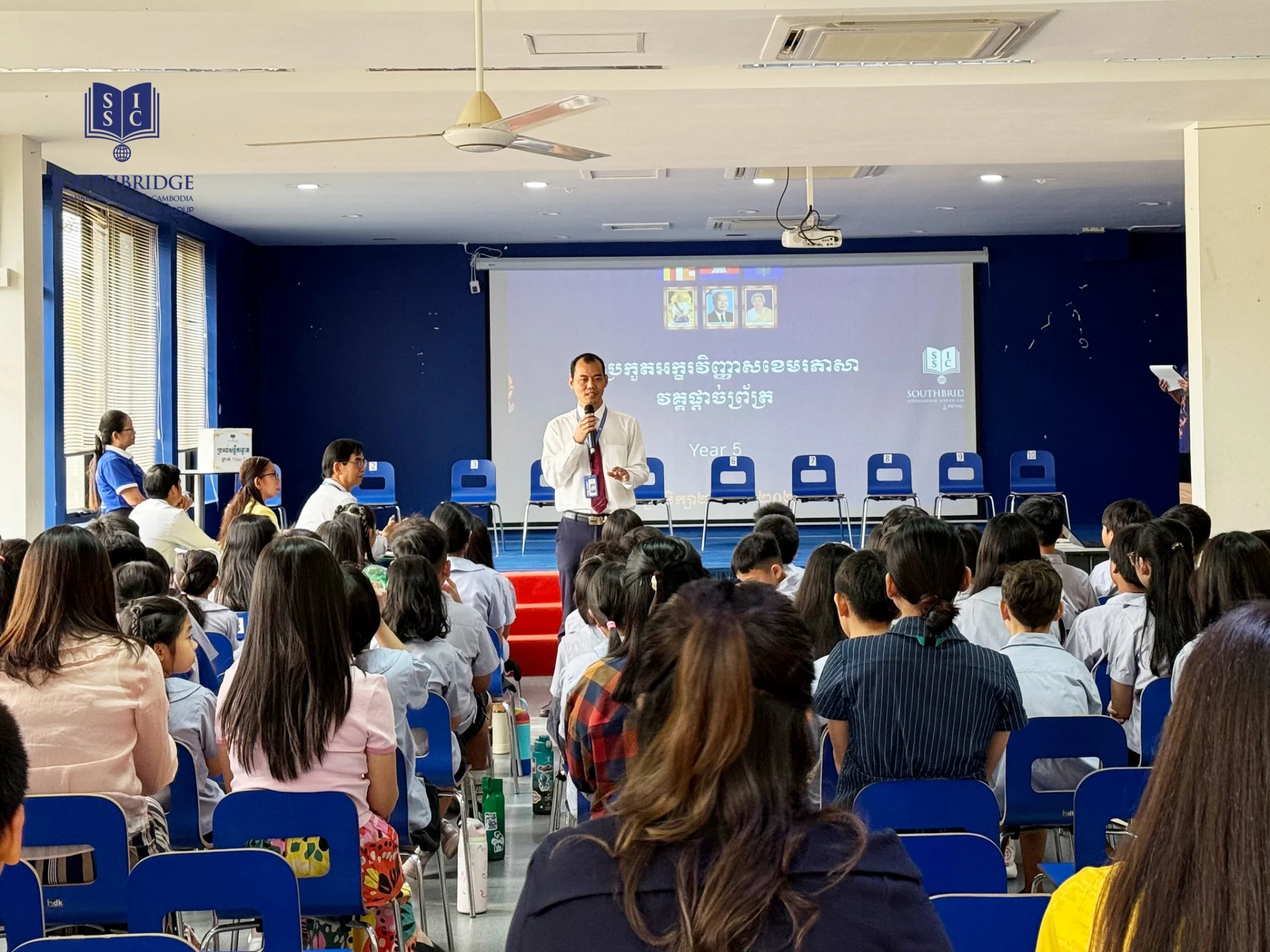

The recent Khmer Spelling Bee at Southbridge International School Cambodia showcased how schools can strengthen language skills while building confidence and academic excellence among students. Events like this are more than competitions; they reflect a commitment to cultural identity, literacy development, and inclusive education practices that support learners in Cambodia’s evolving international school landscape.
Celebrating Khmer Language Learning in an International School

At Southbridge International School Cambodia, the Khmer Spelling Bee 2025–2026 emphasized the importance of bilingual education and cultural respect within a global learning environment. Students demonstrated strong focus, pronunciation skills, and deep understanding of Khmer vocabulary. For many parents and educators, this type of initiative highlights how international schools can balance global academic standards with local language preservation.
Language competitions encourage students to engage actively with reading and writing. By preparing for a spelling bee, learners strengthen phonological awareness, memory skills, and public speaking abilities—key components for academic success across subjects. Schools that prioritize Khmer language development help students maintain a meaningful connection to Cambodian culture while gaining confidence in their academic journey.
Building Confidence Through Healthy Competition
A Khmer Spelling Bee is not only about spelling accuracy; it also supports social-emotional growth. Standing in front of peers requires courage, focus, and resilience. Teachers often observe improvements in students’ communication skills and self-esteem after participating in structured academic events like this one.
At Southbridge International School Cambodia, the event reflected a supportive environment where students were encouraged to celebrate effort as much as achievement. Friendly competitions create opportunities for collaboration, peer encouragement, and positive reinforcement. These experiences help learners develop a growth mindset—an important trait in both local and international education systems.
Why Khmer Literacy Matters for Cambodian Students
Promoting Khmer literacy remains essential, even in schools offering international curricula. Strong foundations in the native language support cognitive development and strengthen overall learning outcomes. When students master spelling, reading, and pronunciation in Khmer, they often demonstrate improved comprehension skills in other languages as well.
Educators in Phnom Penh increasingly recognize the importance of integrating Khmer cultural programs into modern education models. Events such as the Khmer Spelling Bee encourage students to appreciate linguistic diversity and develop pride in their heritage. For parents exploring education options, seeing schools actively promote Cambodian language learning can be a deciding factor.
What Parents and Educators Can Learn From This Event
The Khmer Spelling Bee at Southbridge International School Cambodia serves as an example of how schools can design engaging academic experiences that combine tradition with innovation. By encouraging participation rather than pressure, schools foster a learning atmosphere where students feel safe to challenge themselves.
Parents can support similar learning at home by encouraging reading in Khmer, practicing pronunciation through storytelling, and celebrating small achievements. Meanwhile, teachers can incorporate spelling challenges, collaborative games, and interactive language activities to maintain student motivation throughout the school year.
As education in Cambodia continues to evolve, events like the Khmer Spelling Bee at Southbridge International School Cambodia demonstrate how language programs can remain both culturally meaningful and academically relevant. By nurturing communication skills, cultural awareness, and confidence, schools contribute to a well-rounded educational experience that benefits students long beyond the classroom.


Leave A Comment