
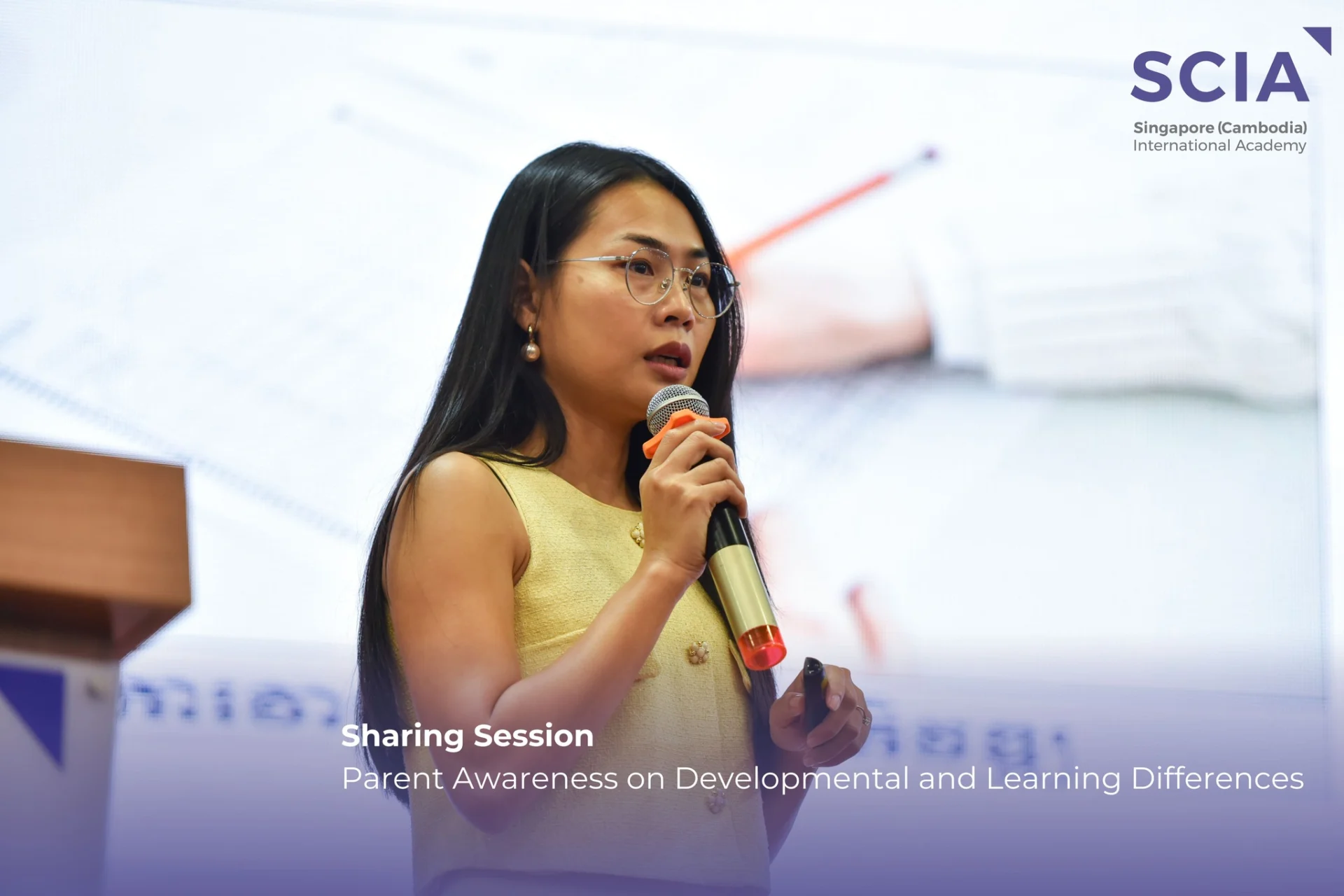
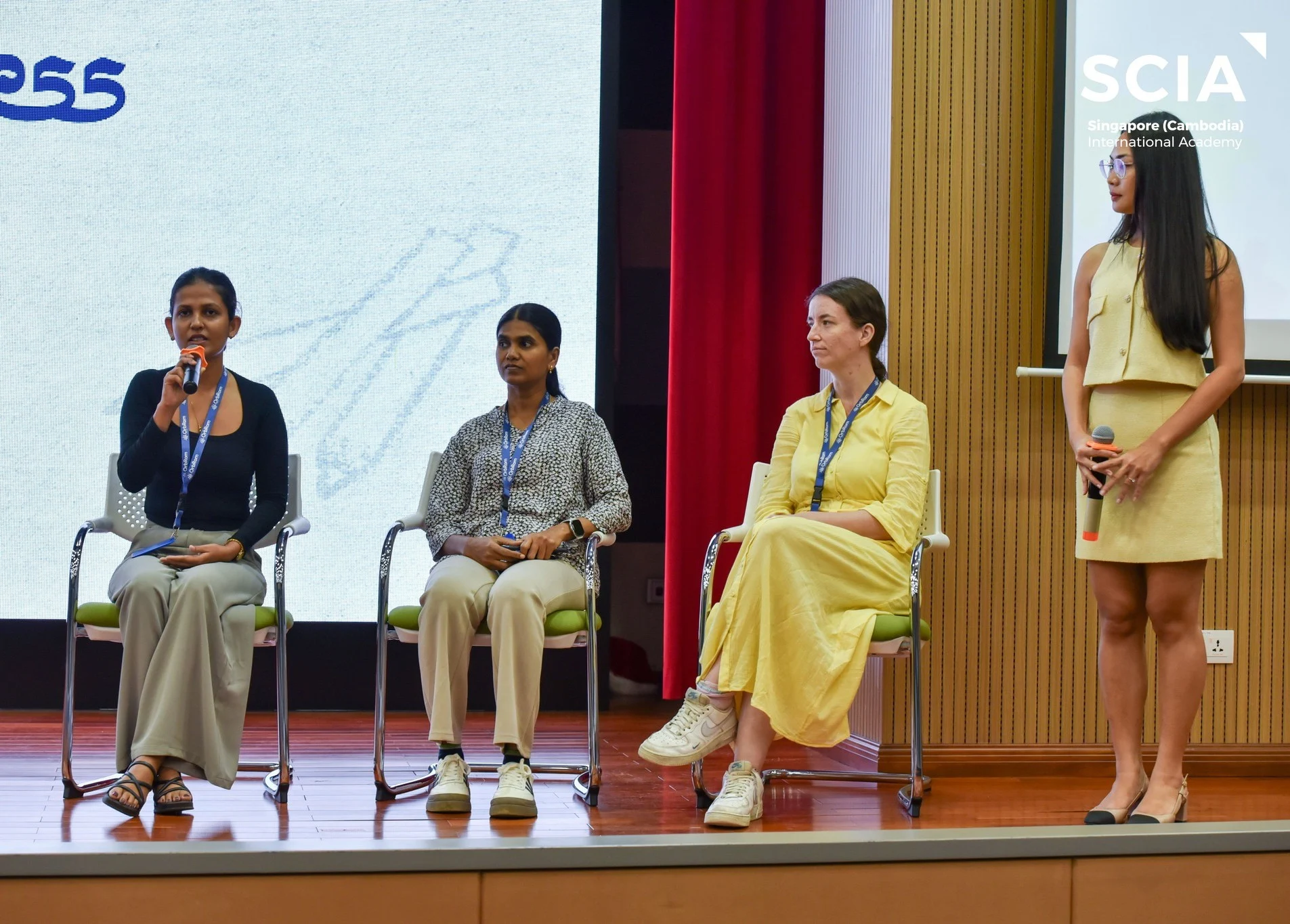

Inclusive education in Cambodia is moving from theory to practice, and parent awareness plays a central role in that shift. A recent Parent Awareness Sharing Session held at Singapore Cambodia International Academy (SCIA) highlighted a growing understanding among schools and families: inclusion is not only about access to classrooms, but about how learning is supported inside them.

The session focused on helping parents recognize learning differences early and understand how schools can respond in structured, meaningful ways.
Why parent awareness matters in Cambodian education
In Cambodia, many learning challenges go unnoticed or are misunderstood as behavioral issues, lack of effort, or language barriers. Parent awareness sessions create space to replace assumptions with knowledge. When families understand how children process information differently, they are better equipped to support learning at home and collaborate effectively with schools.
Inclusive education in Cambodia depends on this partnership. Schools alone cannot meet diverse learning needs without informed and engaged parents who understand both strengths and challenges.
Moving beyond labels to learning profiles
One key theme discussed at SCIA was the importance of focusing on learning profiles rather than labels. Instead of asking whether a child “has” a condition, educators encouraged parents to look at patterns such as:
-
How a child understands instructions
-
How they express ideas verbally or in writing
-
How attention and memory affect classroom participation
-
How emotional regulation influences learning
This approach reduces stigma and allows schools to adapt teaching methods while maintaining high expectations.
What inclusive schools do differently
Inclusive education in Cambodia requires intentional planning. Schools that implement inclusive practices tend to:
-
Use clear routines and predictable classroom structures
-
Adapt instruction using visual, verbal, and hands-on strategies
-
Monitor progress regularly rather than waiting for failure
-
Communicate openly with families about support strategies
At SCIA, the discussion emphasized that inclusion is not an “add-on” service. It is a framework that influences teaching, assessment, and student well-being across the school.
When assessment becomes a tool for clarity
Parent awareness should lead to informed decision-making. When learning difficulties persist, assessment provides direction. Rather than labeling children, assessments help identify how a child learns and what supports will make the greatest difference.
In the Cambodian context, access to appropriate developmental and educational assessments is improving, allowing families to move from uncertainty to targeted support. Early assessment helps schools adjust instruction before learning gaps widen.
From awareness to action
The session concluded with a clear message: awareness must lead to action. Inclusive education in Cambodia advances when:
-
Parents understand what to observe and when to seek guidance
-
Schools respond with structured, evidence-based strategies
-
Support plans are reviewed and adjusted over time
Inclusion is not achieved by intention alone. It requires systems that support teachers, empower parents, and respect each child’s individual learning journey.
A broader shift in Cambodian education
Events like the SCIA parent awareness session reflect a broader shift in Cambodian education. More schools are recognizing that inclusive practices strengthen learning for all students, not only those with identified needs.
As awareness grows, inclusive education in Cambodia becomes less about accommodation and more about quality—ensuring every child has access to teaching methods that allow them to learn, participate, and succeed.


Leave A Comment