
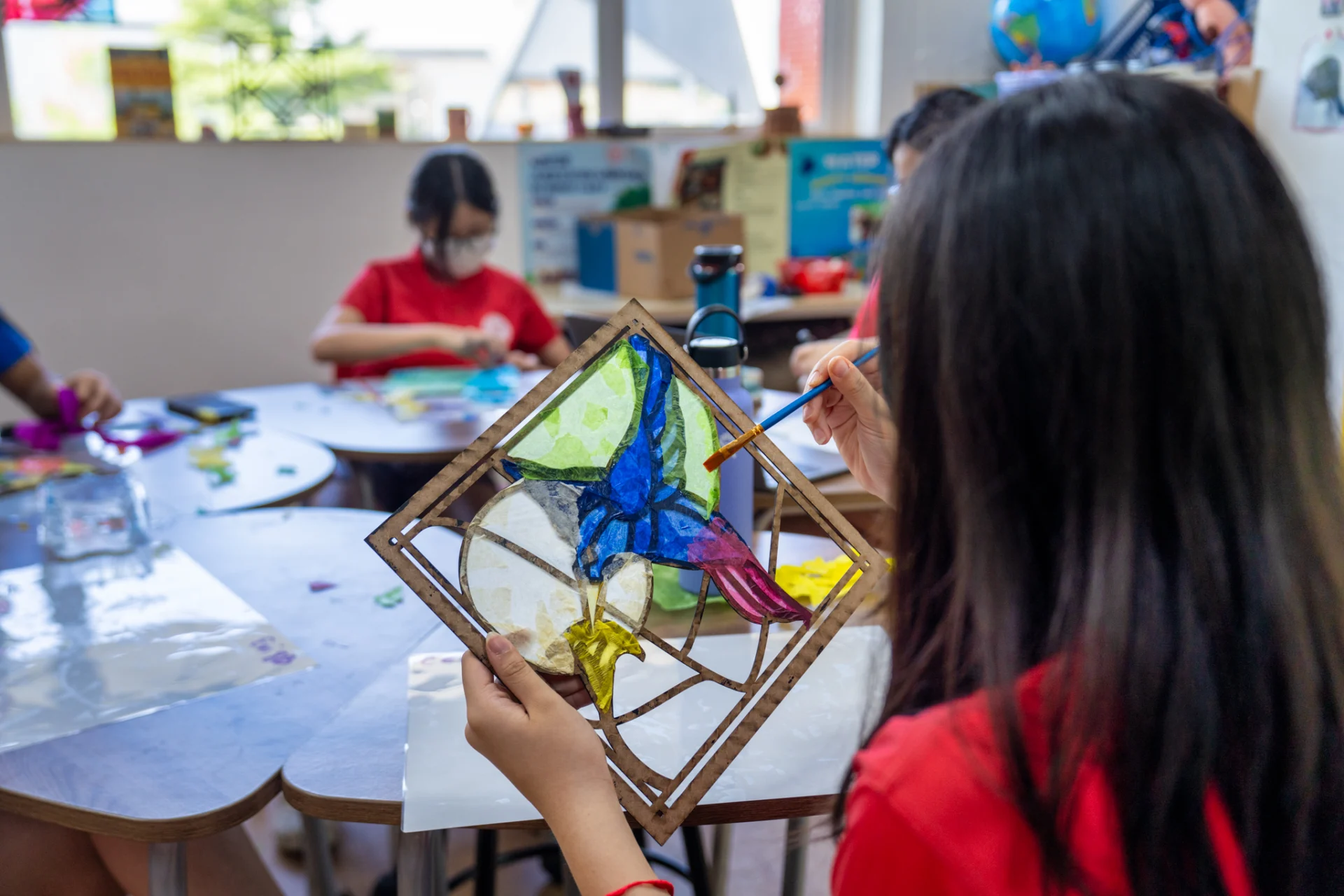

The Canadian International School of Phnom Penh continues to demonstrate how a strong fine arts program can enrich learning beyond academics. In a recent classroom activity shared by the school, students explored light and color through hands-on stained glass–inspired art projects, transforming creative ideas into visually striking work. This approach highlights how the Canadian International School of Phnom Penh integrates creativity, experimentation, and confidence-building into everyday learning.

The images and accompanying text from the school reflect a learning environment where students are encouraged to explore materials, ask questions, and express themselves freely. Rather than focusing solely on final results, the activity emphasizes process, craftsmanship, and personal interpretation—core principles in high-quality arts education.
Learning Through Hands-On Artistic Exploration
At the Canadian International School of Phnom Penh, art is treated as an essential part of holistic education. By experimenting with light, transparency, and color, students learn fundamental artistic concepts while developing problem-solving and fine motor skills. These types of projects also encourage patience and attention to detail, as students must plan designs, select colors, and carefully assemble their work.
Hands-on art activities like stained glass exploration allow learners to understand abstract concepts—such as how light interacts with color—in a concrete and memorable way. This experiential learning supports deeper understanding and long-term retention, benefiting students across age groups.
Building Confidence and Creative Thinking
Creative projects play a key role in building student confidence. When learners see their ideas transformed into tangible artwork, it reinforces self-belief and a sense of achievement. The Canadian International School of Phnom Penh uses fine arts not just as an extracurricular activity, but as a structured program designed to broaden students’ horizons.
Through guided experimentation, students are encouraged to take creative risks, reflect on their work, and appreciate different perspectives. These skills are transferable beyond the art room, supporting communication, collaboration, and flexible thinking in academic and real-world contexts.
Fine Arts Within an International Education Framework
As an international school, the Canadian International School of Phnom Penh places strong emphasis on developing global-minded learners. Fine arts education contributes to this goal by exposing students to visual literacy, cultural expression, and creative interpretation. Art becomes a language through which students can express identity and connect with others.
The school’s Fine Arts Program, as referenced in the post, reflects a broader commitment to balanced education—where academic rigor is complemented by creative development. For parents seeking an international school in Phnom Penh that values both intellectual and creative growth, this integrated approach is a significant advantage.
Why Arts Education Matters for Schools in Cambodia
In Cambodia’s growing international education landscape, schools that invest in quality arts programs stand out. Activities like those at the Canadian International School of Phnom Penh show how creativity supports emotional development, focus, and engagement. For educators and school leaders, this serves as a strong example of how arts education can be embedded meaningfully into the curriculum.
Leave A Comment